What Is Going On
Walk through any of the twelve named areas that make up the Bay City service area and you'll find the same thing
A lot of houses built between 1952 and 1994, with the median landing right around 1969. That's the heart of the problem. Doors from that era were built to keep rain and squirrels out, not to hold heat in. There was no insulation requirement driving the design, so a huge share of the original one-layer steel or wood doors still hanging on these garages have no foam core, no thermal break, and no weatherseal worth the name.
When a door that age finally fails, it's rarely one thing
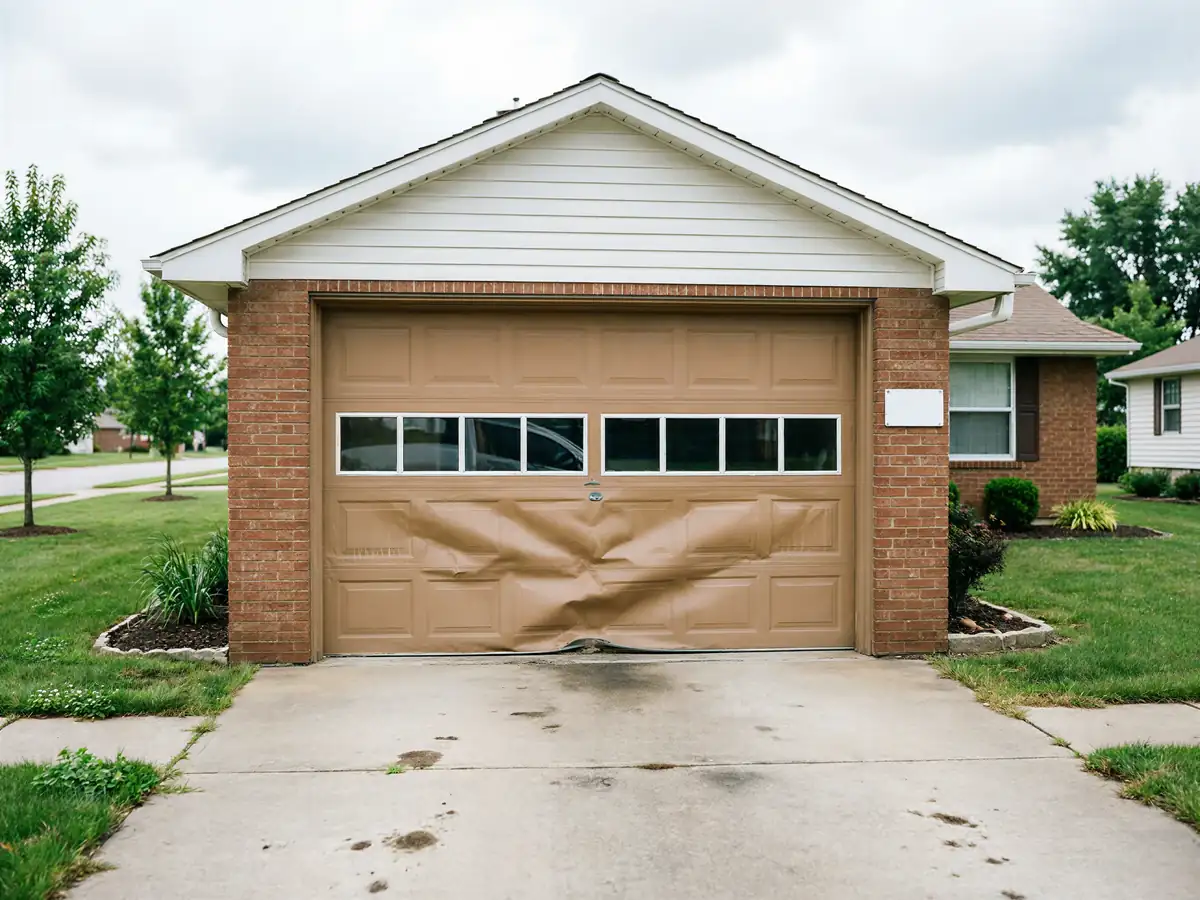
The steel has usually thinned from decades of condensation cycling against an uninsulated slab, the hinges have stretched their holes, and the panel seams have opened just enough to let wind through. Homeowners often call about a noisy track or a spring that let go, and when we get the door open we find the real issue is a 50-plus-year-old skin that was never meant to stop cold air, just block the weather.
With 13,393 owner-occupied houses across this area, this isn't a rare situation
It's the baseline condition of a big chunk of the local garage door stock, and it shapes almost every repair call we take.
- 13,393 owner-occupied
What the Weather Here Does to It
Bay City sits in a climate band classed as cold and severe, and an uninsulated 1960s-era door doesn't just let heat out - it works against itself structurally. Steel contracts in deep cold, and on a door with no insulation layer to buffer that movement, panels flex more with every open and close cycle through winter. That flex is what eventually cracks old weld points and loosens the roller brackets that were fine for forty years and then suddenly aren't.
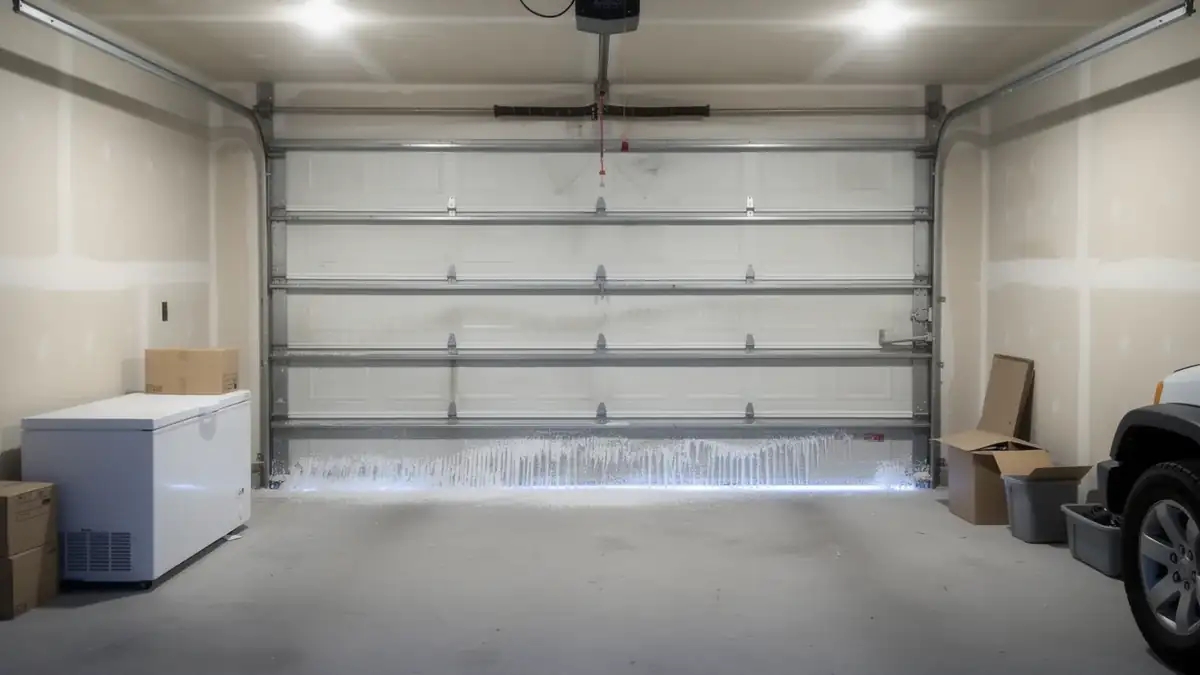
The garage itself usually isn't heated, so the door becomes the coldest surface in the structure, and it sweats. That moisture finds every seam in an uninsulated panel and starts rust from the inside, which is why so many of these original doors fail along the bottom panel first - it's the one closest to ground moisture and furthest from any airflow.
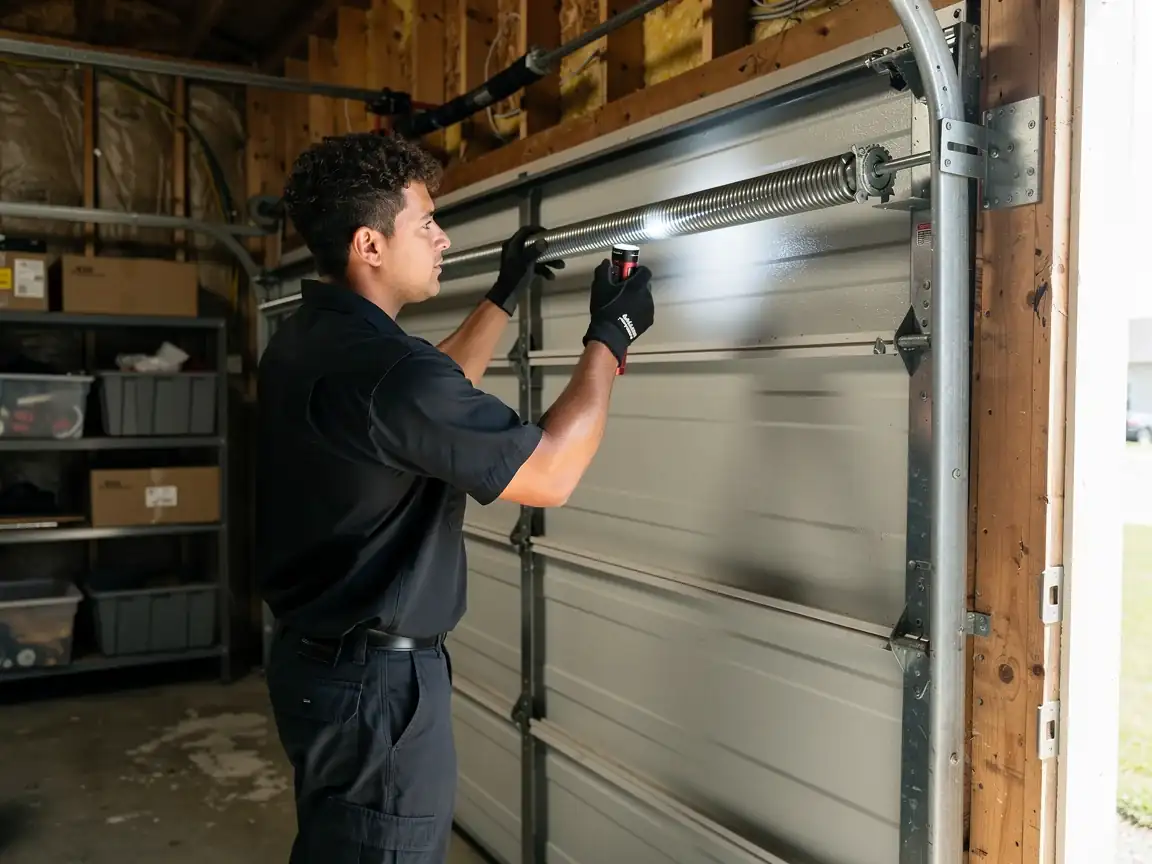
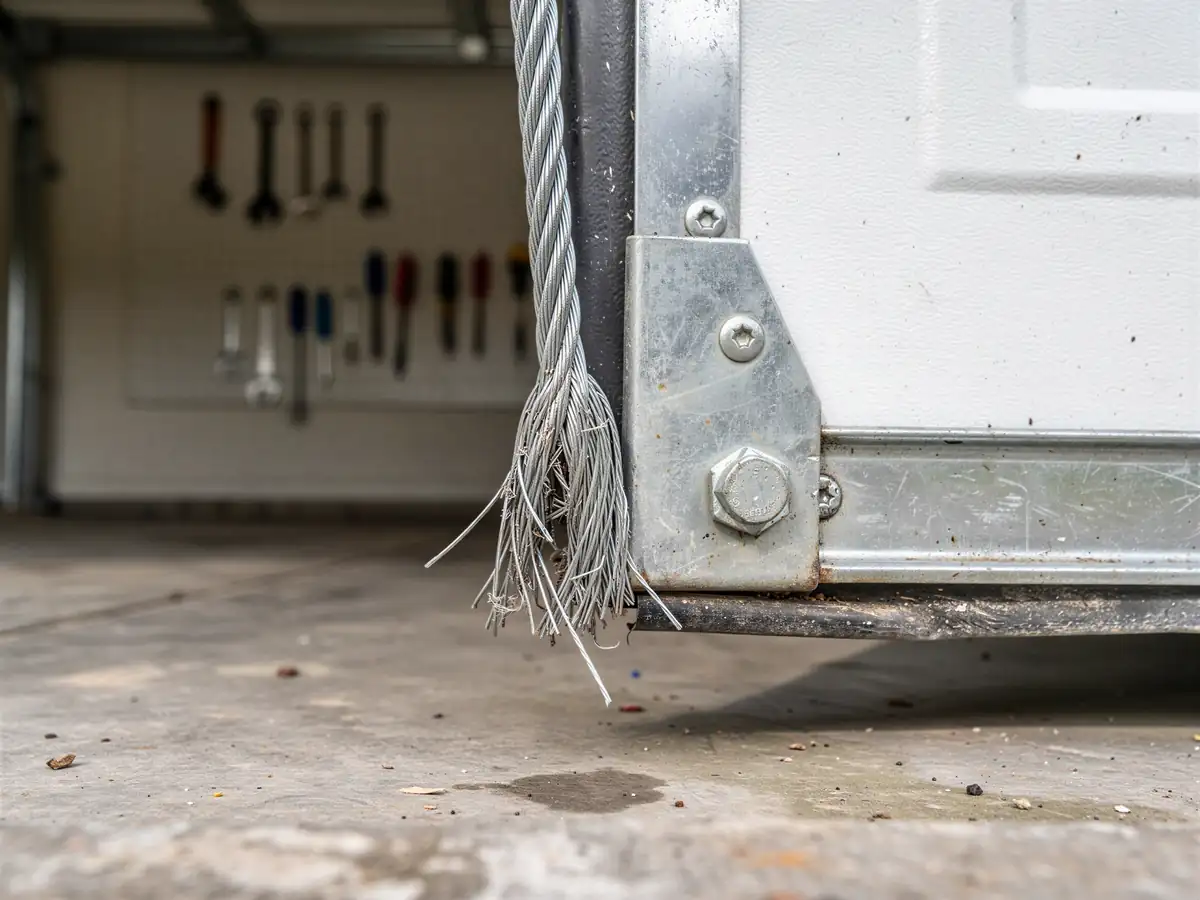
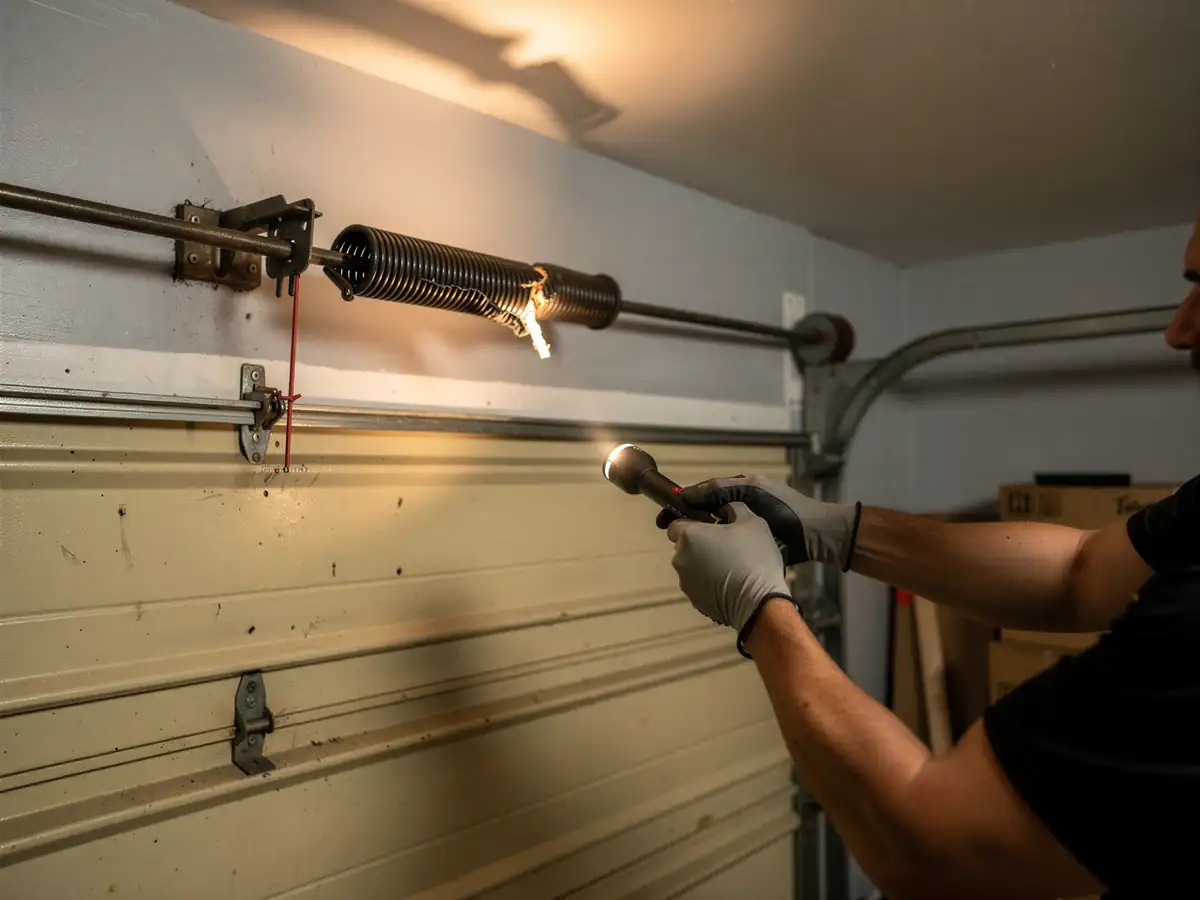
Springs take a hit too. Cold makes the torsion spring's steel stiffer and less forgiving, so a spring already fatigued from fifty-plus winters is more likely to snap on a sub-freezing morning than a mild one. We see that pattern every year once the real cold sets in, and it lines up almost exactly with how old the housing stock here actually is.
What It Costs
We're not going to hand you a number that isn't grounded in your actual door, because what drives cost here isn't a flat rate, it's what decade your garage was built in. A door from the 1990s end of the local housing range usually needs a spring, a cable, or an opener part - straightforward work on hardware that's still a known size. A door from the 1960s end is a different conversation: panel sizes, track spacing, and even bolt patterns from that era often don't match anything on the shelf, so a repair can turn into a full replacement once we're actually looking at it.
Median household income across this area runs around $72,558, and that matters because it sets what kind of replacement makes sense - a mid-range insulated steel door versus something custom. We'll tell you straight when a repair isn't worth sinking money into an original 1960s panel that's going to need the same fix again in a year. That's not a sales pitch, it's just where the math on an old door usually lands.
Where People Go Wrong
The biggest mistake we see in this area is treating a pre-insulation door like it just needs new hardware
People replace the opener, the springs, even the rollers, and the door still feels like a sheet of cold steel in January because the panel itself was never insulated and never will be without replacing it.
The second mistake is ignoring the bottom seal on these older doors because it looks intact
On a door built before insulation rules, the bottom seal is doing almost all the work of keeping weather out, since the panel has no R-value to speak of. Once that seal compresses or cracks, cold air and moisture get straight into the garage, and from there into anything stored against that wall.
The third is waiting for a full failure before looking at replacement
With housing stock this old across Bay City - Essexville, Kawkawlin, and the other named areas nearby all sit in roughly the same build era - a door that's starting to show rust at the bottom panel is telling you where it's headed. Catching it before a spring lets go in a cold snap is cheaper than the emergency call.