The Symptom
It's usually one of three things
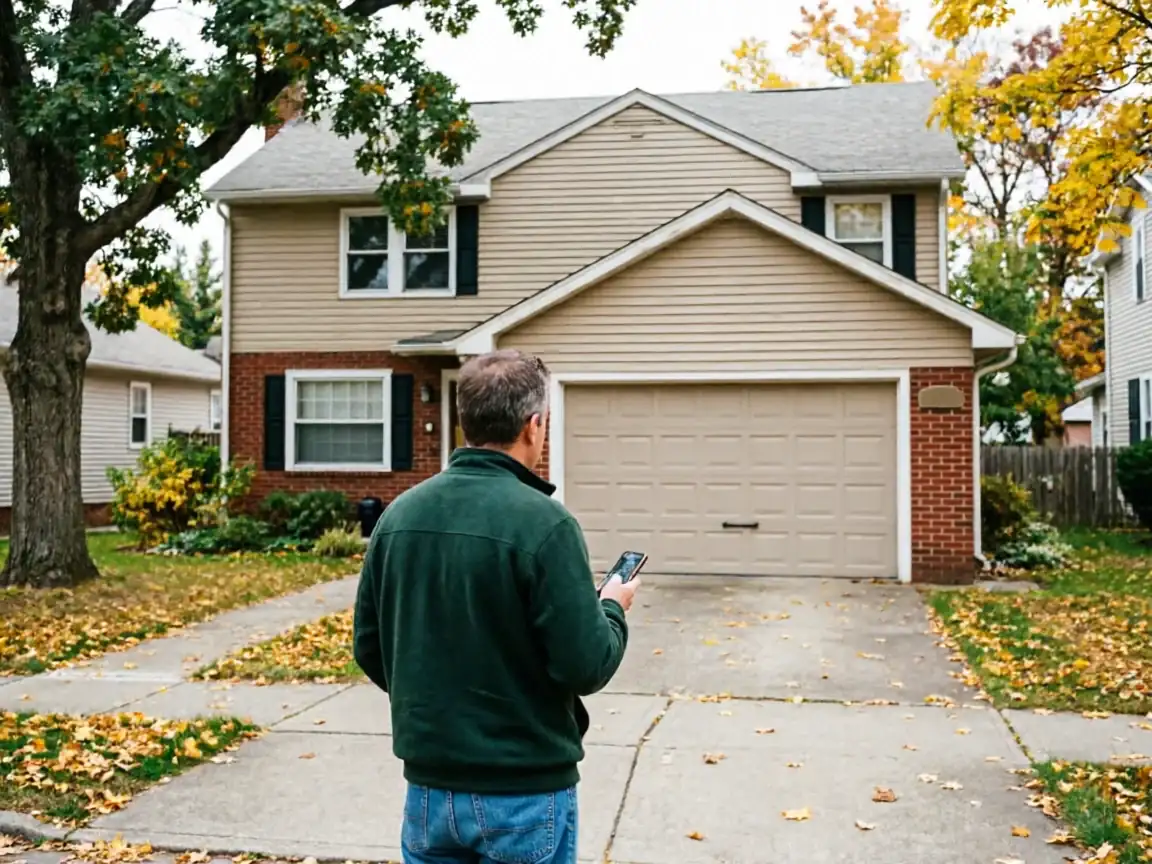
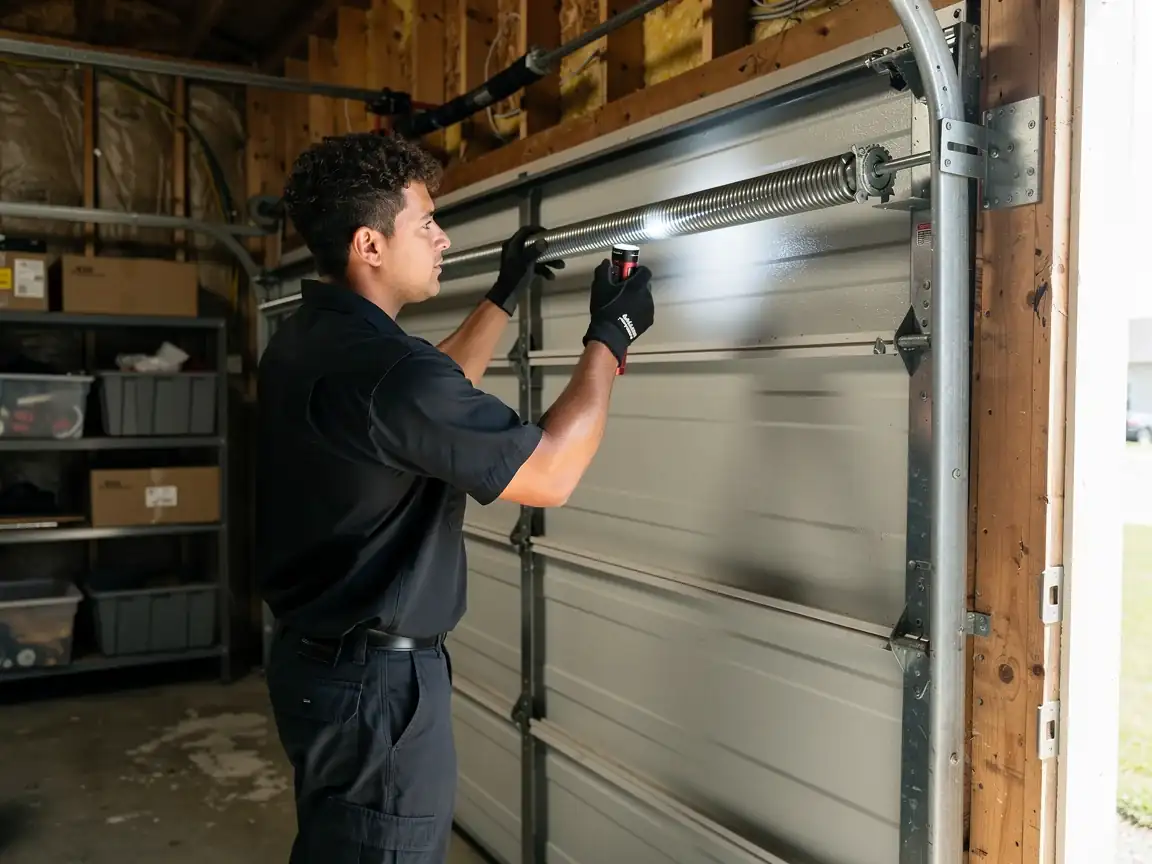
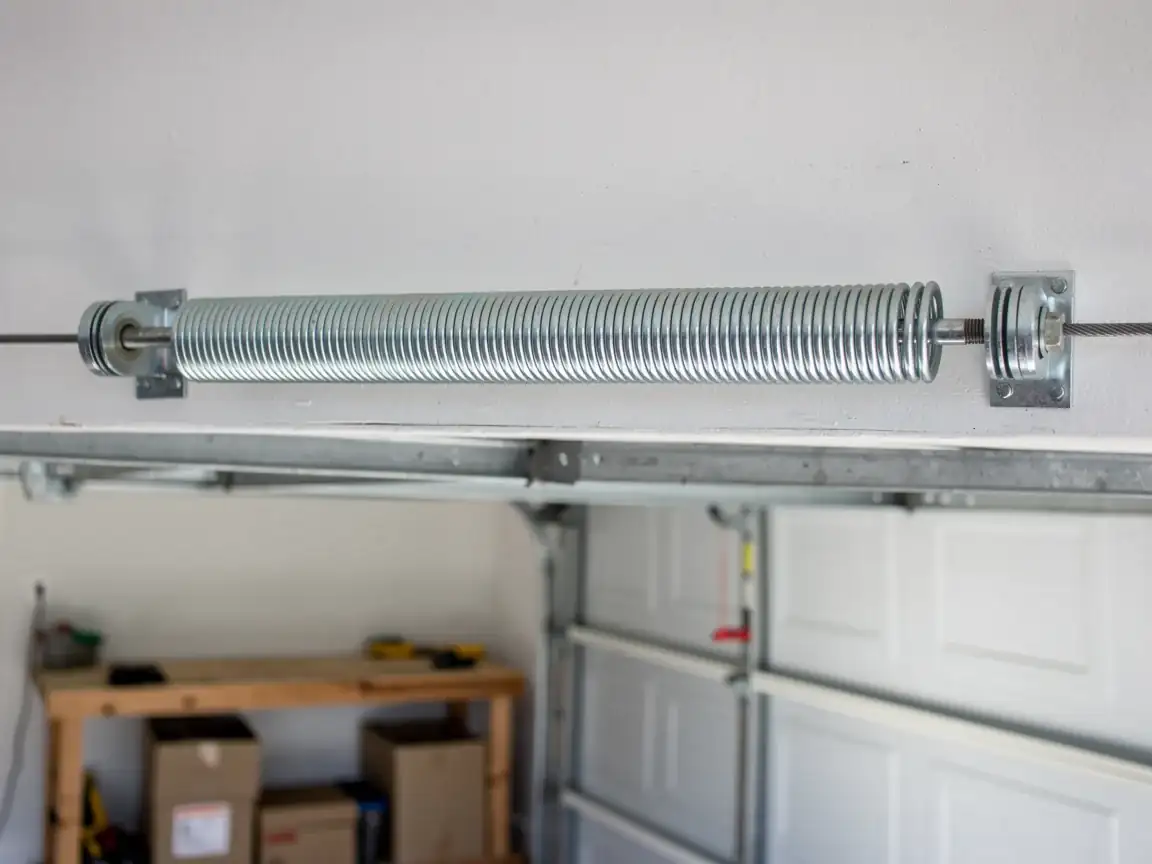
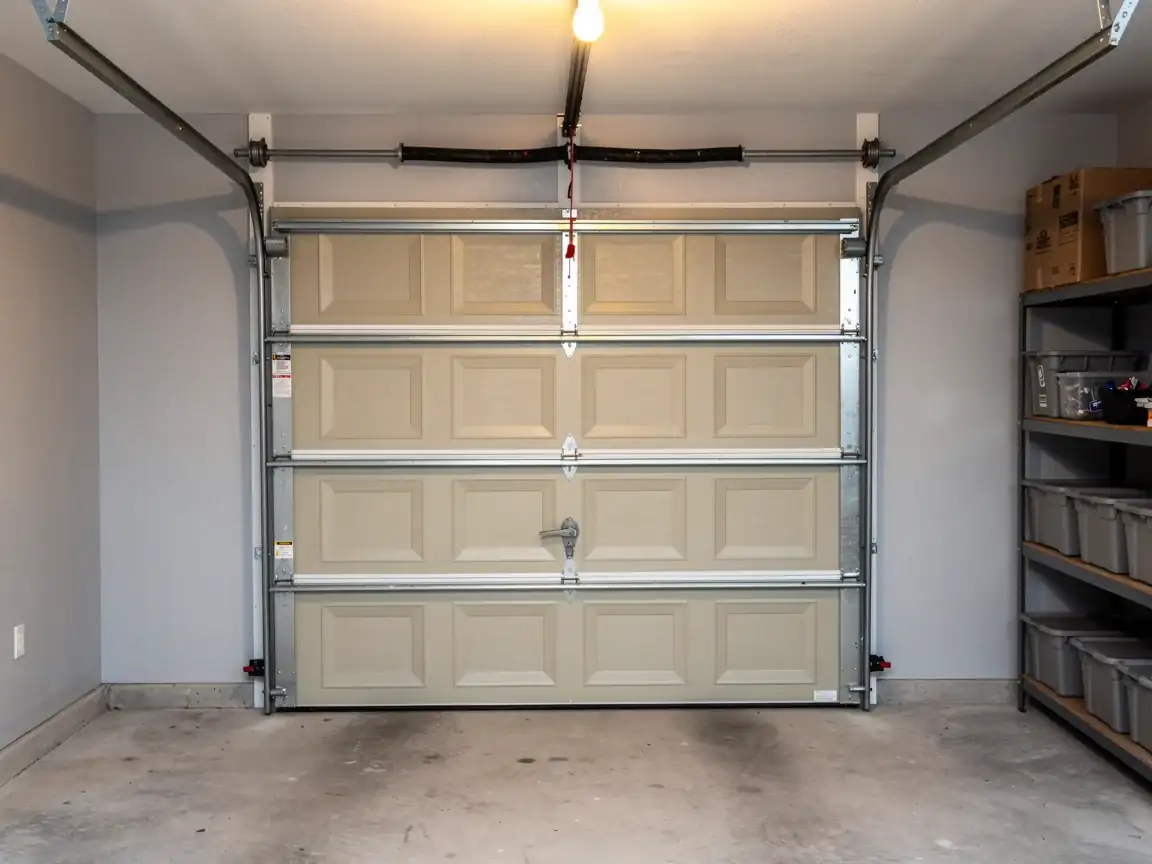
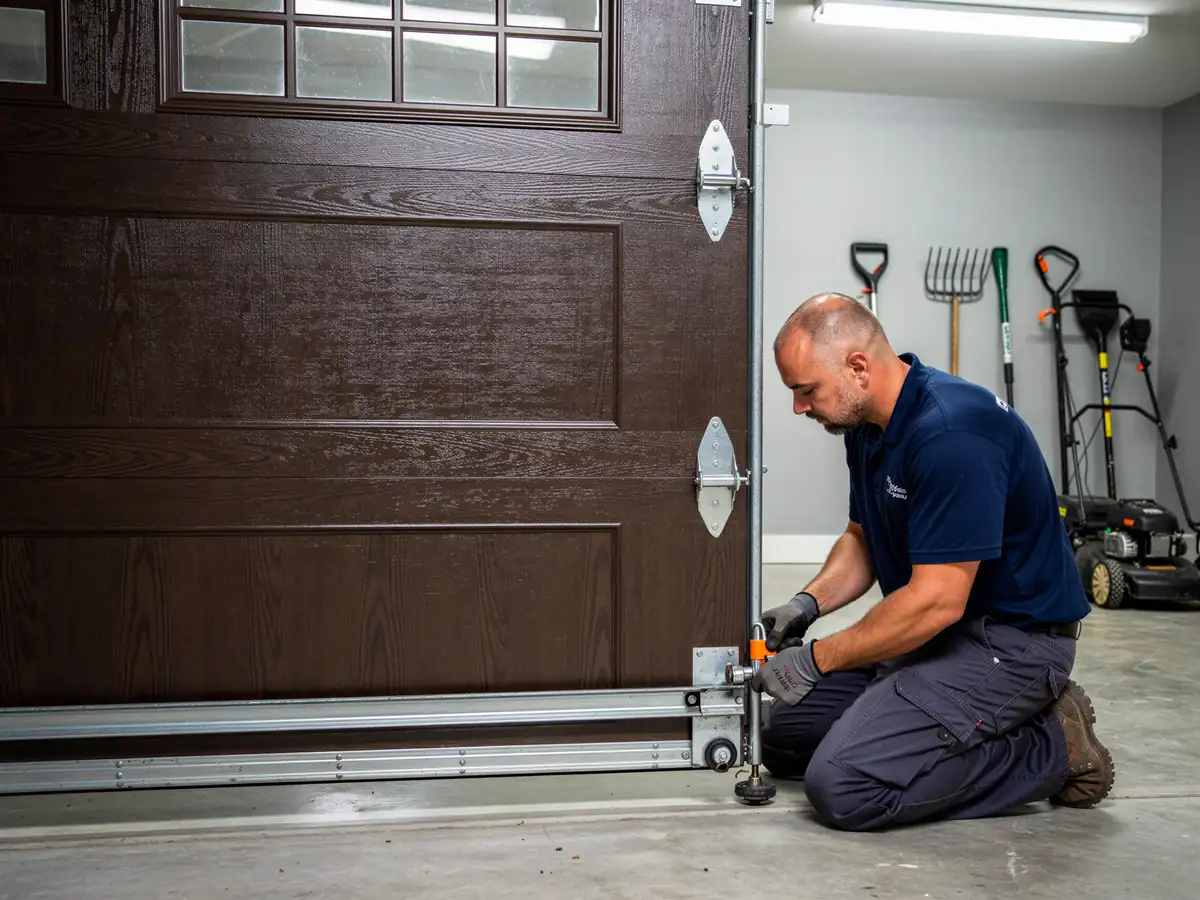
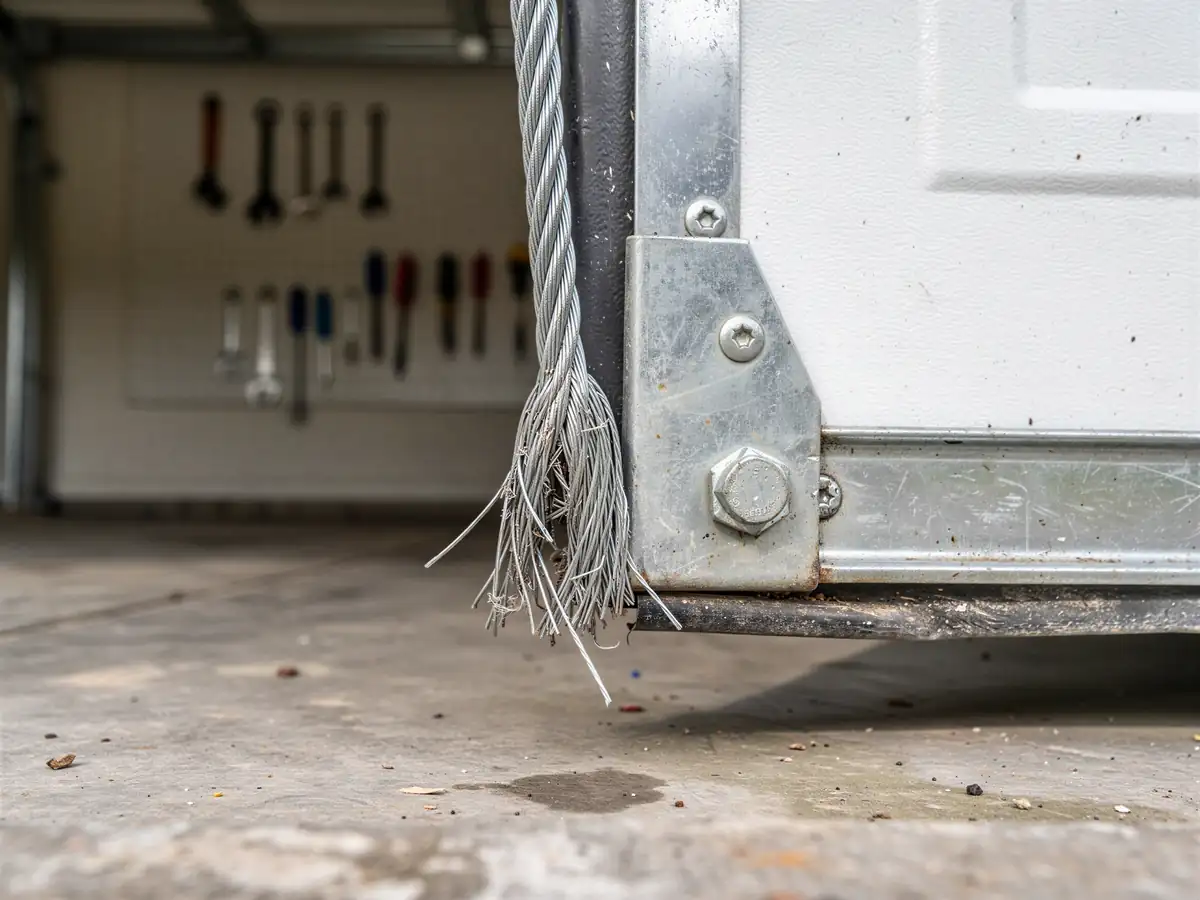
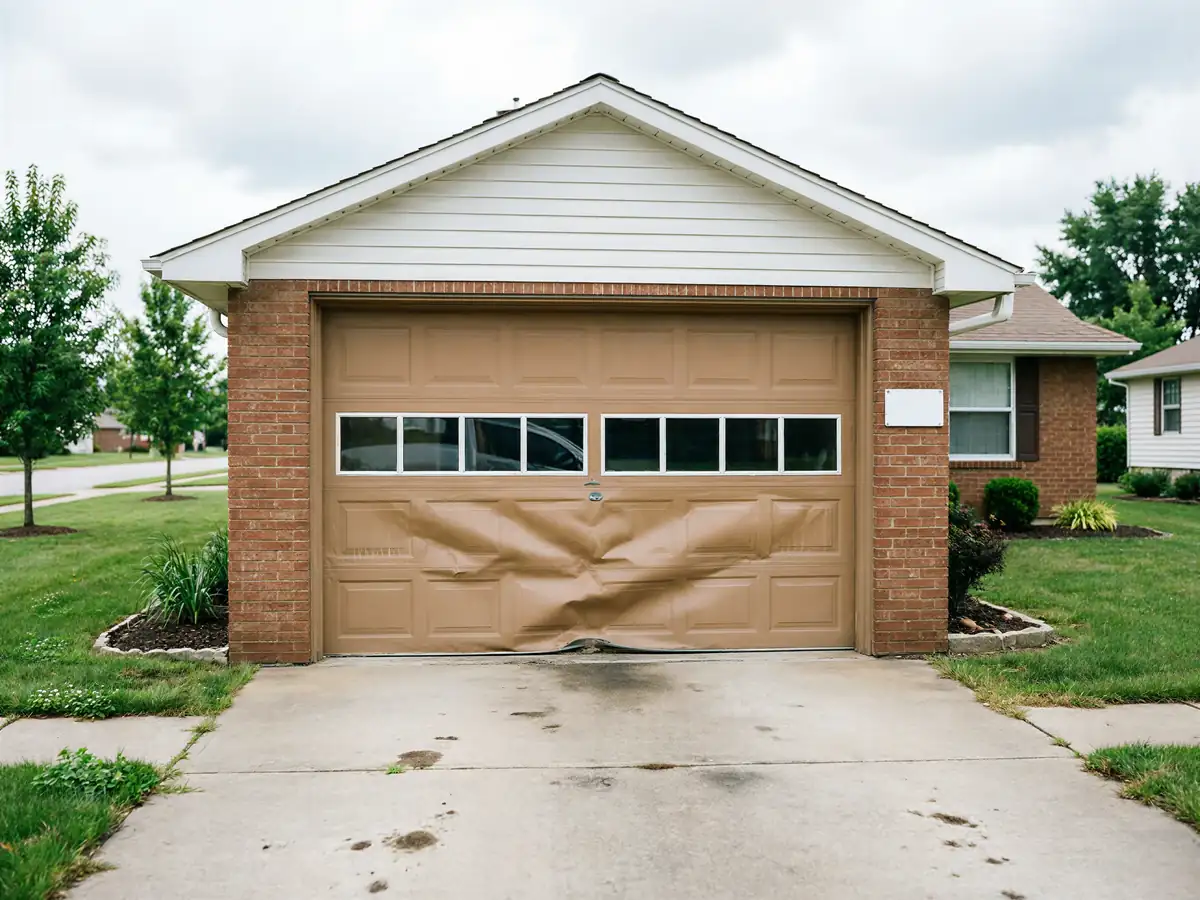
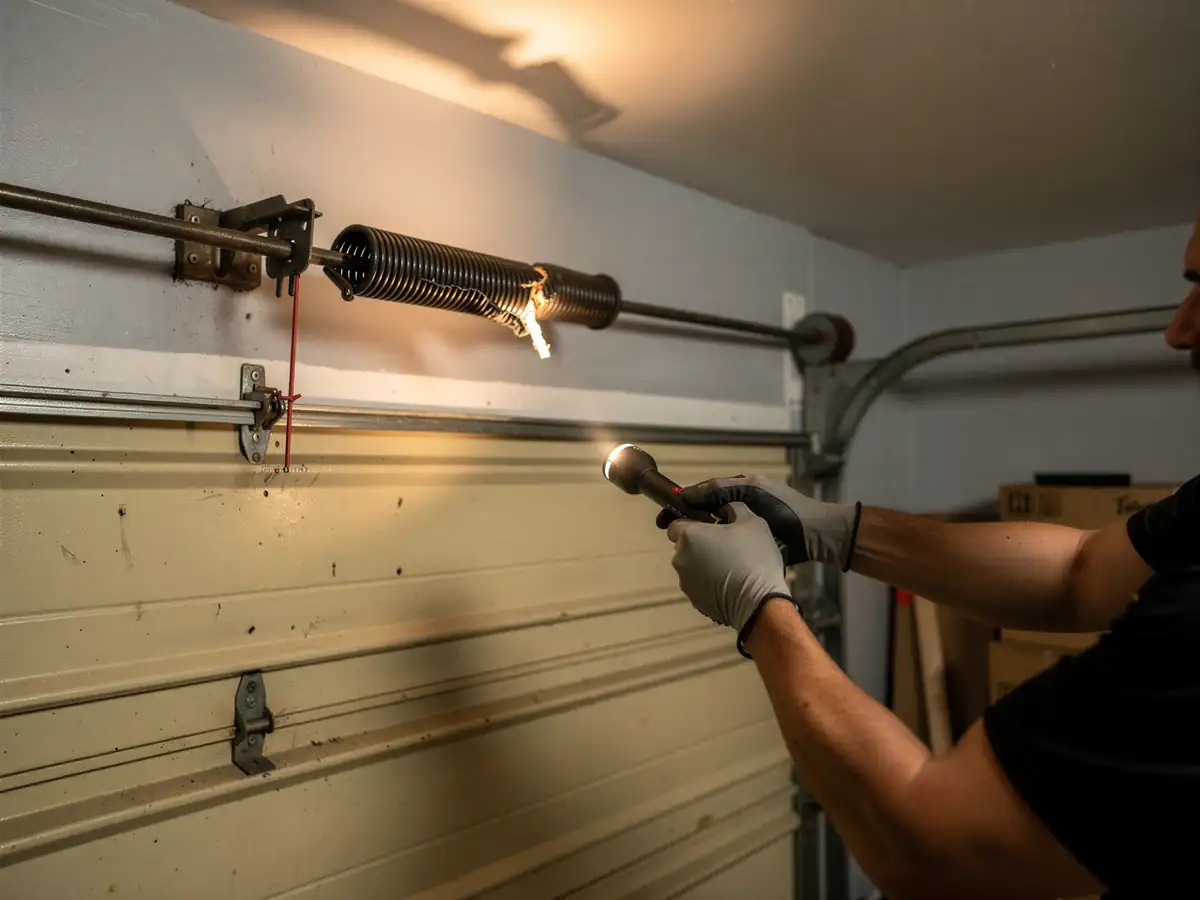
A loud bang from the garage followed by a door that won't budge - that's a torsion spring letting go. A door that reverses halfway up, or won't respond to the remote at all - that's an opener fault or a misaligned safety sensor. Or the door comes off track entirely, hanging crooked on one side, usually after a cable snaps or a roller gives out.
None of these are emergencies in the sense of a fire or a flood
But they stop being minor fast. A door stuck open all night in a cold-severe climate band like this one means a garage that's no warmer than the driveway, and anything stored in there - or parked in there - takes the hit. A door stuck shut means a car trapped inside on the morning you need it most.
Most of the service calls we run fall into this short list
Few are mysterious once you're standing in front of the door. The honest truth is that a torsion spring break is loud and alarming but rarely dangerous if nobody's under the door when it happens - the danger is in the stored tension, which is exactly why we don't recommend homeowners touch a broken spring themselves.
What Is on the Truck
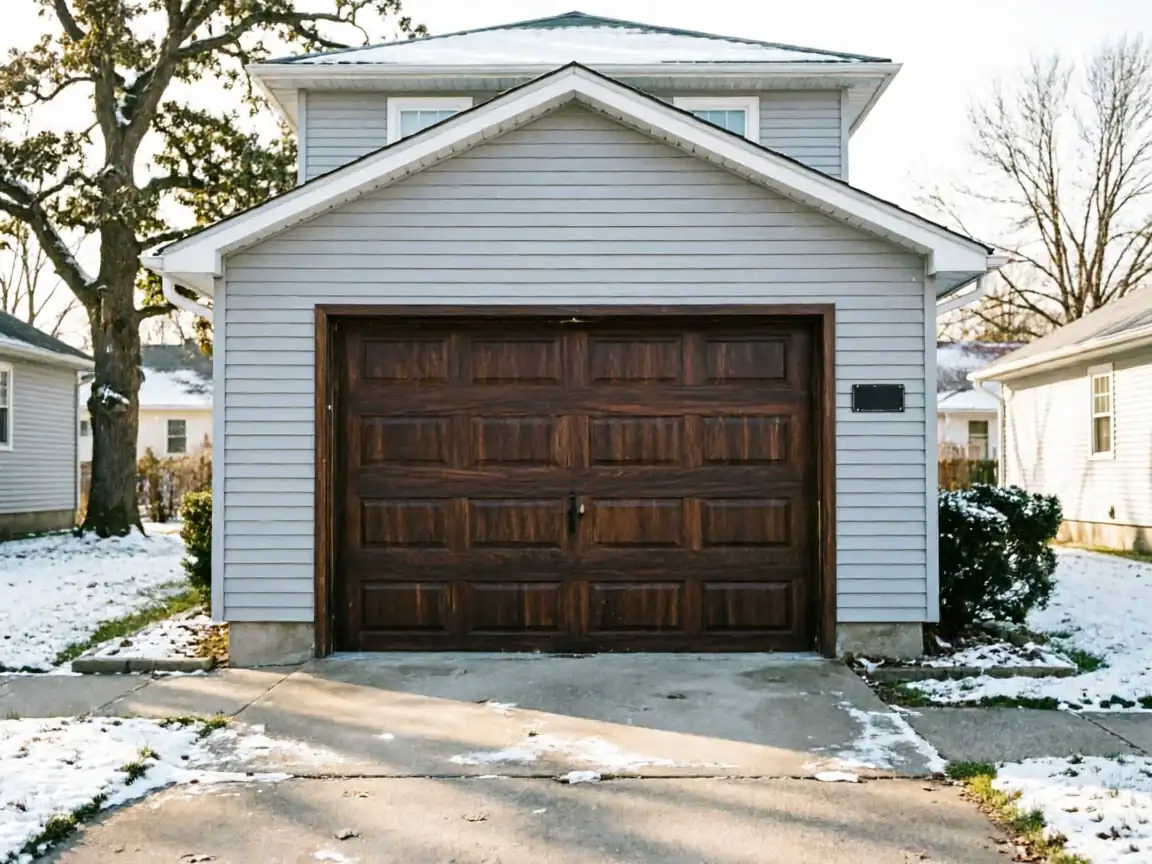
Our trucks carry torsion springs in the sizes that actually show up in this area's housing stock - most of it built between 1952 and 1994, with the typical home dating to around 1969. That means a lot of original or first-replacement side-mounted torsion hardware, sized for doors and openers that newer suppliers don't always stock off the shelf. We carry those sizes because we see them constantly, not because they're universal.
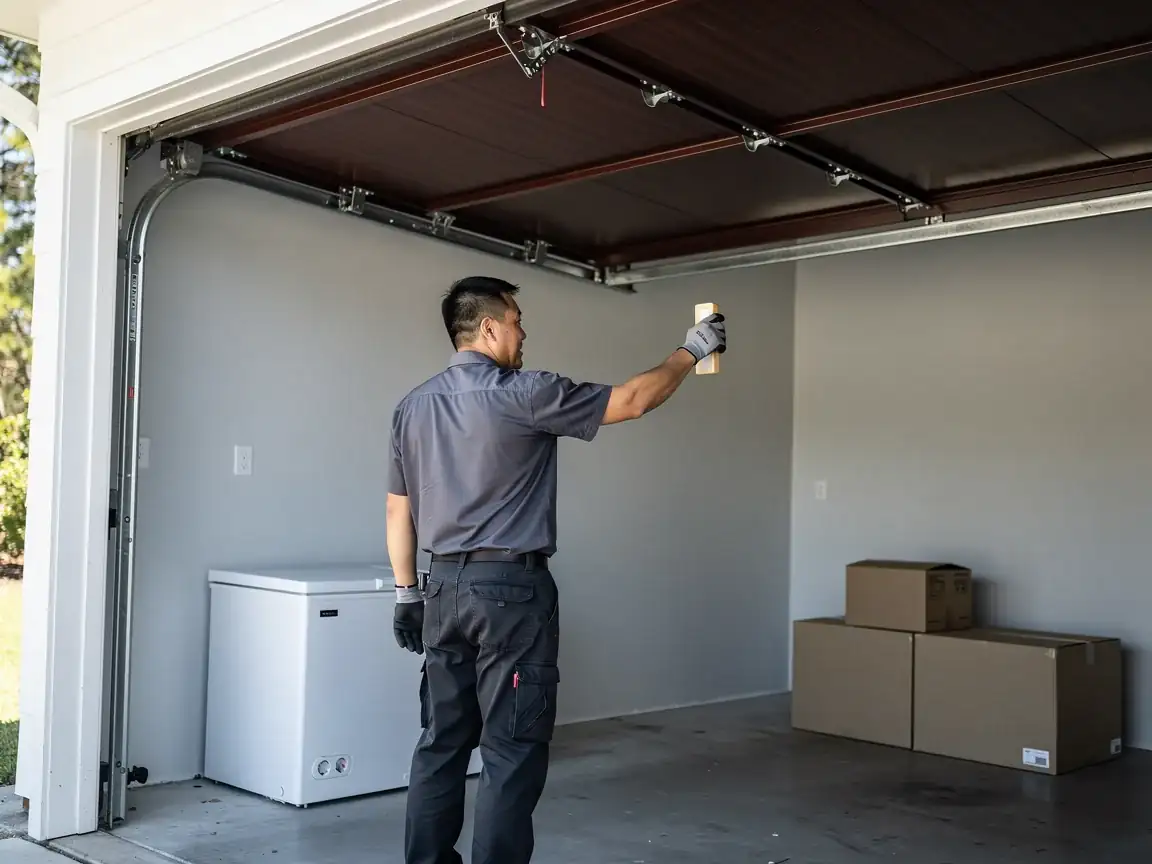
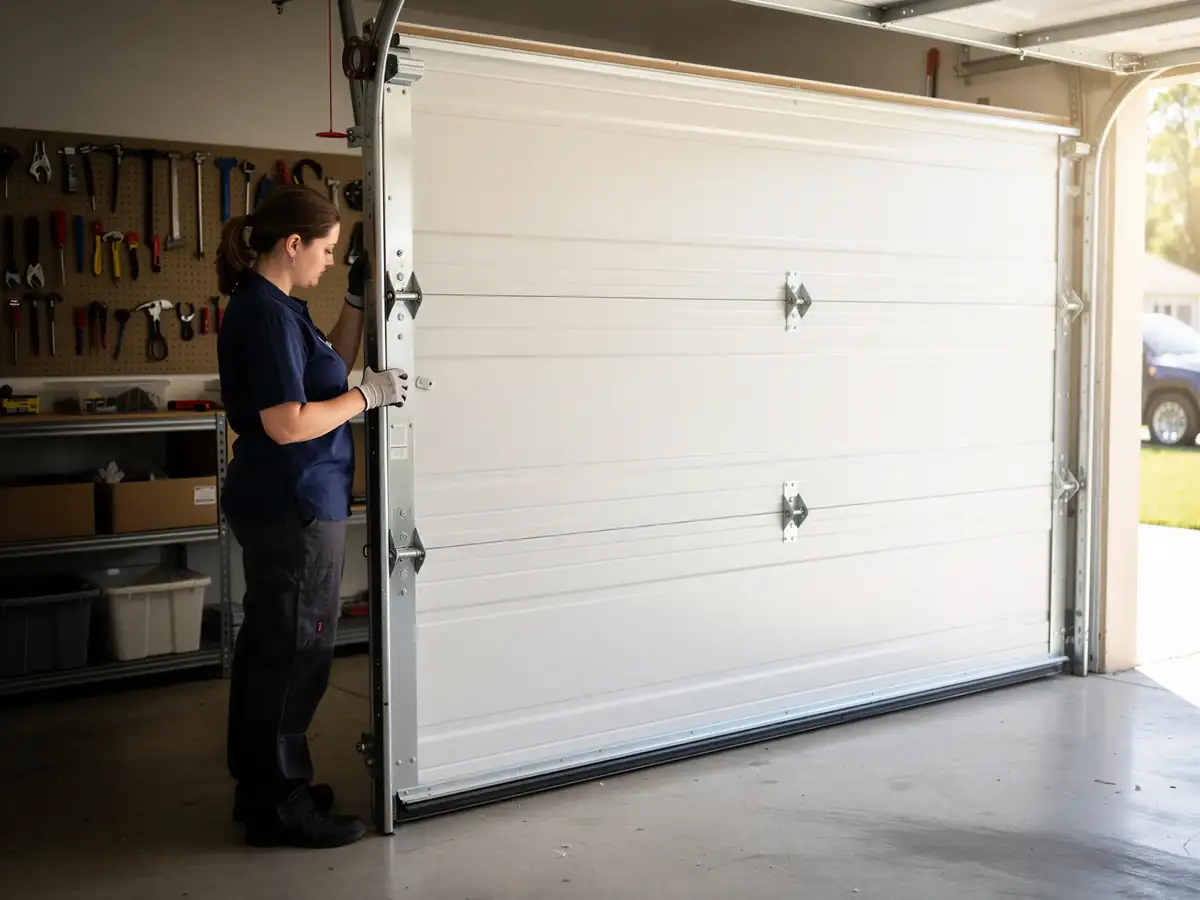
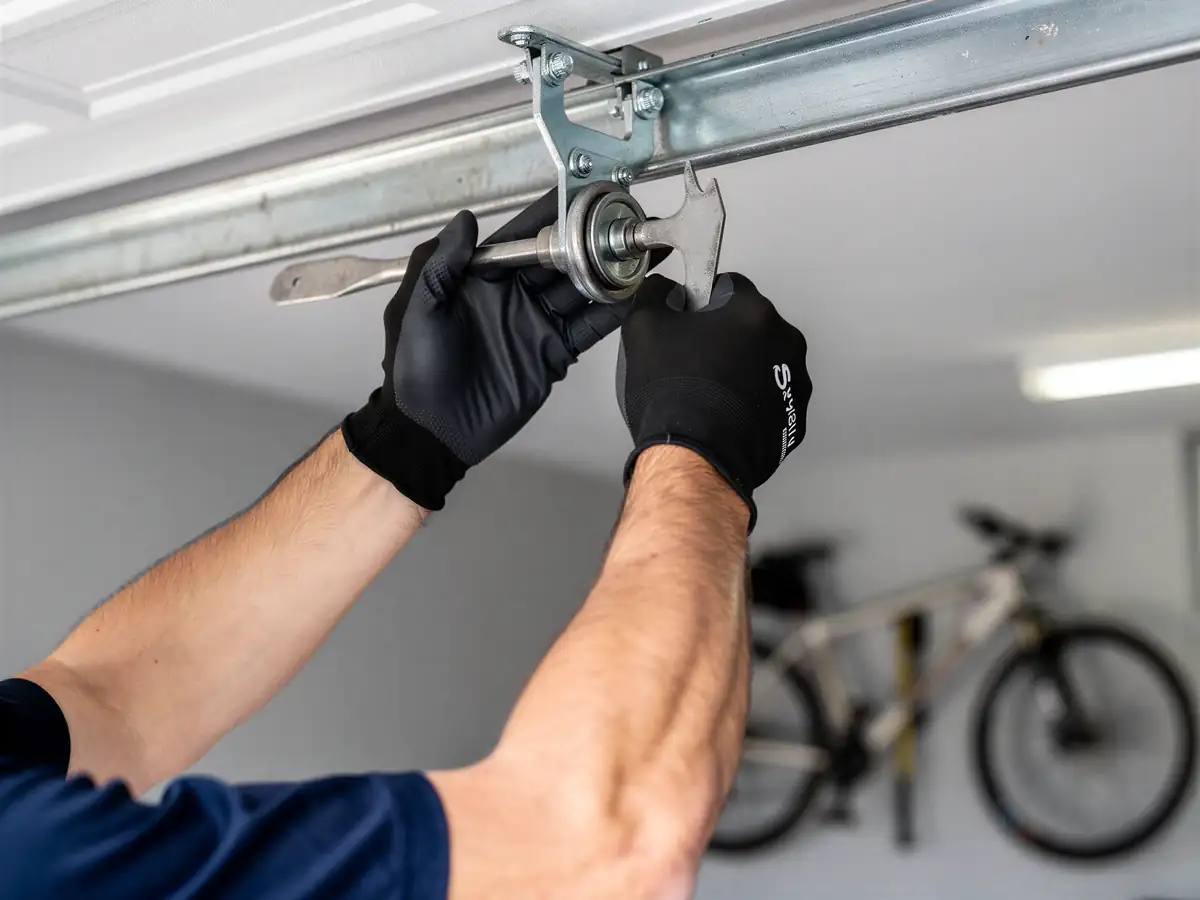
Beyond springs, the truck carries galvanized lift cables, nylon and steel rollers, hinges, and the common opener logic boards and safety sensors that fail after repeated cold-to-warm cycling. We stock fasteners and track sections too, since a door off its track usually bent something on the way down.
What we don't carry is every custom panel or specialty insulated door section in every color and style - those are special order, and if your door needs one, that part of the job waits on a supplier, not on us. We'll tell you that up front rather than pretend otherwise. For everything else - spring, cable, opener, track - the truck is built to finish the job on the first visit.
What It Costs
We're not going to put a number here that doesn't match what shows up at your door, so we won't guess at one. Spring jobs, cable jobs, and opener repairs all price differently depending on door size, spring count, and whether hardware beyond the obvious failure point is also worn out - which is common on a door that's been running on its original torsion system since the 1960s or 70s.
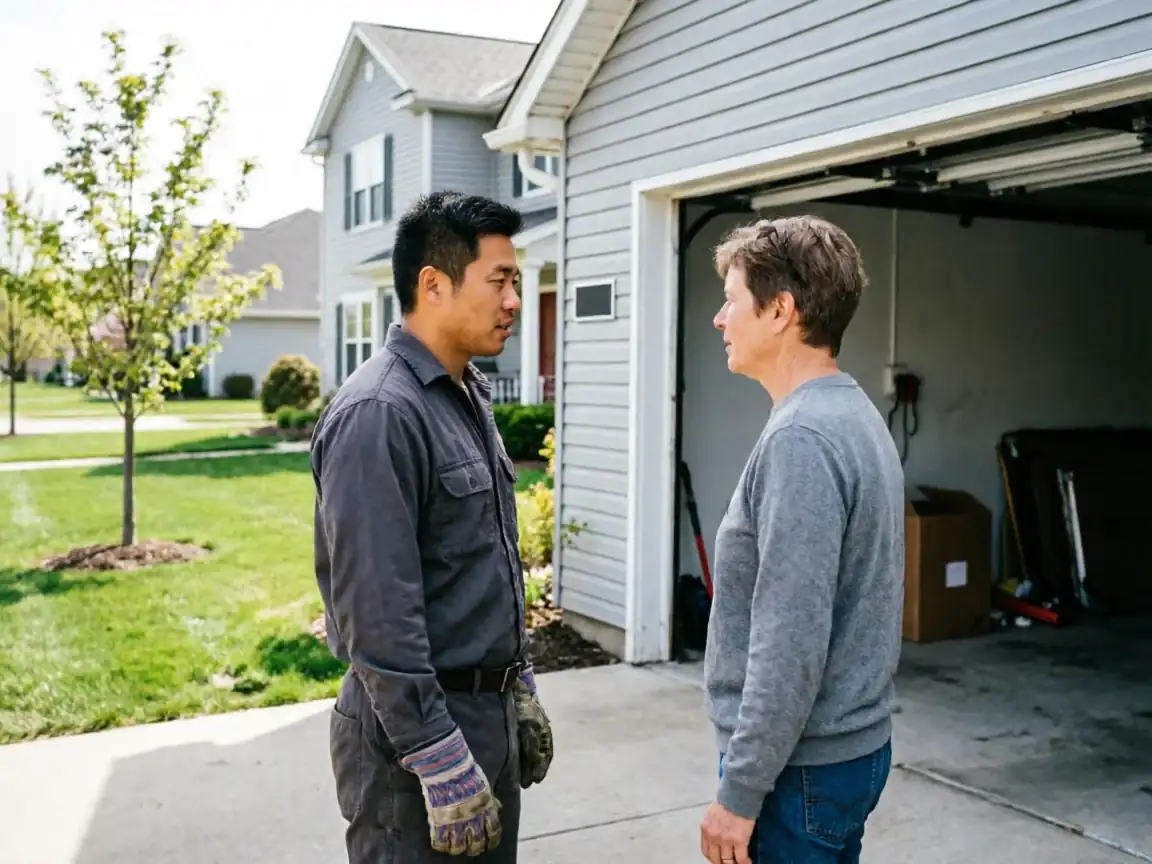
What we can tell you is how we quote: we look at the door in person or over a clear photo and video call before we commit to a number, because a quote given blind over the phone is a guess dressed up as a price. With median household income across the service area at $72,558, most owners we talk to want a straight answer before a truck shows up, not a surprise after.
The one thing that reliably changes a job's cost is whether we're repairing or replacing. If the spring's gone but the rest of the door is sound, repair is usually the right call. If the opener, track, and springs are all failing around the same time on an old door, replacement can end up costing less over a few years than repeated repair visits - we'll say so when that's the case.
What Causes It Around Here
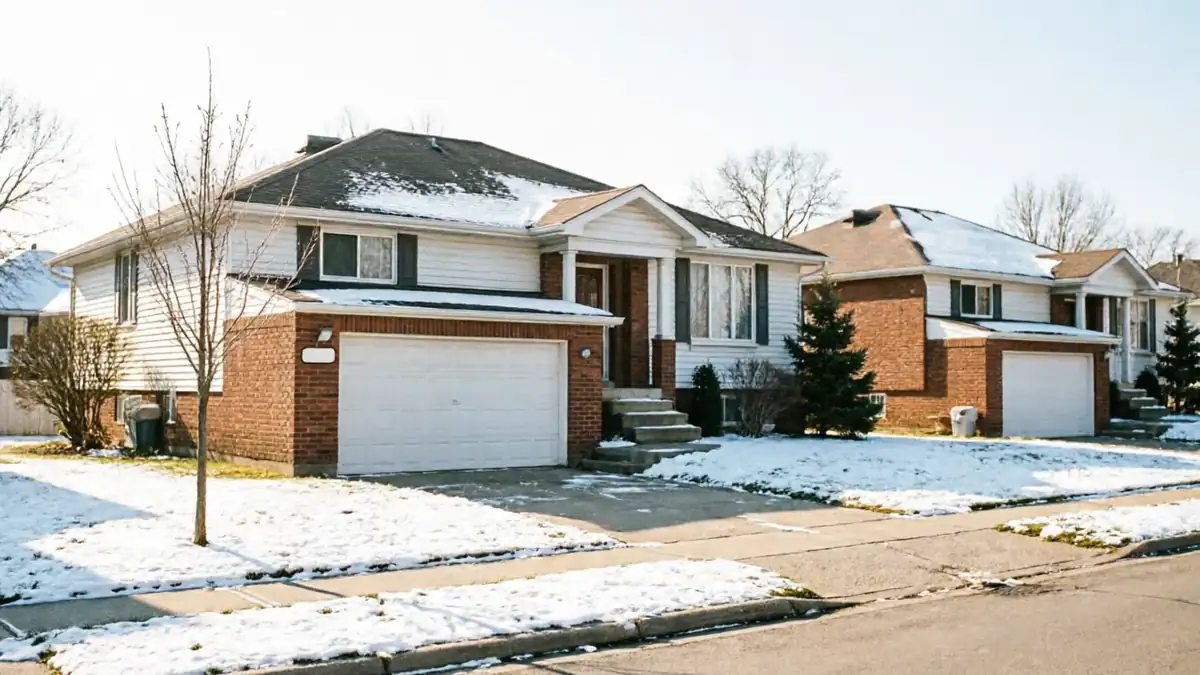
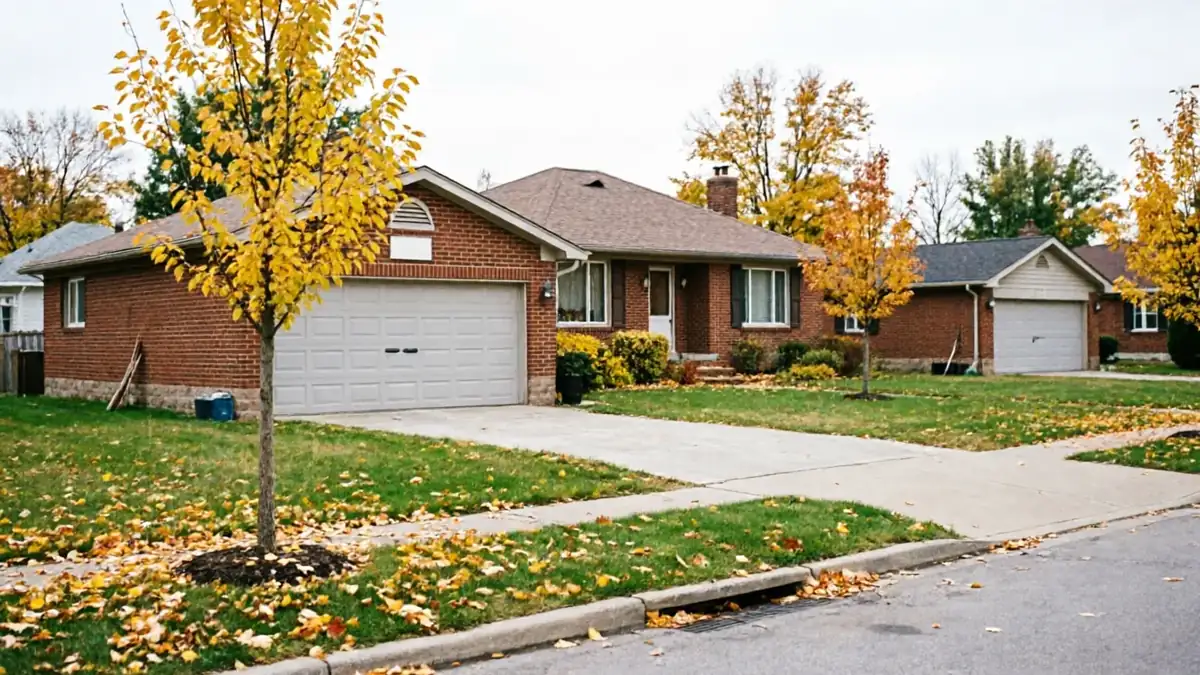
The service area's housing stock is mostly mid-century
Built from 1952 into the 1990s, with a median year around 1969, spread across a dozen distinct neighborhoods and small communities. That means a lot of garage doors are still running the torsion hardware that came with the house, or a direct swap put in decades ago. Steel springs have a rated cycle life, and hardware from that era is well past it in most cases.
The cold-severe climate band this area sits in does its own damage
Steel contracts in deep cold, and a spring already near the end of its life cycle is more likely to snap on a hard freeze morning than on a mild one. Lubricant also thickens in cold temperatures, which puts more strain on rollers and cables that are already worn.
Across the roughly 20,381 households in the service area, about 13,393 are owner-occupied houses
Most with an attached or detached garage built to the same era's standards. That's a lot of original torsion systems reaching the same age at roughly the same time, which is why the pattern repeats door after door, street after street, rather than being one unlucky house.
- 20,381 households