When the Power Cuts Out and Your Opener Doesn't Come Back
Bay City's 1960s-70s housing stock and cold-severe winters mean openers fail at the worst time. Here's what goes wrong, what it costs, and how to avoid it.
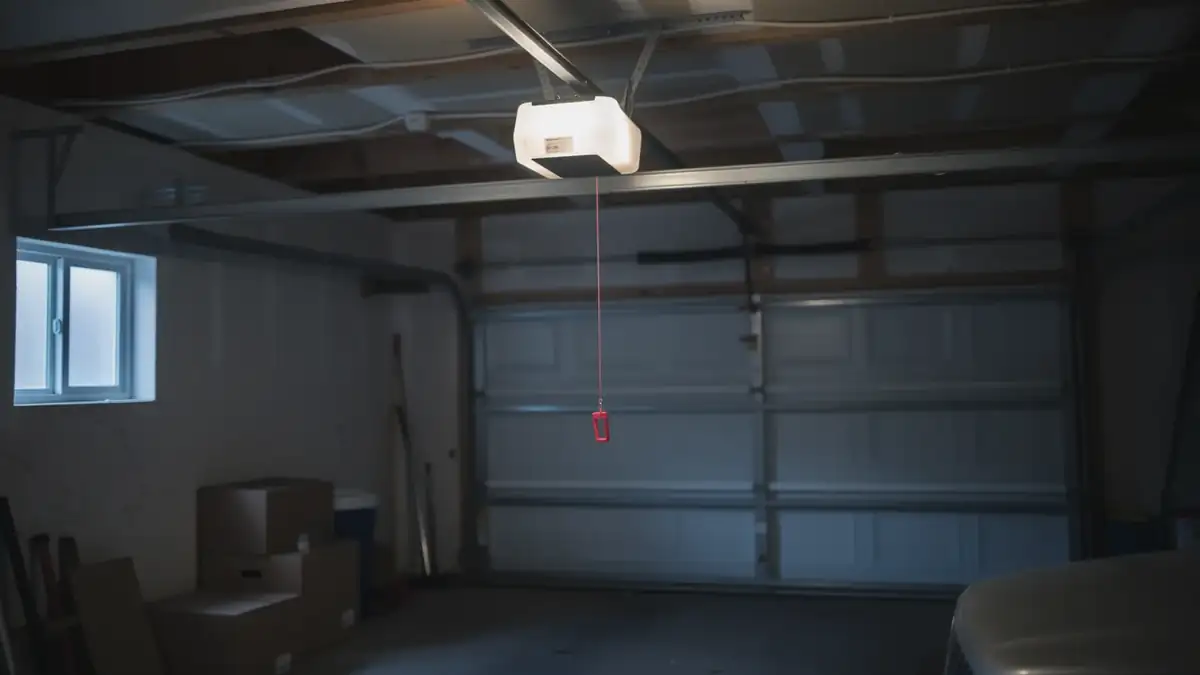
Most houses in Bay City went up between 1952 and 1994, with the typical home dating to 1969, which means a lot of garage doors here still run on the chain-drive openers that shipped standard before battery backup was built in. Across the twelve named areas that make up this town, the bulk of that stock is 1960s and 70s construction, and the openers in those garages have usually been swapped once already, often with a like-for-like replacement that didn't add backup power either. So when the power cuts, the door just stops. No chime, no light, no half-second of travel before it locks up. The motor loses its reference point for where the door was in its cycle, and depending on the model, it may need to be reset by hand once power comes back. If you're mid-cycle when the outage hits, the door can end up stuck half-open, which is worse than fully closed for security and for keeping cold air out. The fix people reach for first is usually the manual release cord, which gets the door moving by hand but does nothing to restore the opener's memory of its position once the power returns.
What the Weather Here Does to It
Bay City sits in a cold-severe climate band, and that matters more for openers than people expect. Cold doesn't just slow a chain drive down, it goes after the battery backup units that are supposed to solve the power-cut problem in the first place. Lithium and lead-acid backups both lose usable capacity as the temperature drops, and in an unheated garage in this band, a backup that tests fine in October can fail to finish even one full cycle in January. That's the part that catches people off guard: they installed a backup specifically so the power cutting out wouldn't leave them stuck, and the cold quietly took away the margin they thought they had. The outage itself is rarely the whole problem. It's the outage plus the cold plus a battery that was already working harder than it should to move a door with stiffened weatherstripping and thickened lubricant on the rollers. Each one on its own is manageable. Stacked together, on the kind of night this climate produces, they're what actually strands a car in the garage.
What It Costs
I don't have a flat number to hand you here, and I'd rather say that than make one up. What drives the cost is the opener's drive type, whether the existing wiring can take a backup unit without a rewire, and how old the rest of the hardware is. Across this service area, median household income runs $72,558, and a mid-range battery backup addition sits within reach for most owners here without being a casual add-on, which is why a lot of people wait until a power cut leaves them stuck before they look into it. The honest tradeoff: a backup unit bolted onto a chain-drive opener from the 1970s or 80s is money spent propping up a motor that's also due for replacement soon anyway. In that case the better spend is usually a new opener with backup built in, not a backup unit retrofitted to the old one. I can walk through which applies to your setup, but I'm not going to quote a number for a job I haven't looked at.
Where People Go Wrong
The biggest mistake is treating the manual release cord as a fix instead of a stopgap. Pulling it gets the door open by hand, but if you leave the opener disengaged and the power comes back while you're out, the door can be re-engaged in a position the motor doesn't recognize, which is how you end up with a door that reverses itself or won't close all the way. Second mistake: assuming a battery backup installed years ago still performs the way it did when new. In a cold-severe band like this one, those batteries degrade faster than owners expect, and the only way to know if yours will hold up is to test it in the cold, not just confirm the light turns on. Third, people in the areas further out, toward Essexville or Kawkawlin for instance, sometimes assume outages hit them differently than closer in. They're in the same climate band, so the cold-and-battery problem is the same problem, not a smaller version of it. None of this is exotic. It's just easy to ignore until the one night it isn't.
Will a battery backup keep my opener working during a power cut in winter?
It depends on the battery's age and the cold. In Bay City's cold-severe climate, backups lose capacity fast in an unheated garage, and a unit that's a few years old may not finish a full cycle on the coldest nights even though it worked fine testing it indoors.
My garage door opener stopped working after the power came back on, what happened?
Most chain-drive openers from Bay City's older housing stock lose track of the door's position during an outage. If the door was mid-cycle, the motor needs to be reset, and in some cases the manual release needs to be re-engaged carefully to avoid the door reversing on the next cycle.
Is it worth adding a battery backup to an old opener?
If the opener is already decades old, a backup bolted onto it is money spent propping up a motor that's likely due anyway. A new opener with backup built in usually makes more sense than retrofitting an old one, but it depends on the unit and the wiring.
Ready to get your garage door sorted?
Tell us what it’s doing and where you are in Bay City - we’ll take it from there.