What Causes It Around Here
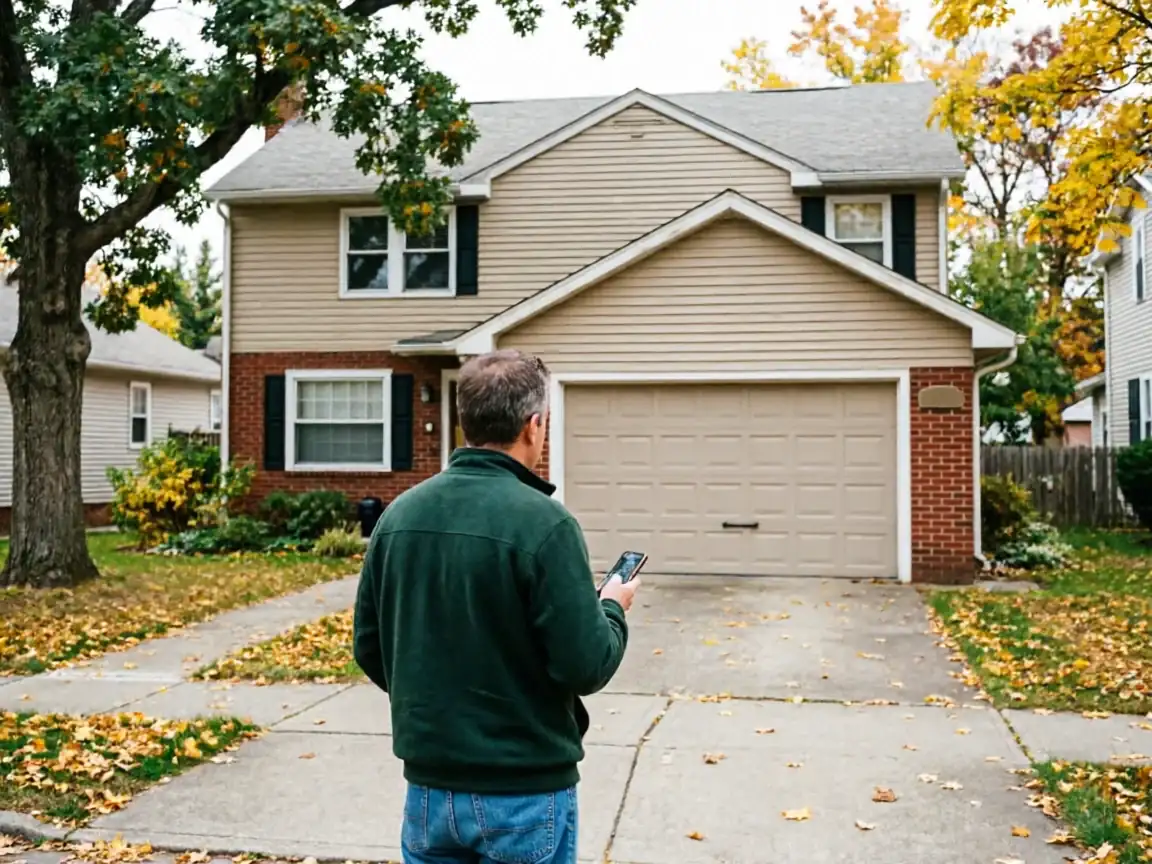
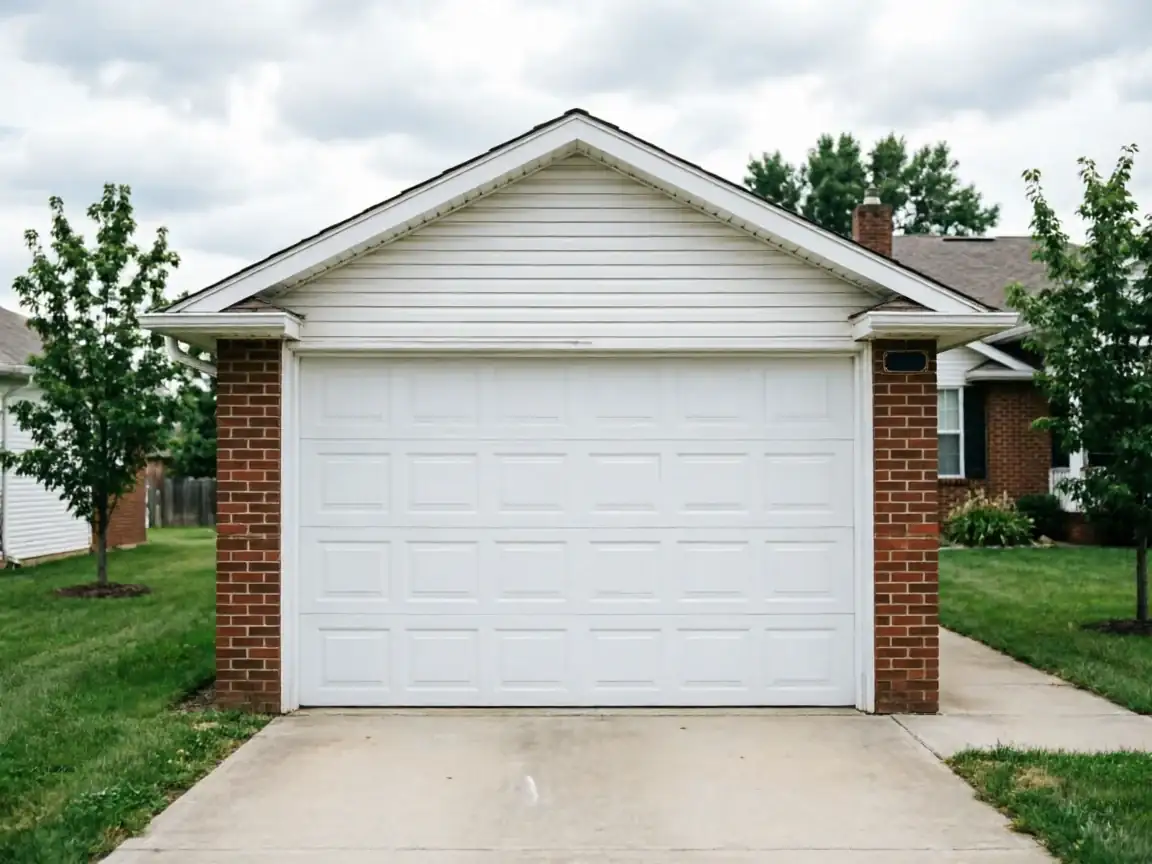
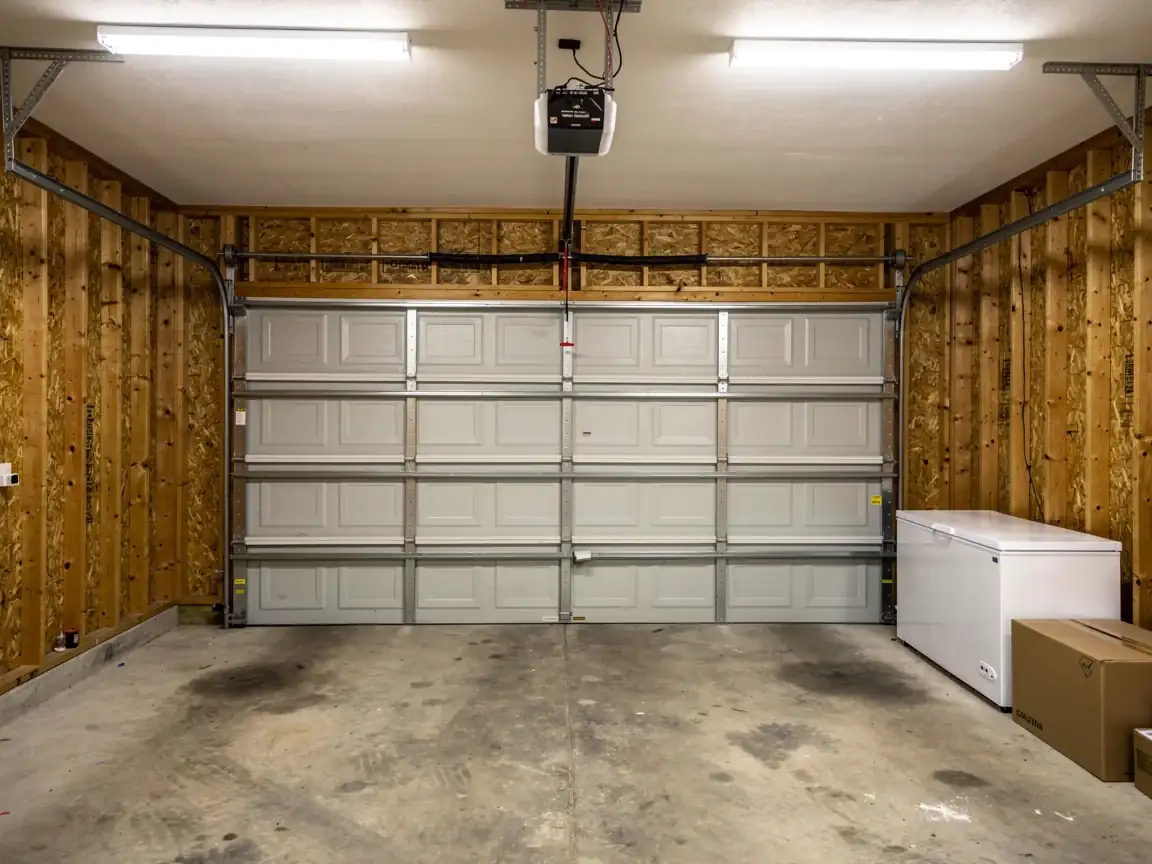
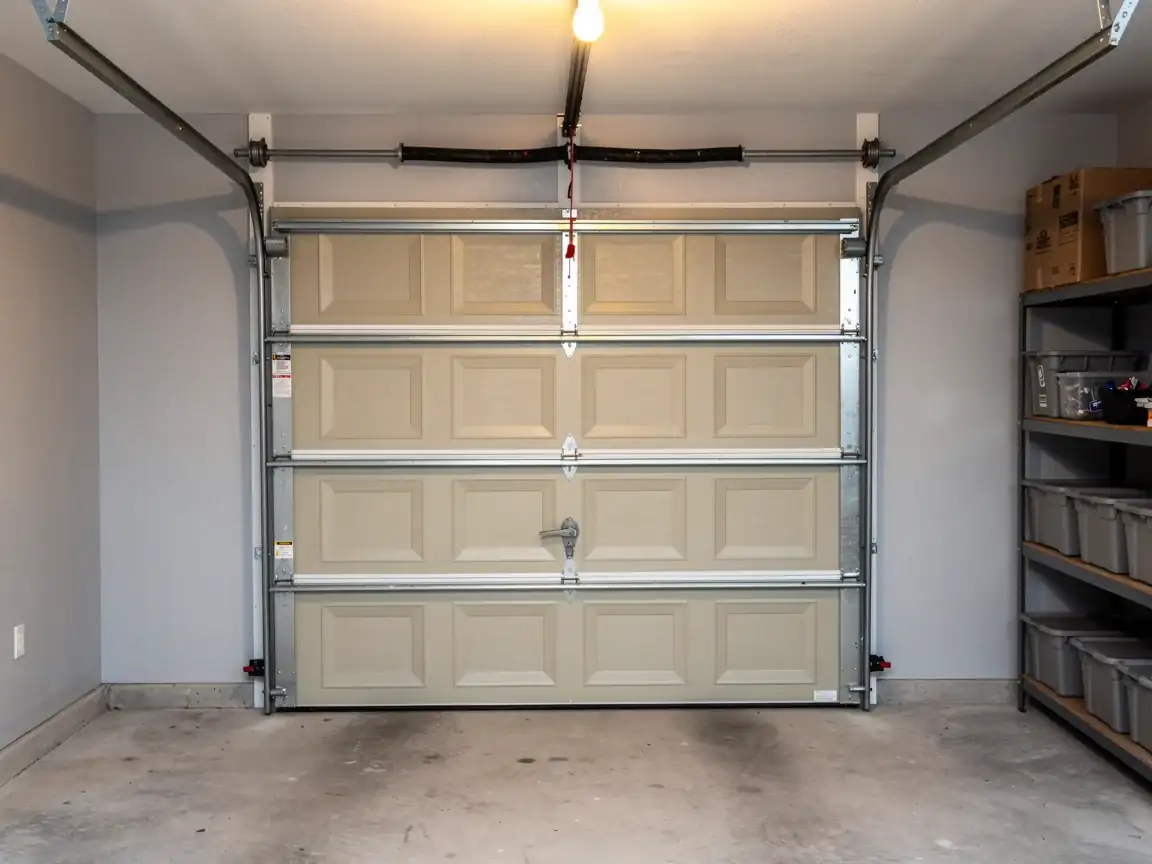
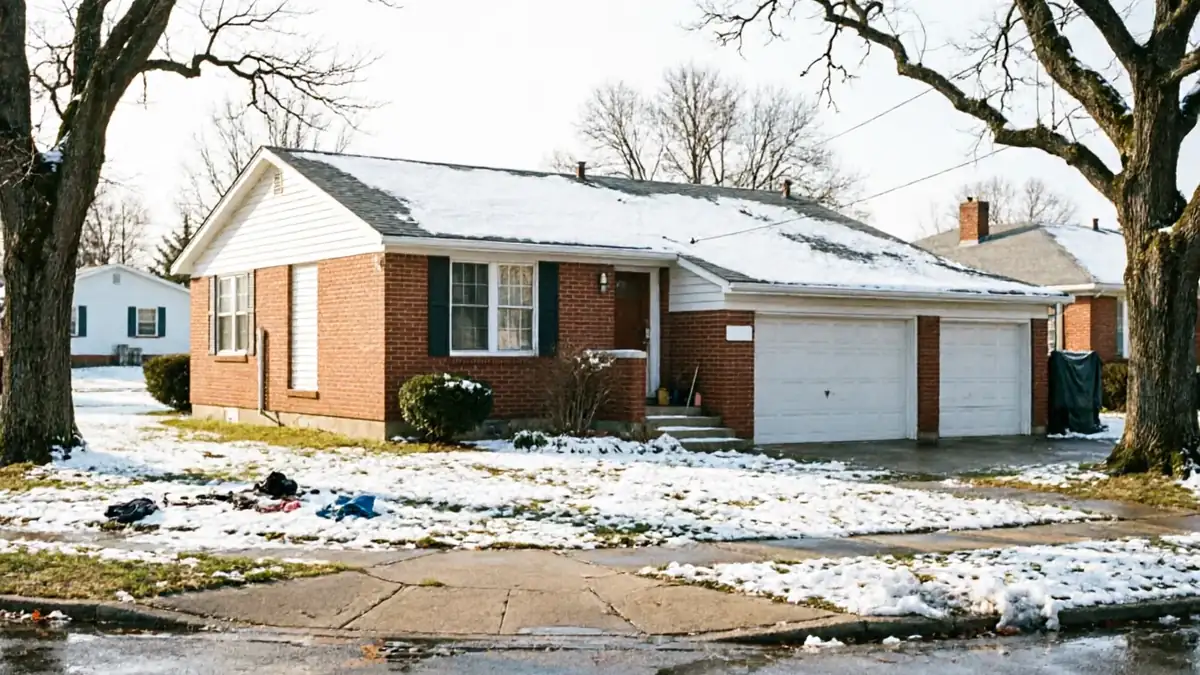
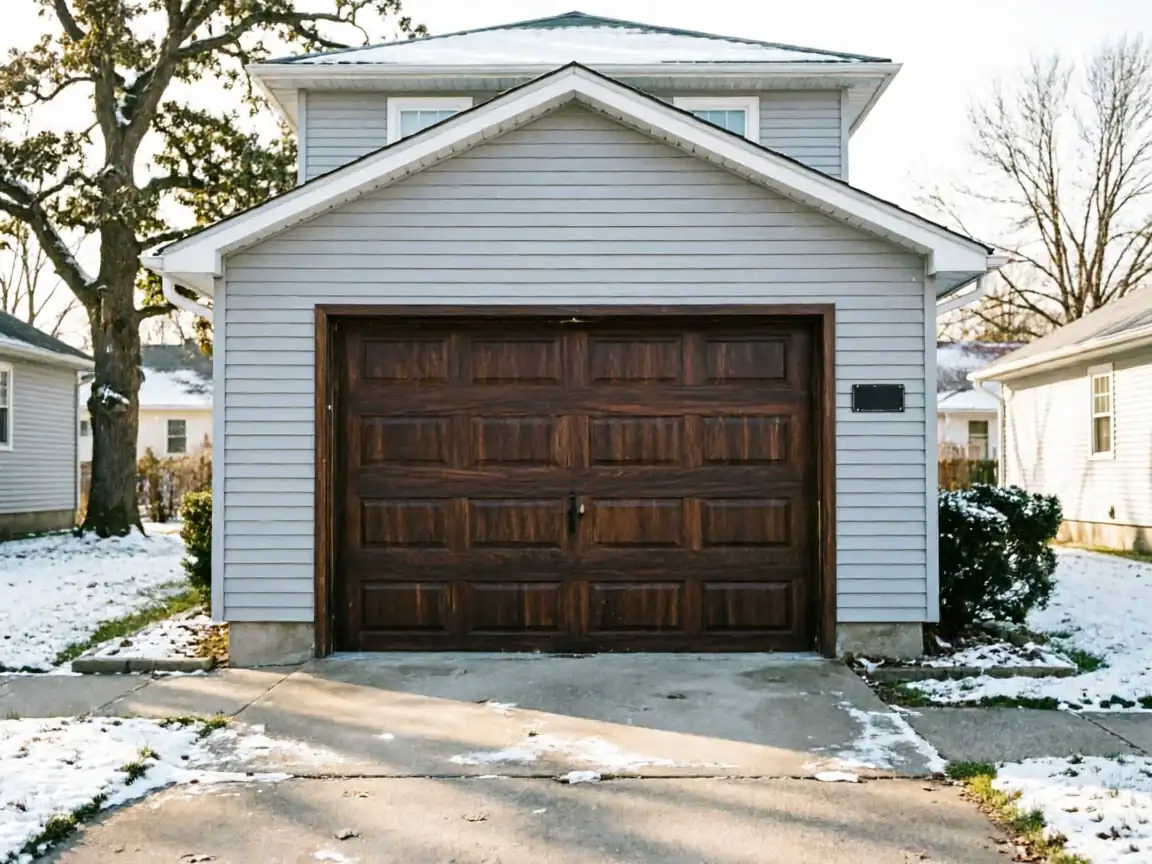
Three things line up in this town that don't line up everywhere Bay City Garage Door Pros drives to. First, the housing age: a 1952 median build year means a lot of these garages still carry their second or third track installation, not the first, and old mounting holes in a warped jamb give a new track less to grip. Second, this is a cold-climate service area, and repeated freeze-thaw at the slab edge shifts the track's bottom bracket a few degrees over the years without anyone noticing until the door jumps. Third, Essexville sits tight against Bay City, about three miles out, so the same weather swings and the same era of construction that shaped the city's older neighborhoods shaped this one too - this isn't a newer subdivision with uniform 1990s hardware, it's a mix of original and replaced parts on lots that were built up close together. That combination of old track gauge and slab movement is what we find when a door comes off clean rather than from obvious impact or a snapped cable.
What It Costs
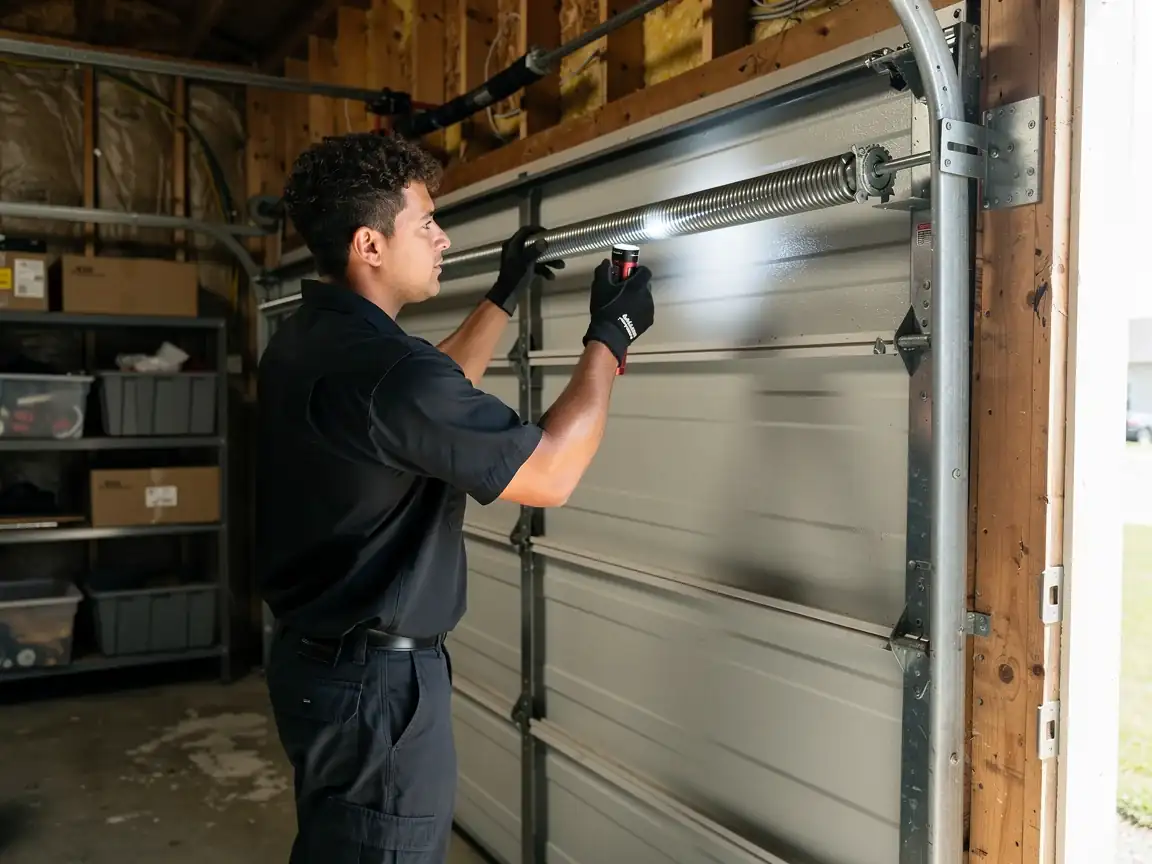
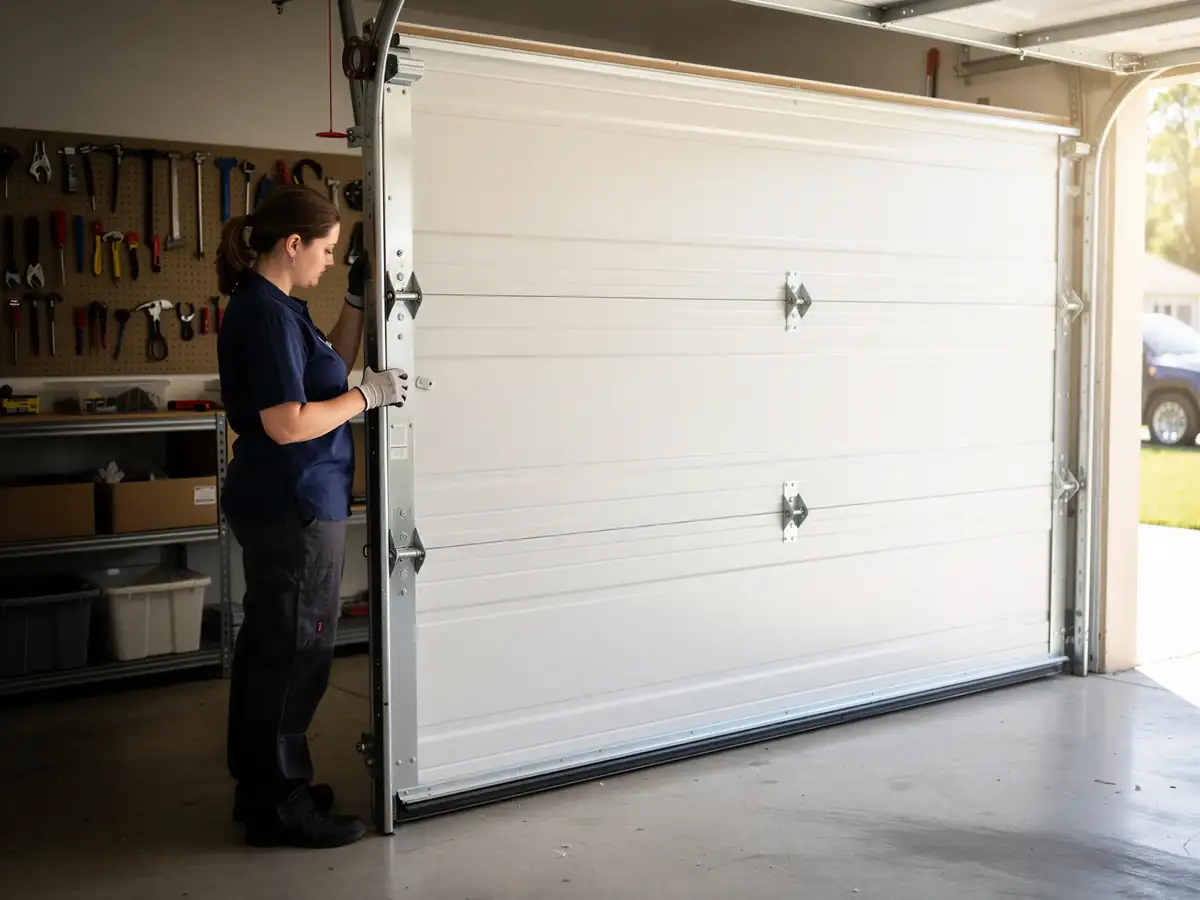
I don't have pricing figures specific to this job in front of me to quote here, and I'm not going to guess at a number. What I can tell you is what drives the cost up or down on an off-track call: whether the track itself needs replacing or just realigning, whether a roller or cable failure caused the jump, and whether the door has to come off the opener entirely to reset it safely. A straightforward realignment on a track that's still true is a different job than swapping bent sections on a 1950s-era rail where the bracket spacing doesn't match current stock. We'll look at the actual track before we tell you which one you've got.
What Is on the Truck
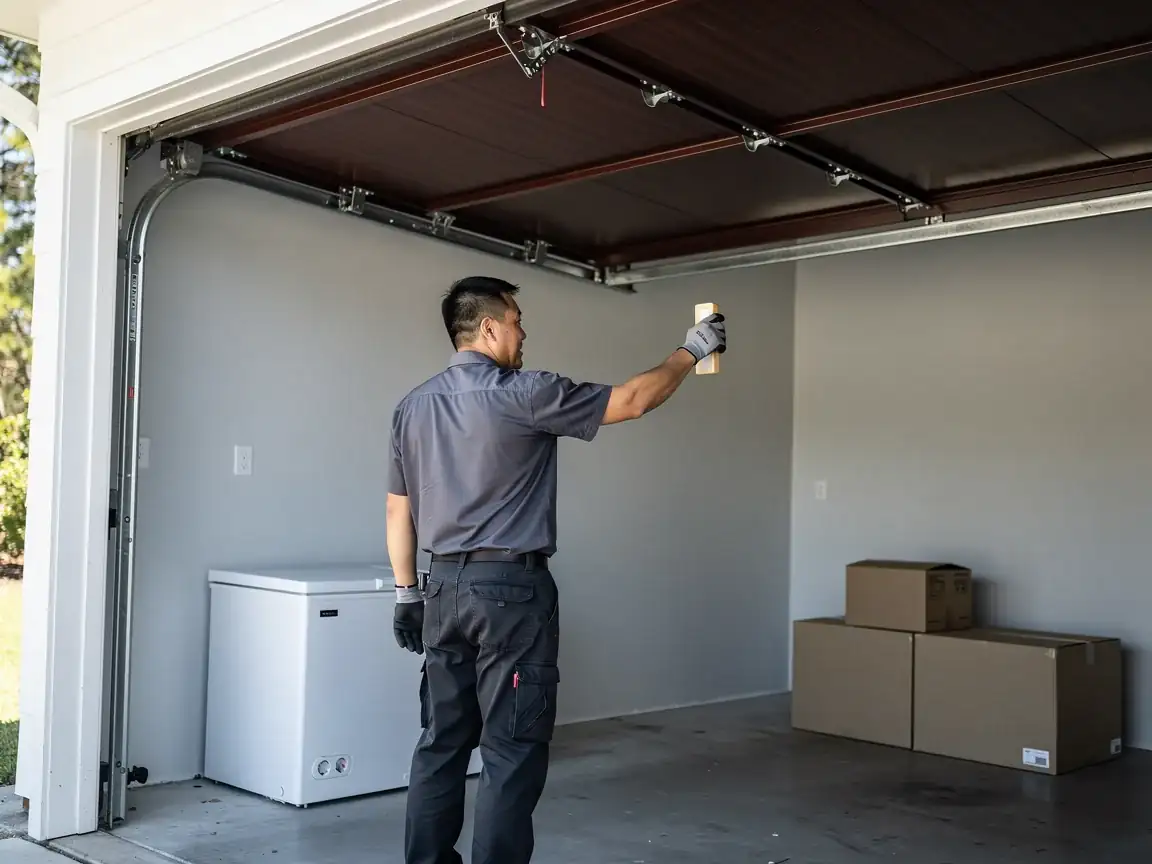
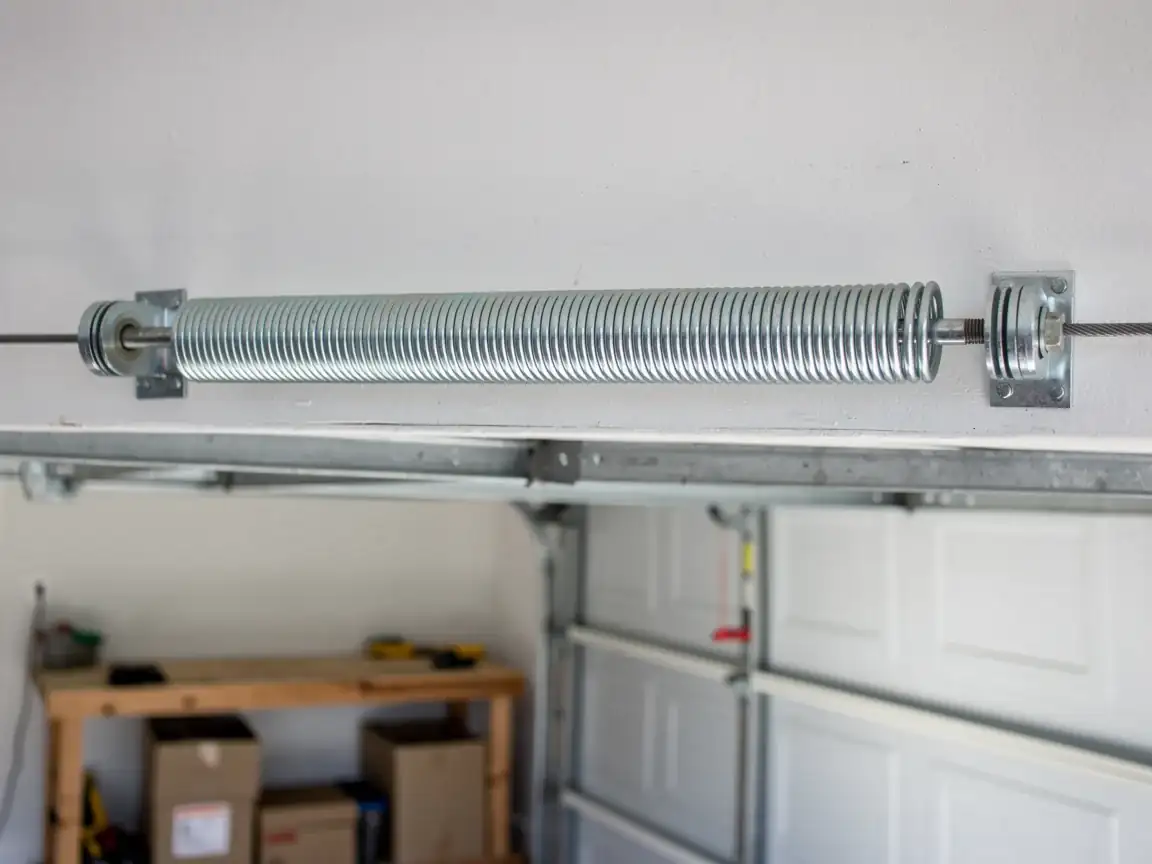
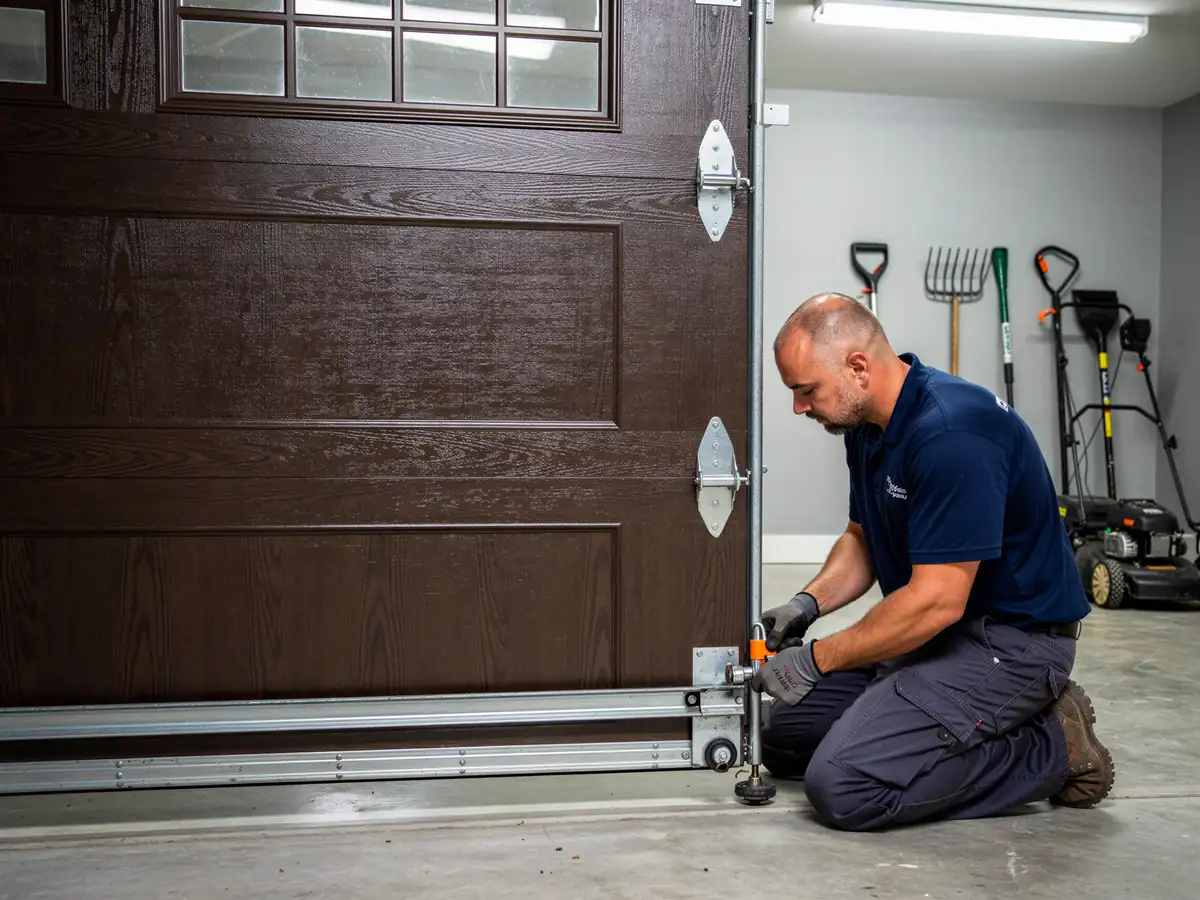
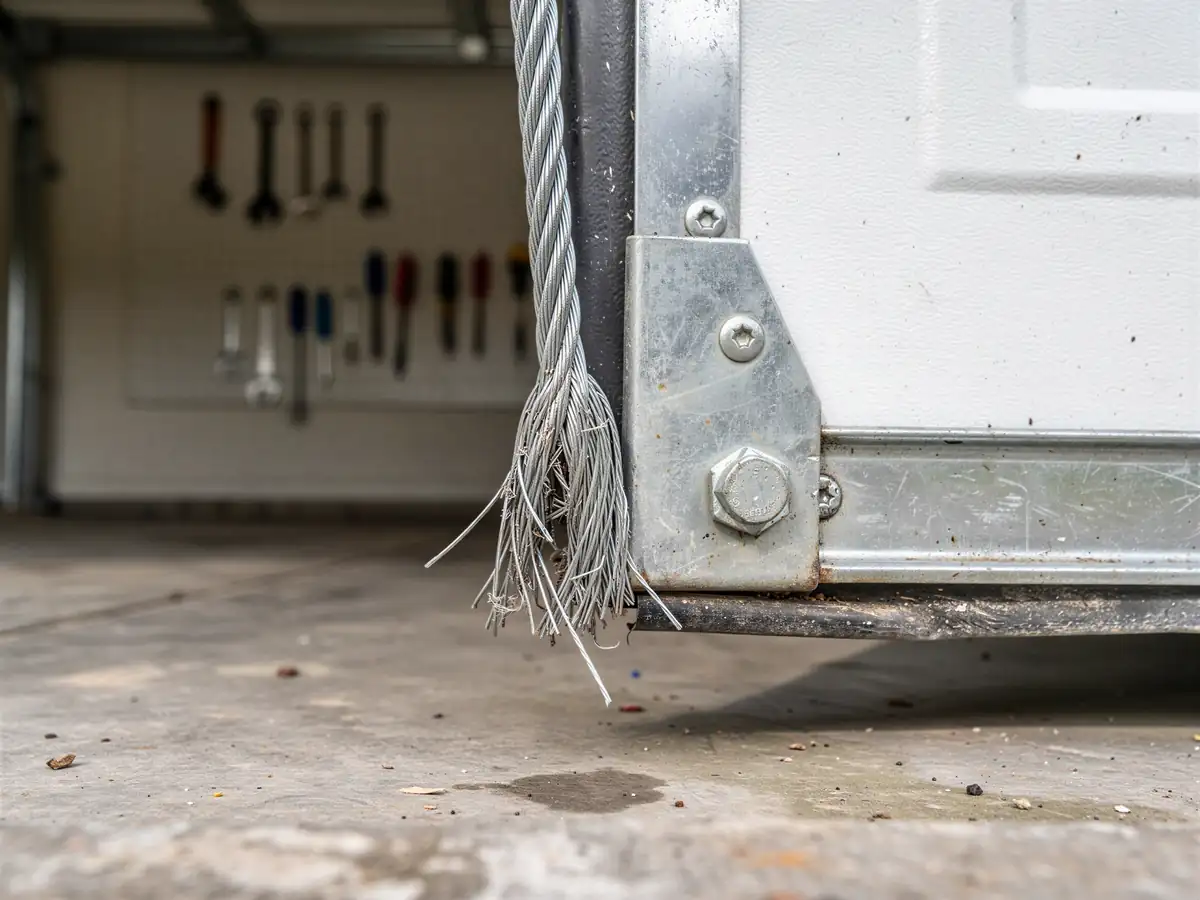
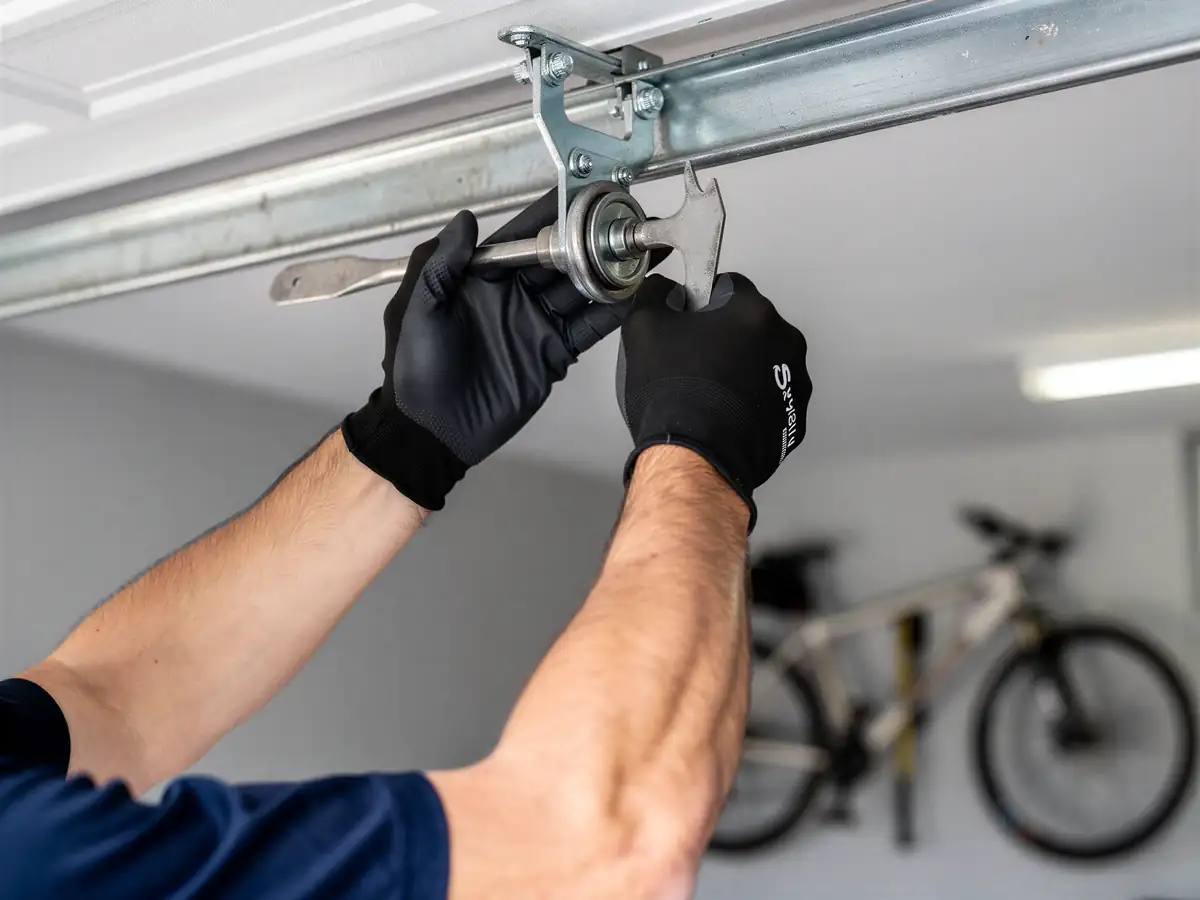
For an off-track call we bring track sections in standard modern gauge, replacement rollers (nylon and steel), cable, end bearing plates, and the brackets and lags needed to remount a rail on a jamb that's taken some damage. What we can't always match on the first trip is an exact original bracket spacing from a 1950s installation - those vary enough from house to house in this area that sometimes the fix is a new hole pattern rather than reusing the old one. We'd rather tell you that up front than make a second trip look like an oversight.