Where This Job Goes Sideways
Most of the off-track calls we get from Freeland don't look like the ones we get from the older side of Bay City
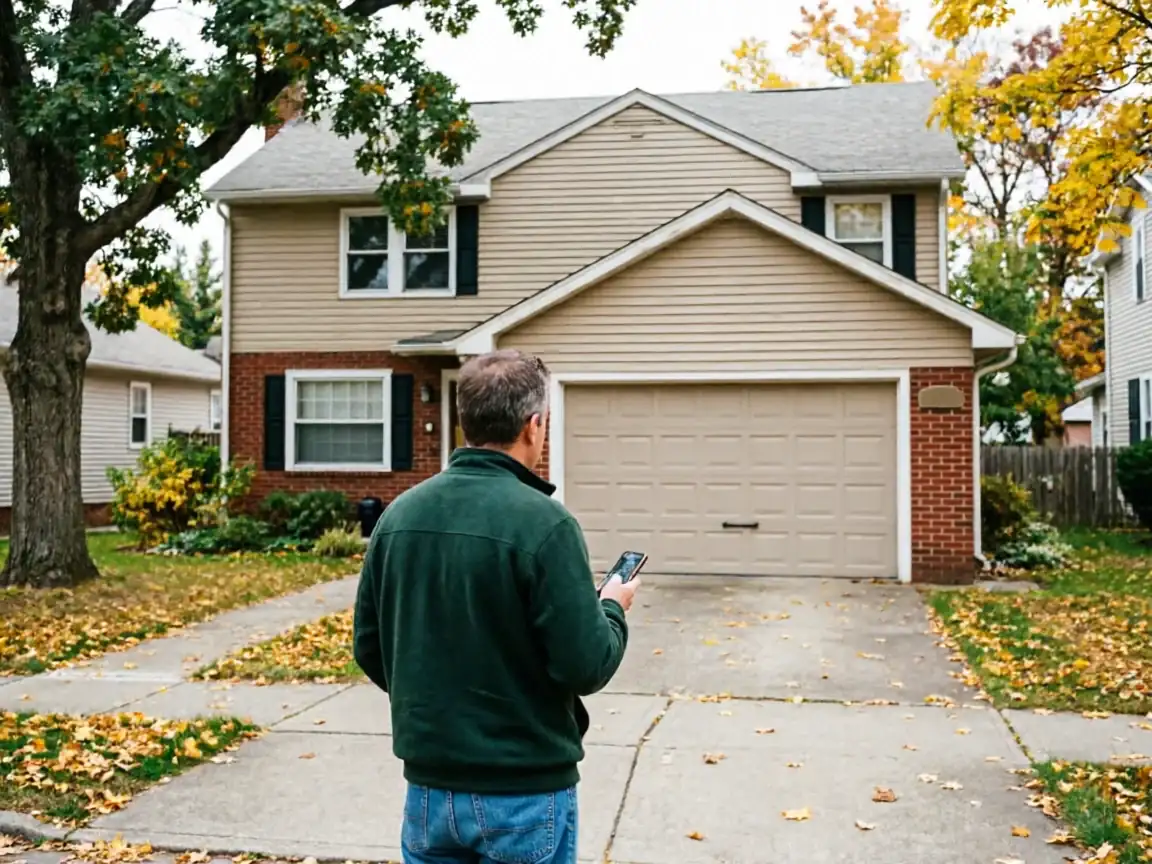
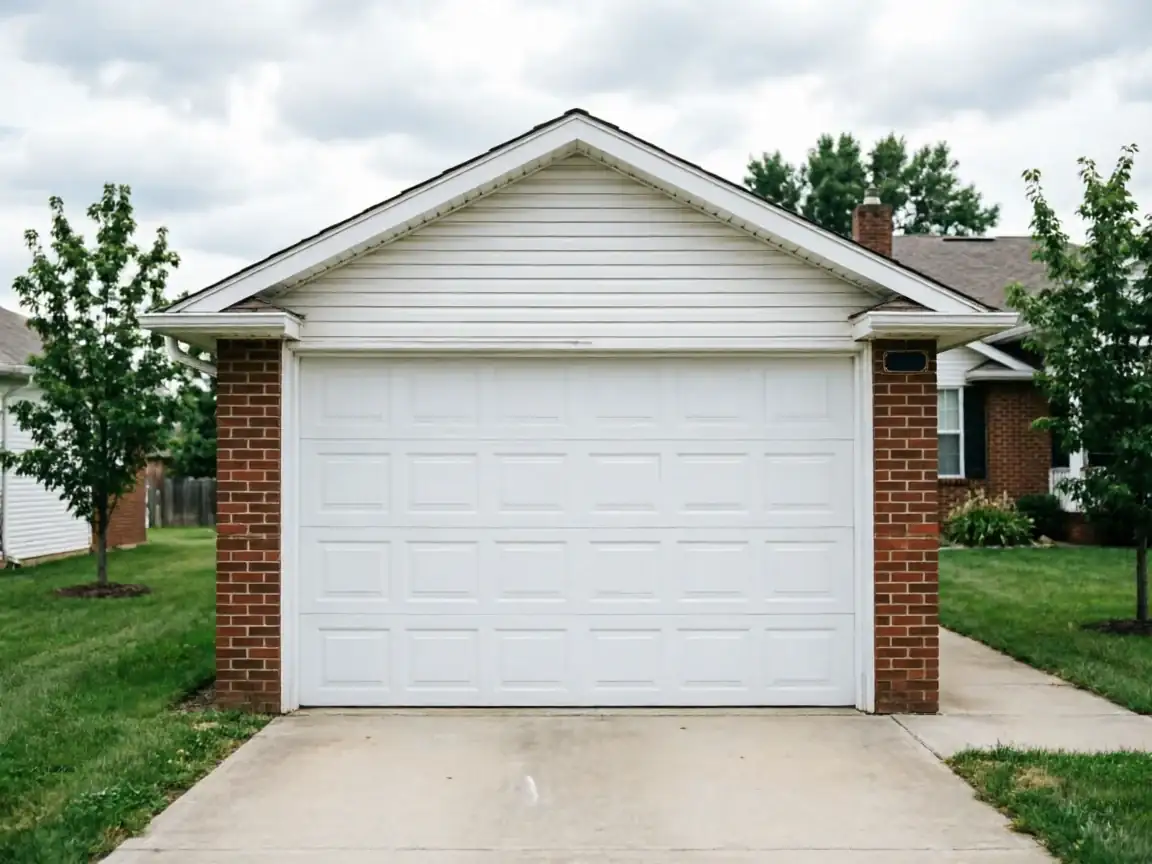
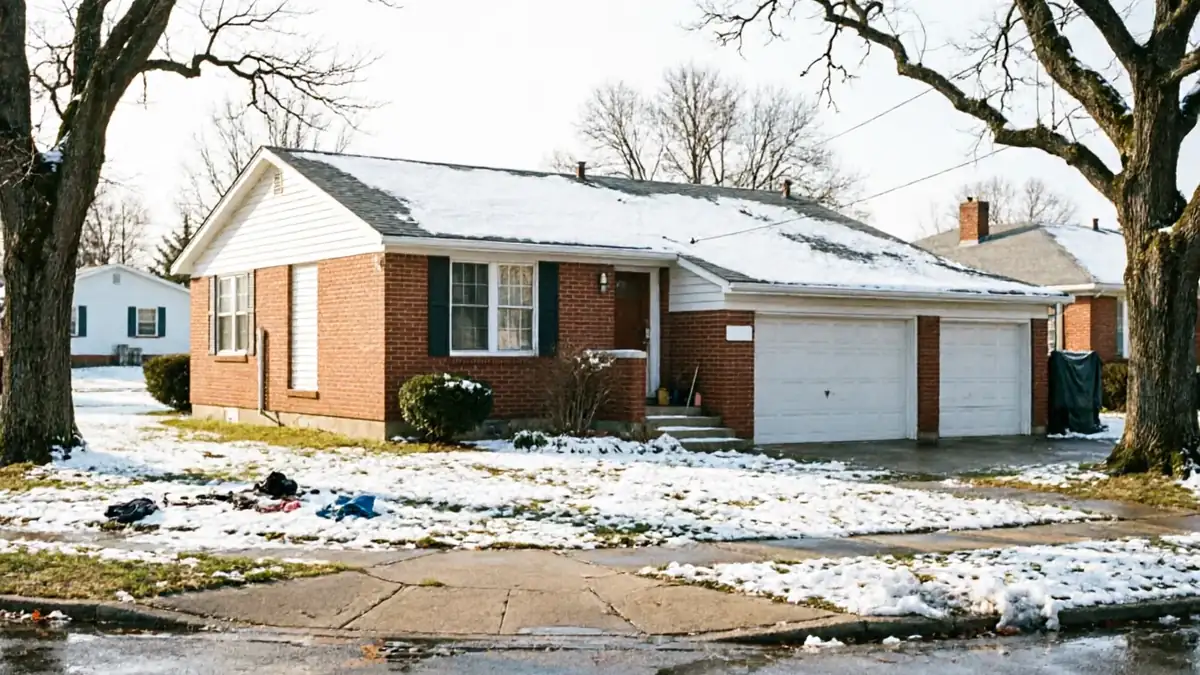
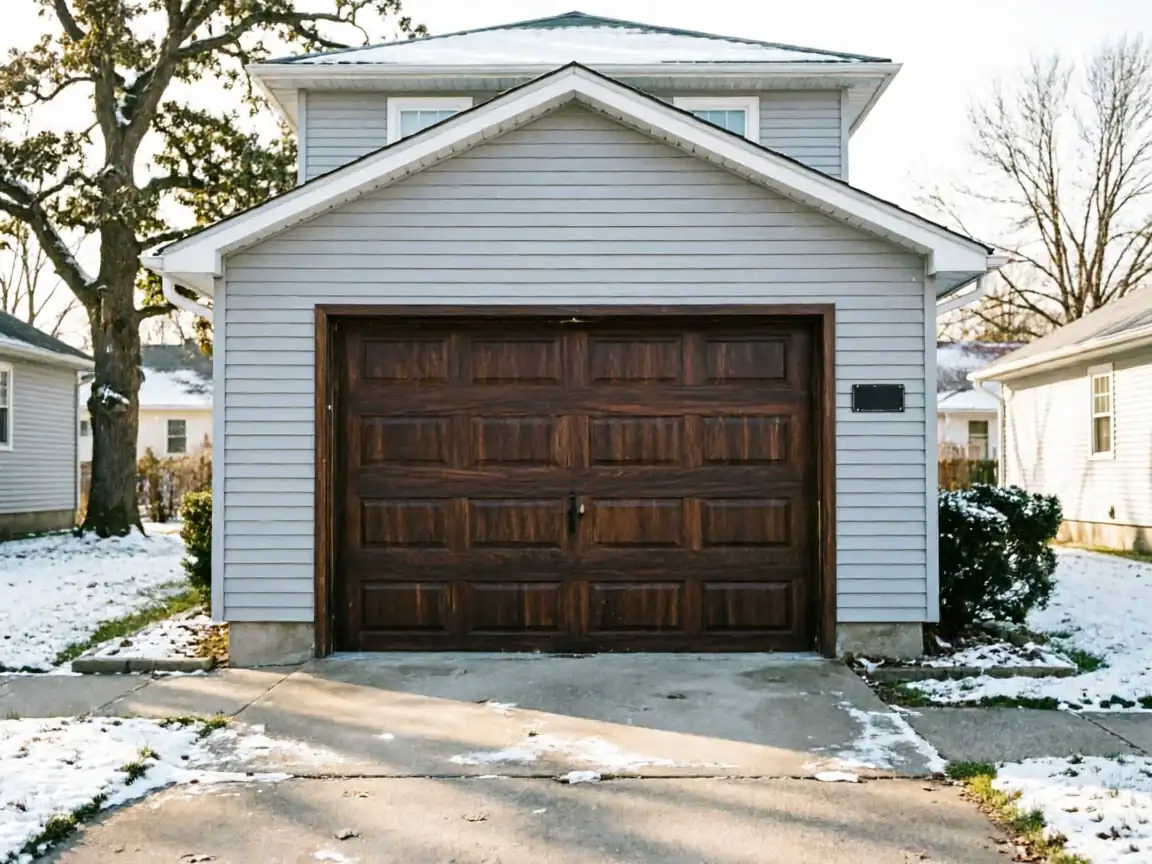
Freeland's housing stock runs newer - the median build year here sits around 1994, a good 25 years past the service area's overall median of 1969. That means steel doors on factory rollers and track brackets lag-bolted into newer framing, not the thin single-layer doors on side hardware you find in a lot of the older neighborhoods we cover.
- 25 years
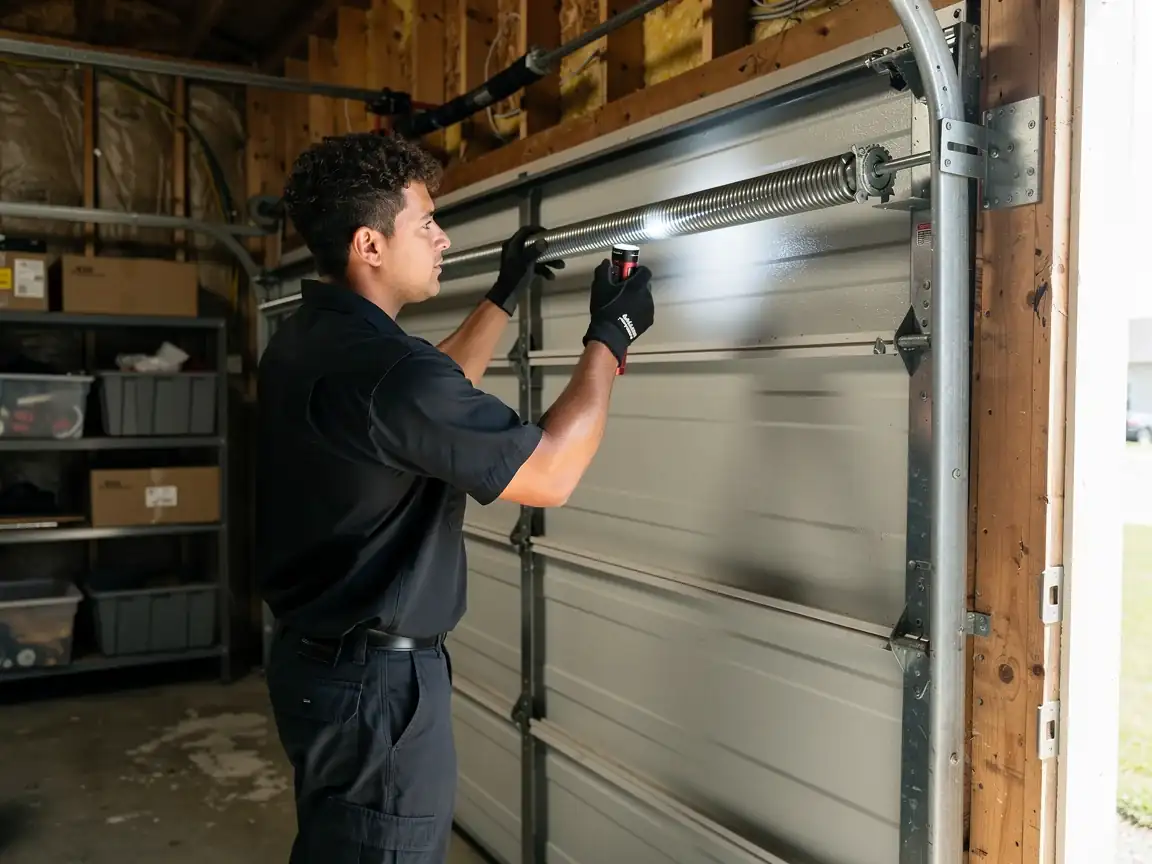
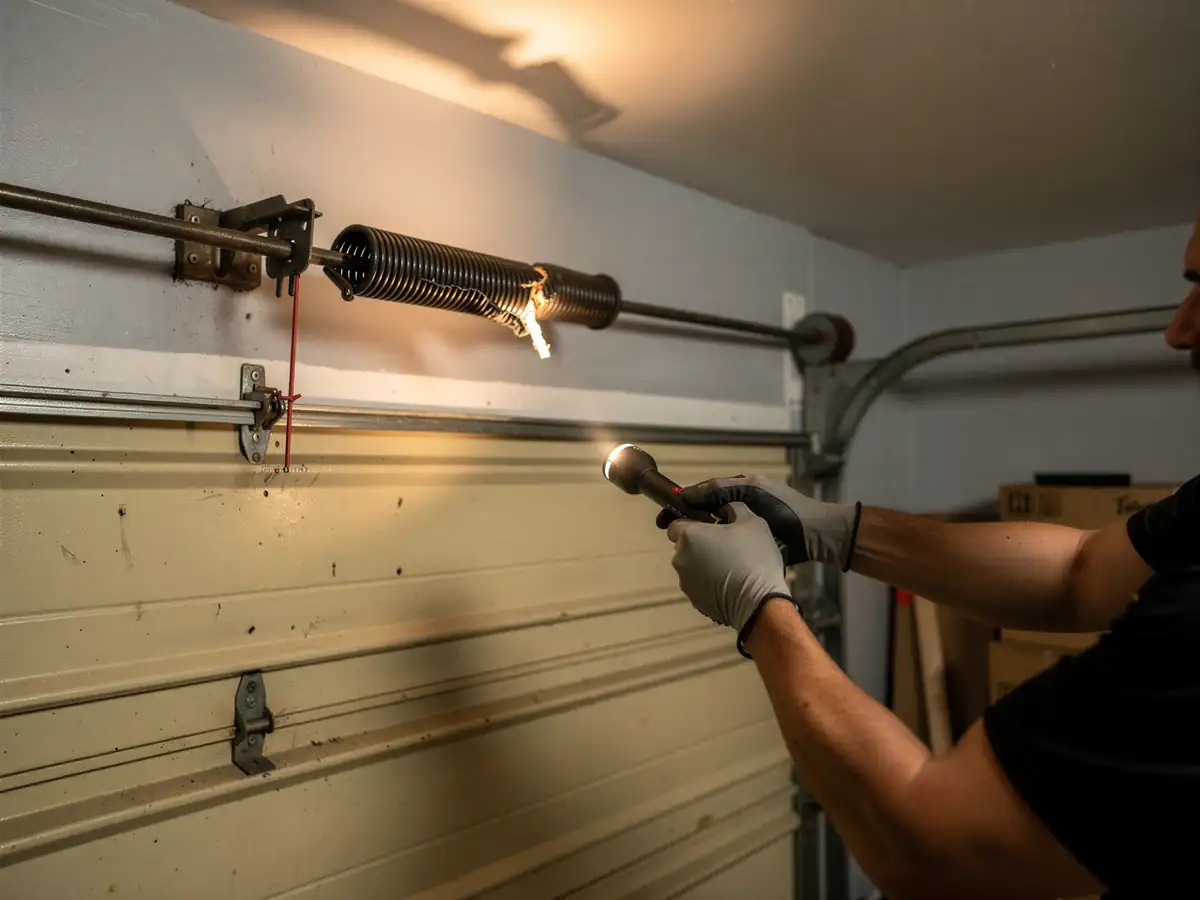
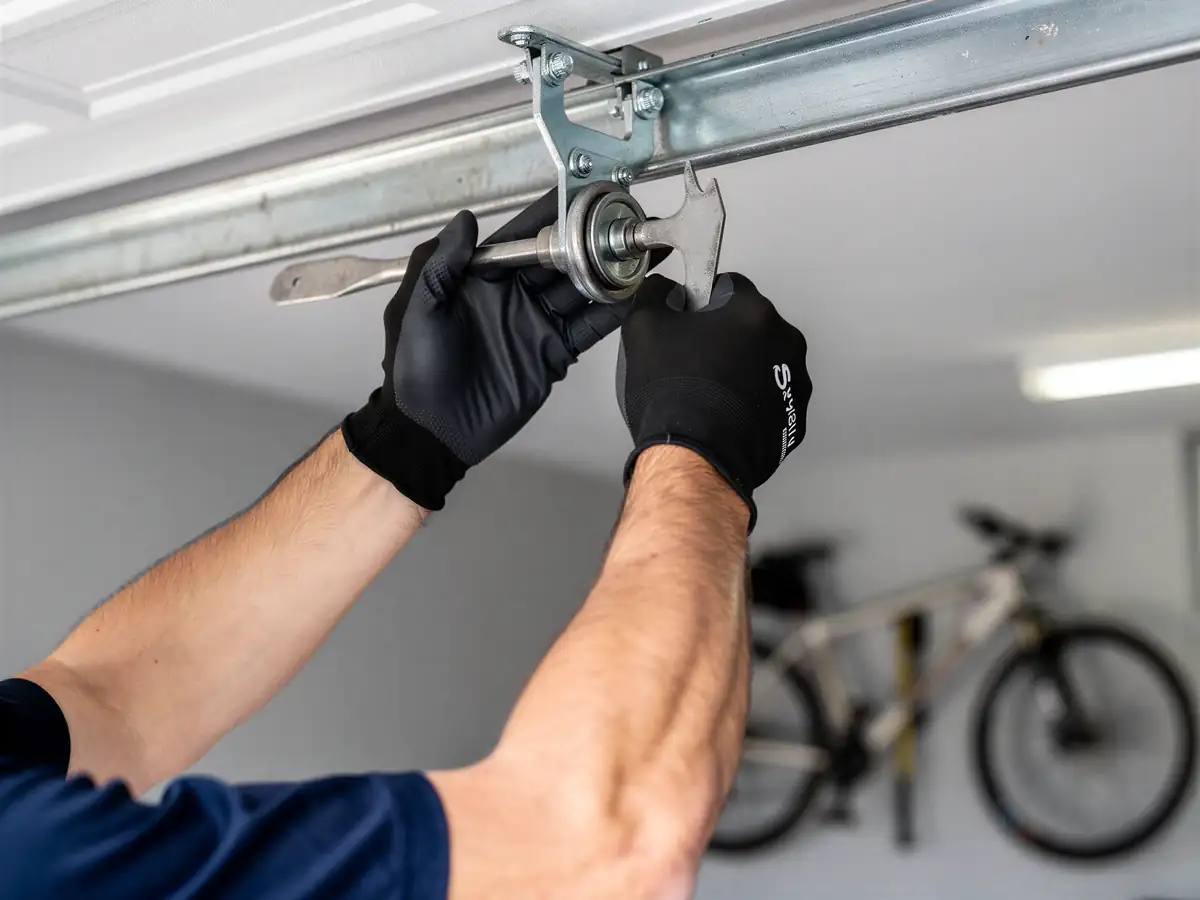
The failure pattern that shows up here is usually one bracket working loose at the top roller
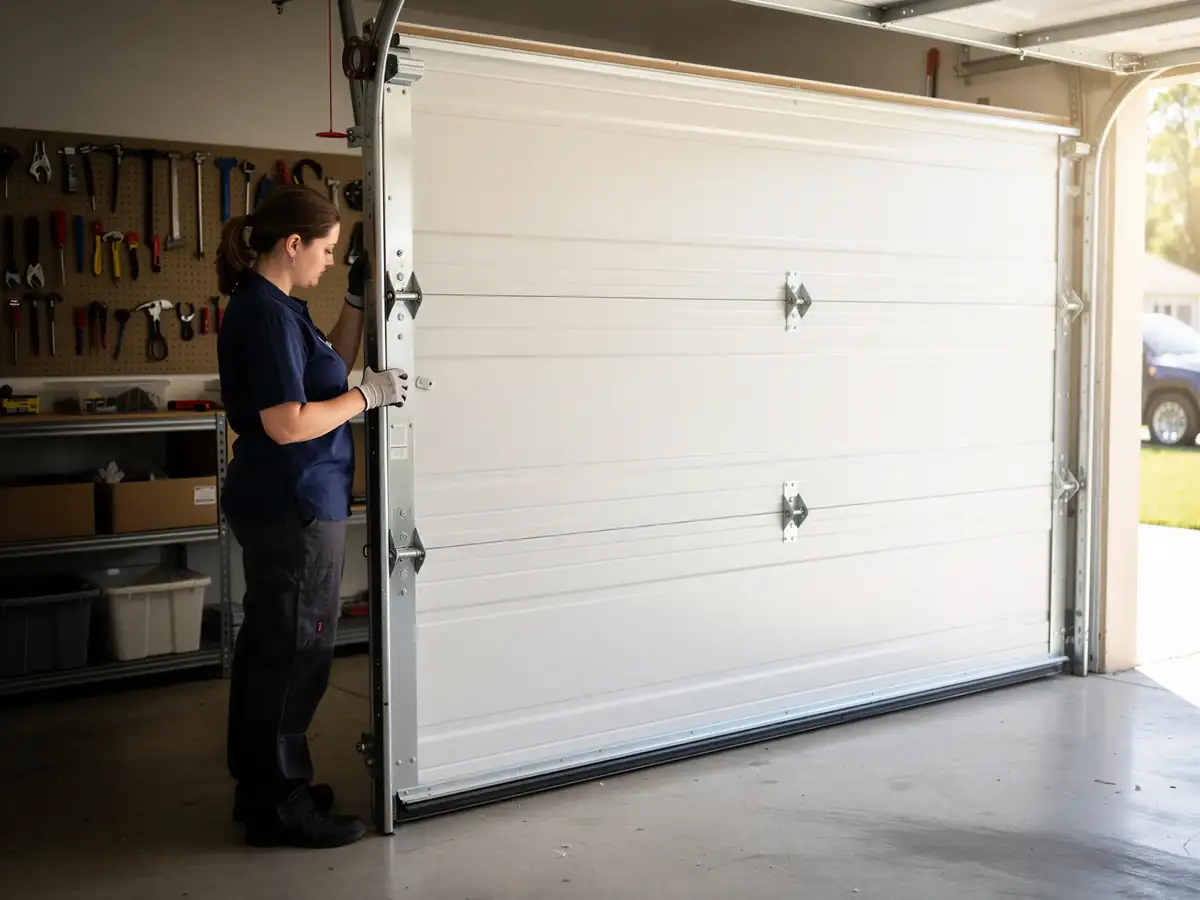
Or a track that's been bumped hard enough to spread at a seam - not the wholesale rust-and-sag you see on 1960s track in older housing. The door comes off the rail on one side, cocks, and either binds halfway up or drops a corner on the way down. On a newer door that's still square and true, that's almost always a hardware problem, not a door problem, and it's usually a shorter fix than the owner expects.
What Causes It Around Here
Freeland sits inside the same cold-climate band as the rest of the area we work, and that matters even with newer doors. Ice buildup at the bottom of the track in a hard freeze can catch a roller and walk it off the rail the next time the door cycles. That's a weather problem, not a workmanship problem, and it happens to well-built doors as readily as old ones.
The other driver we see on newer stock is a bracket that was never quite torqued right at installation. A loose top roller bracket holds for years under normal use, then lets go the first time a door gets slammed shut or a kid backs a bike into it. Because Freeland's homes are newer on average, we see less flat-out rust-through on track than in the older parts of the service area - but we see more impact and loose-hardware cases, because the stock is still young enough that fatigue hasn't set in yet.
Getting It Booked In
We run this job out of Bay City, about 12 miles south of Freeland, so there's no local branch to call - just the one number and a truck that comes out to you. We don't promise a same-hour window here and won't pretend otherwise; the drive is part of the job, and we tell you that up front when you call.
What we need from you on the phone: whether the door is stuck open, stuck shut, or hanging at an angle, and whether you can see the roller sitting outside the track or just loose in it. That tells us whether this is a bracket re-set or whether a panel's been bent enough that it needs straightening or replacing before the door will track true again.
What Is on the Truck
For an off-track call on newer stock like Freeland's
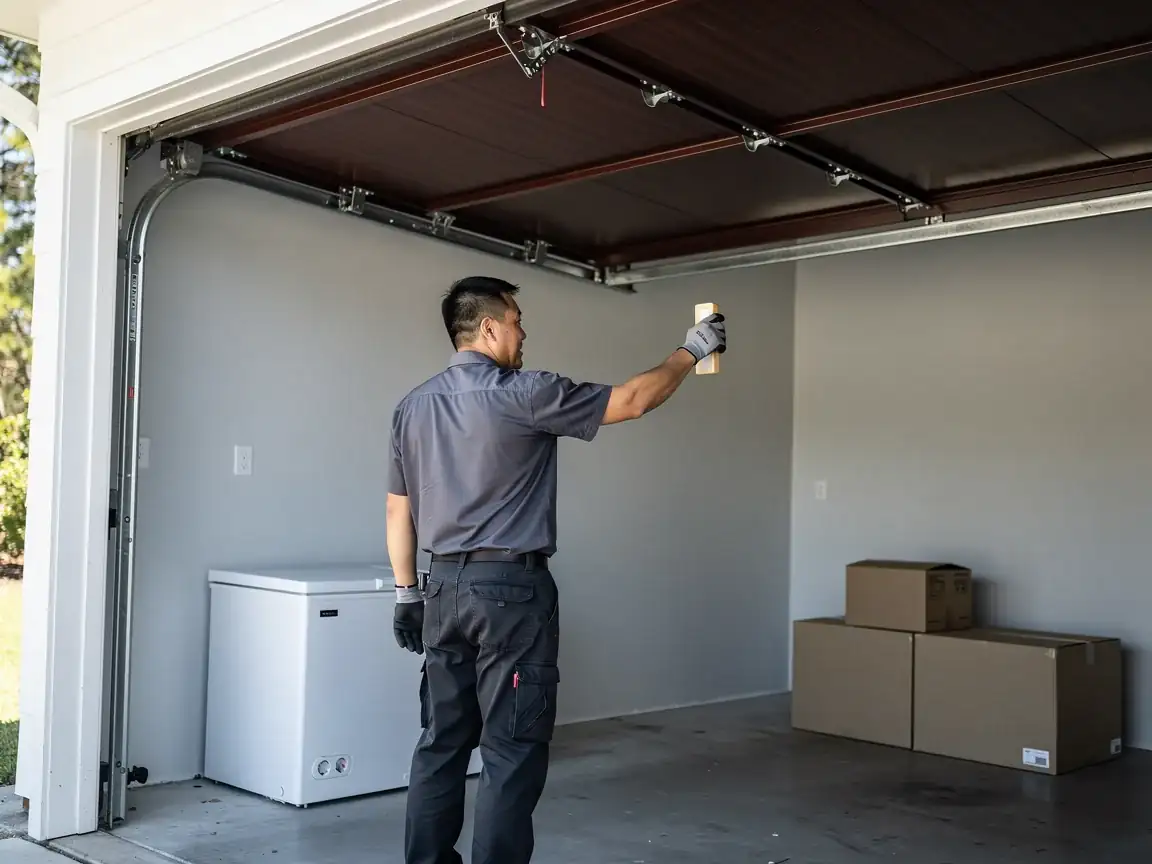
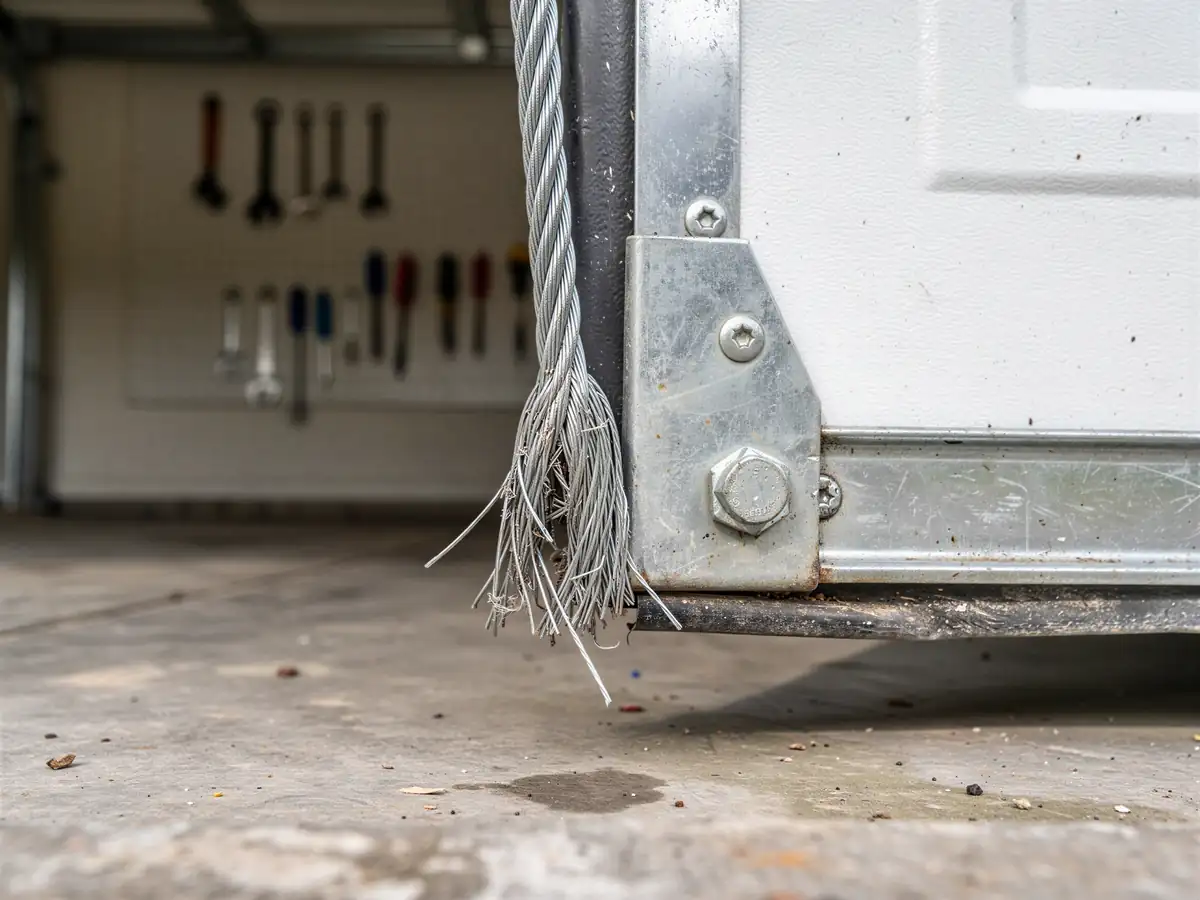
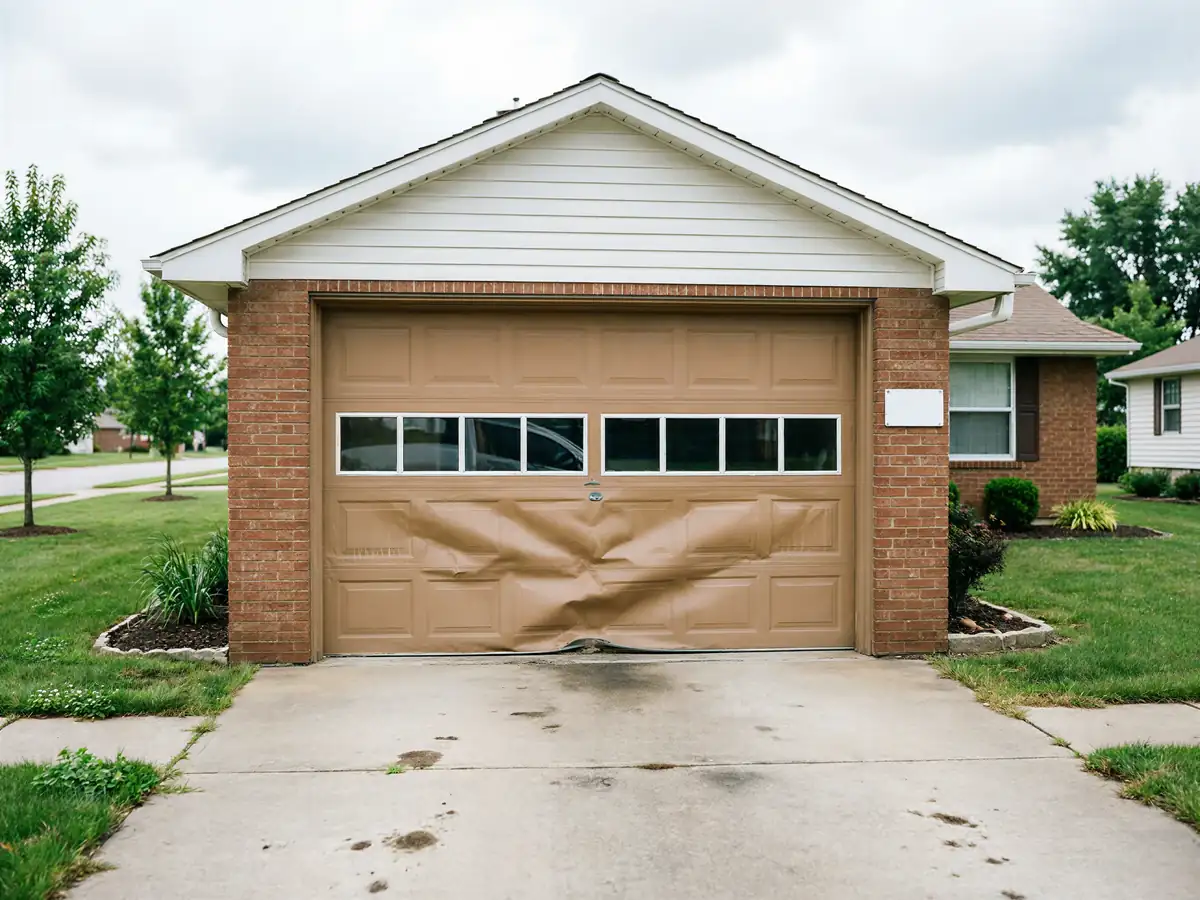
The truck carries replacement rollers (steel and nylon), track sections in standard widths, lag bolts and brackets sized for the lighter-gauge steel these doors typically use, and a level for checking whether the vertical track is still plumb after an impact. We also carry strut reinforcement for panels, since a lot of the two-car doors built in this era use a thinner steel skin that can oil-can or dent under the same impact that knocks the roller loose.
What we don't carry
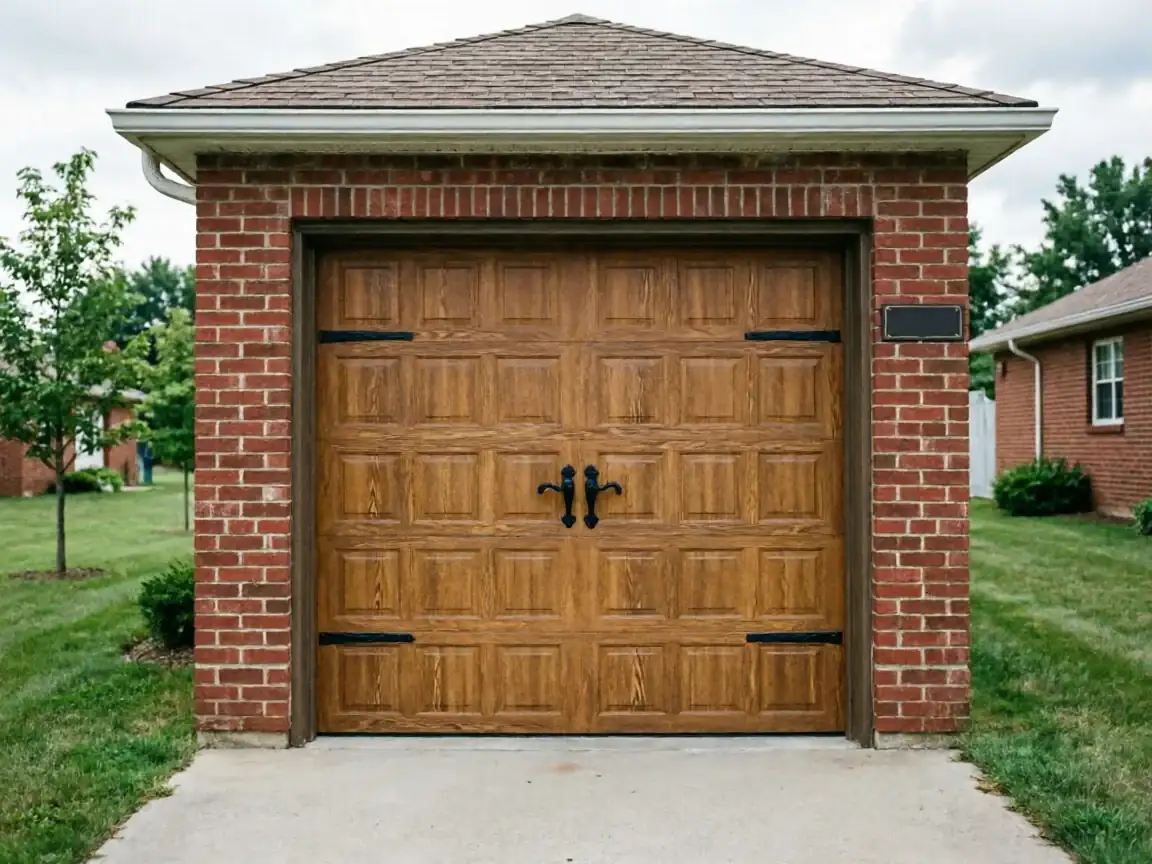
And won't pretend to: a stock match for every builder-grade panel color or woodgrain finish from the 1990s. If a single panel's cracked and the door's otherwise fine, we can usually source a close match, but an exact finish match on an older run of a discontinued model isn't something we guarantee sight unseen.
The Symptom
The door you're describing is probably hanging crooked in the opening, with one bottom corner lower than the other, or it's stopped partway through its travel and won't go up or down without grinding. On newer doors like the ones common in Freeland, this almost always traces to one roller that's come out of the vertical track on one side - you can often see a gap between the roller and the rail from inside the garage with the door partway open.
What it isn't, most of the time: a dead opener. The motor usually still runs fine; it's just fighting a door that's binding against a track it's no longer seated in. If you hear the opener straining and the door barely moves, stop running it. Forcing a door through a bind like that is how a bent bracket becomes a bent panel.
What the Repair Takes
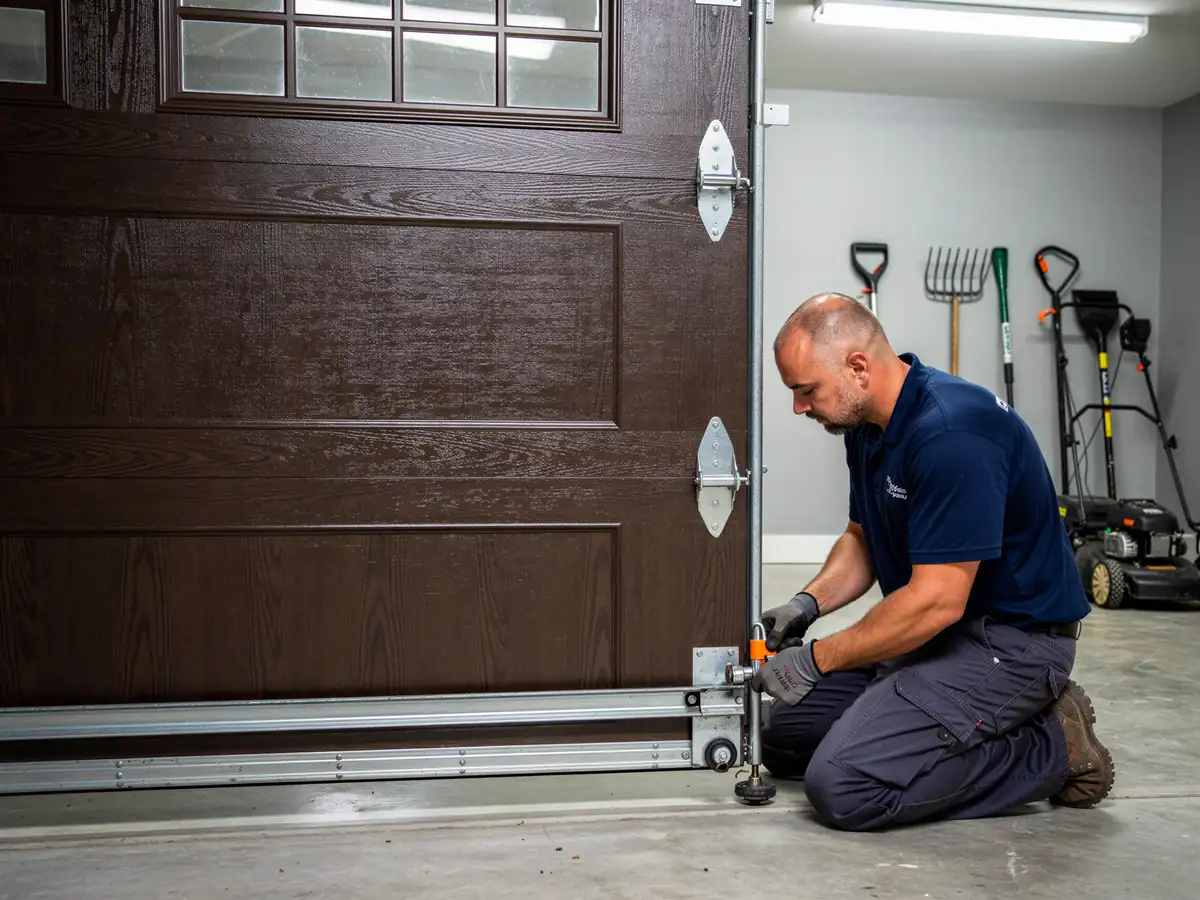
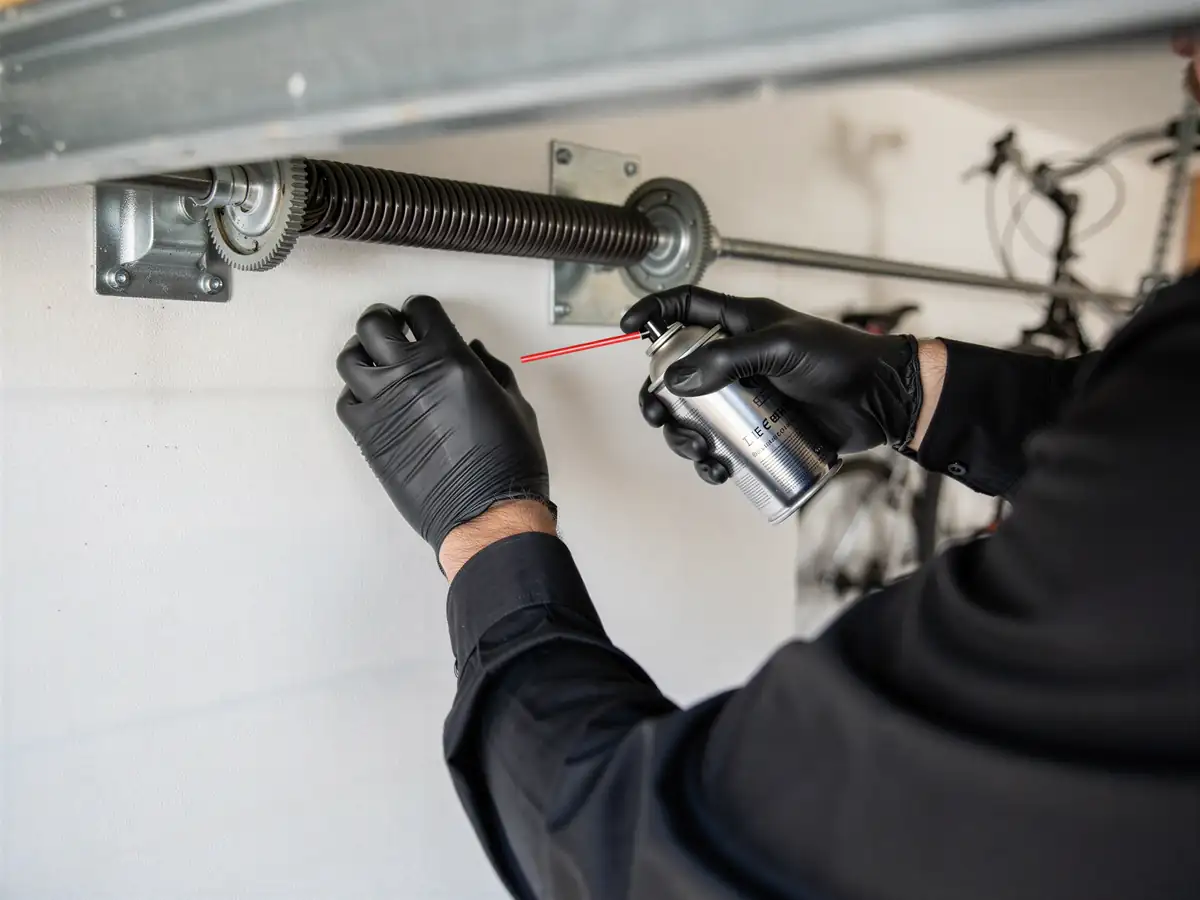
On a straightforward bracket or roller job - the kind we see most on Freeland's newer stock - we're talking about re-seating the roller, checking the bracket torque, and confirming the track is still plumb. If the track itself spread or bent on impact, that section gets replaced rather than hammered back into shape; bent track that's been straightened once tends to let go again under the next bump.
We won't try to save a track section that's cracked at the mounting hole - that's a replace, not a patch, because a cracked mount will walk again under normal door weight. If the panel itself took the hit and dented past the point of holding its shape, we'll say so rather than bolt a bracket to a panel that's going to keep flexing wrong.