Time on the Job
Most of the repair calls we get from Shields trace back to the same decade
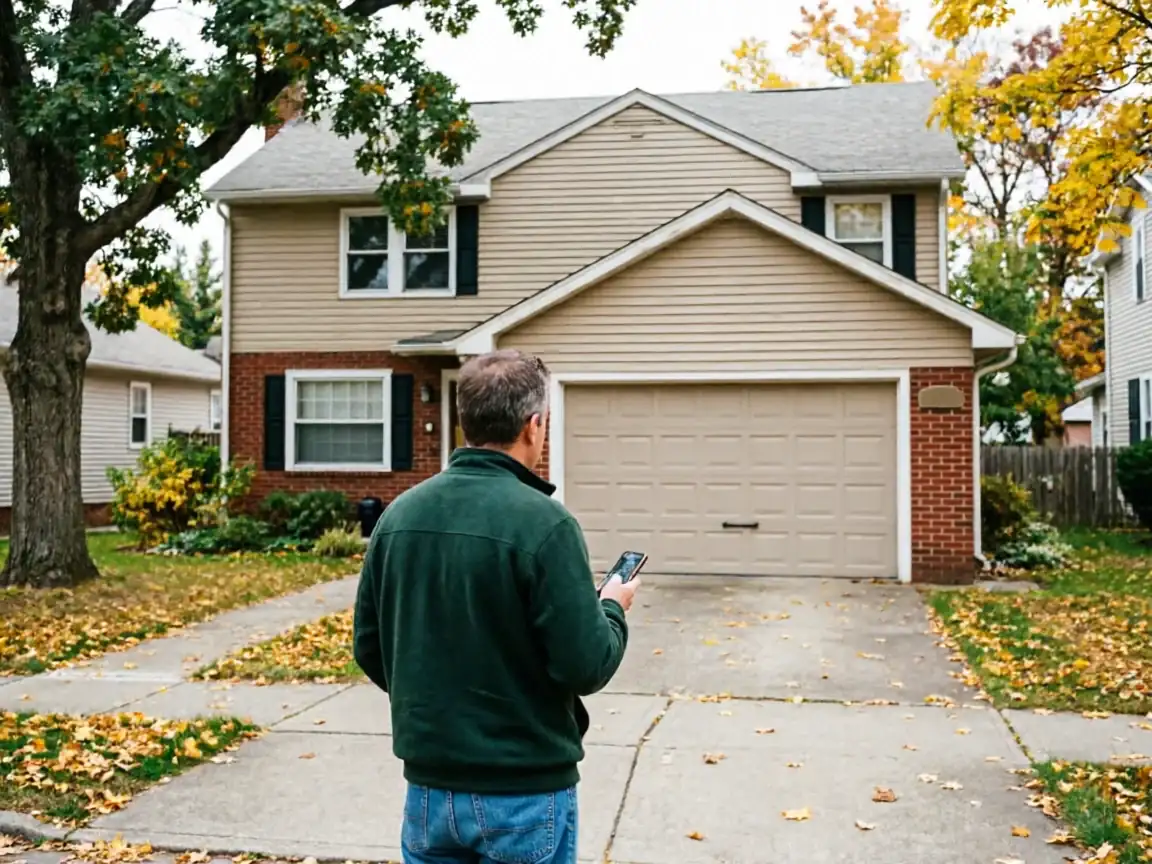
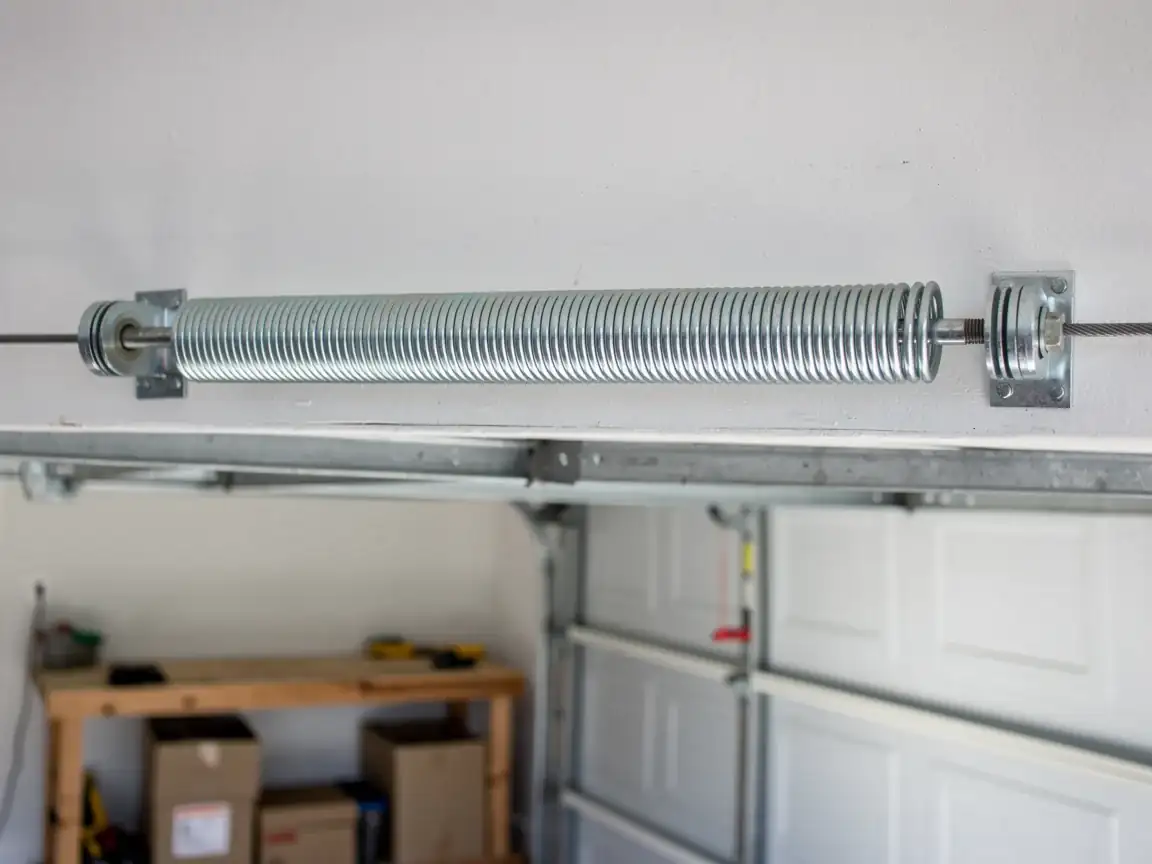
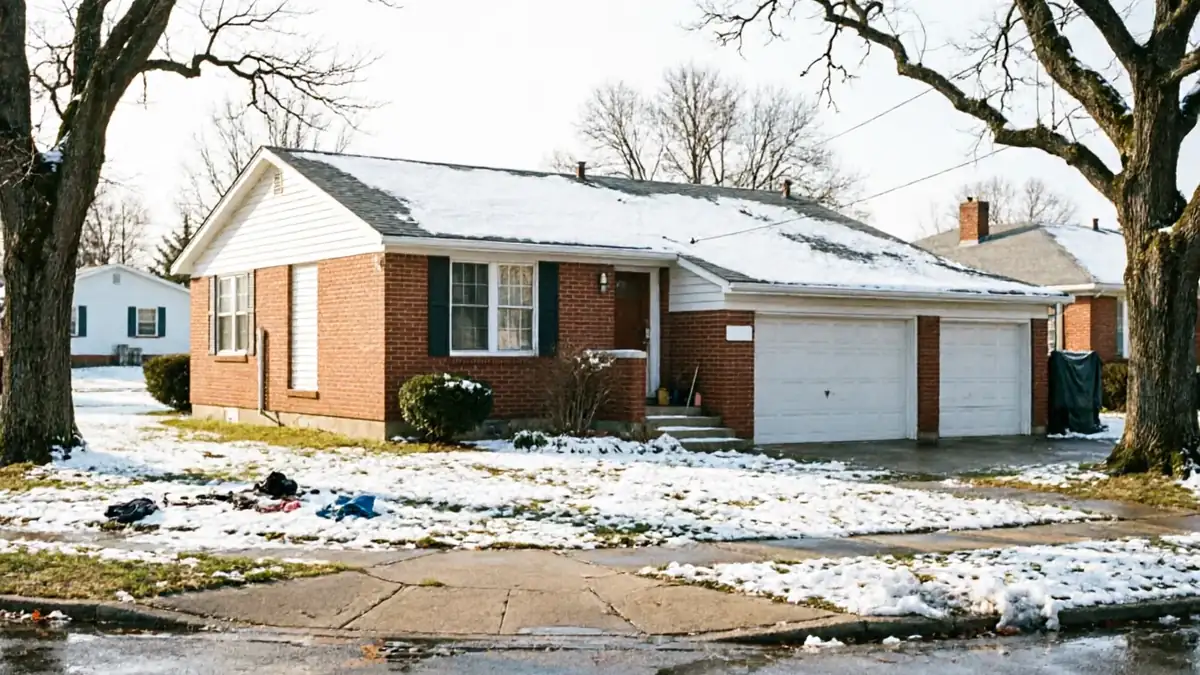
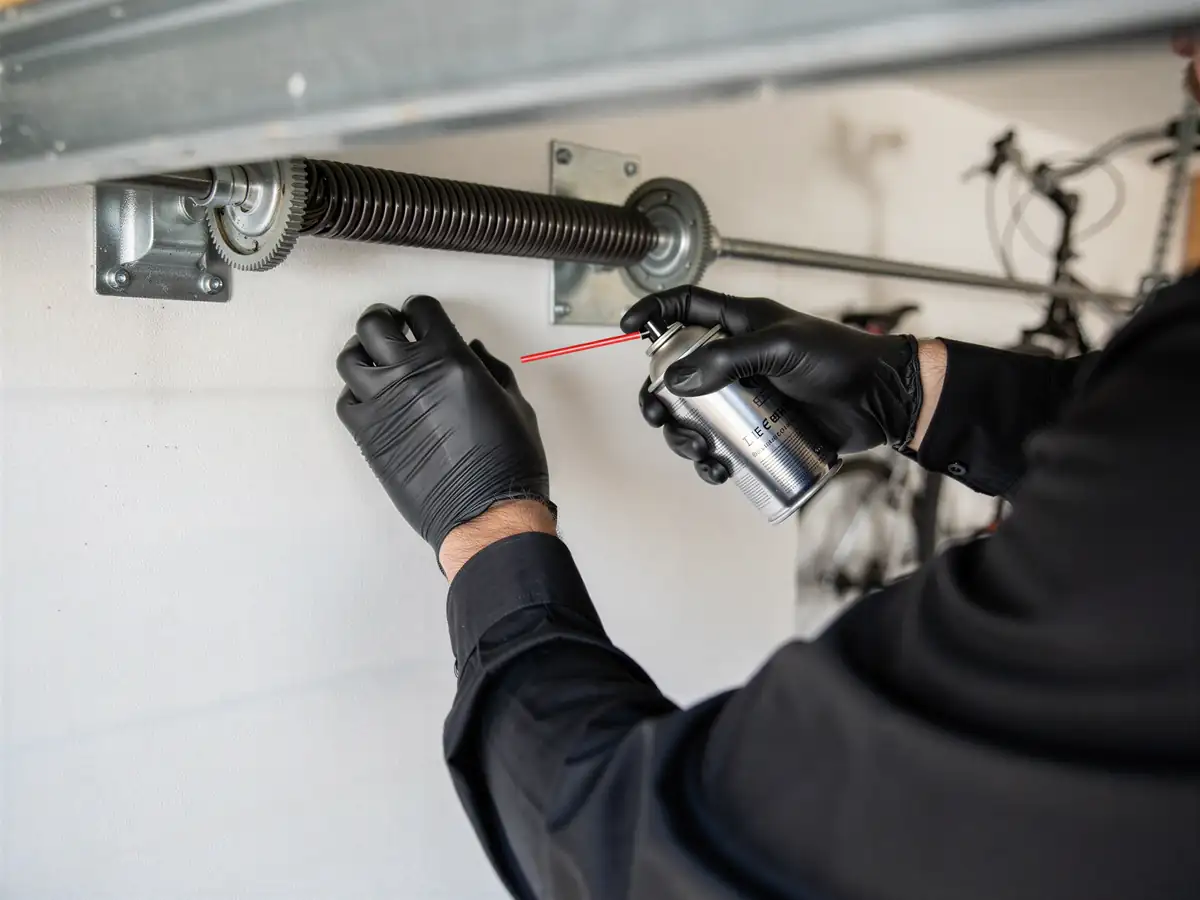
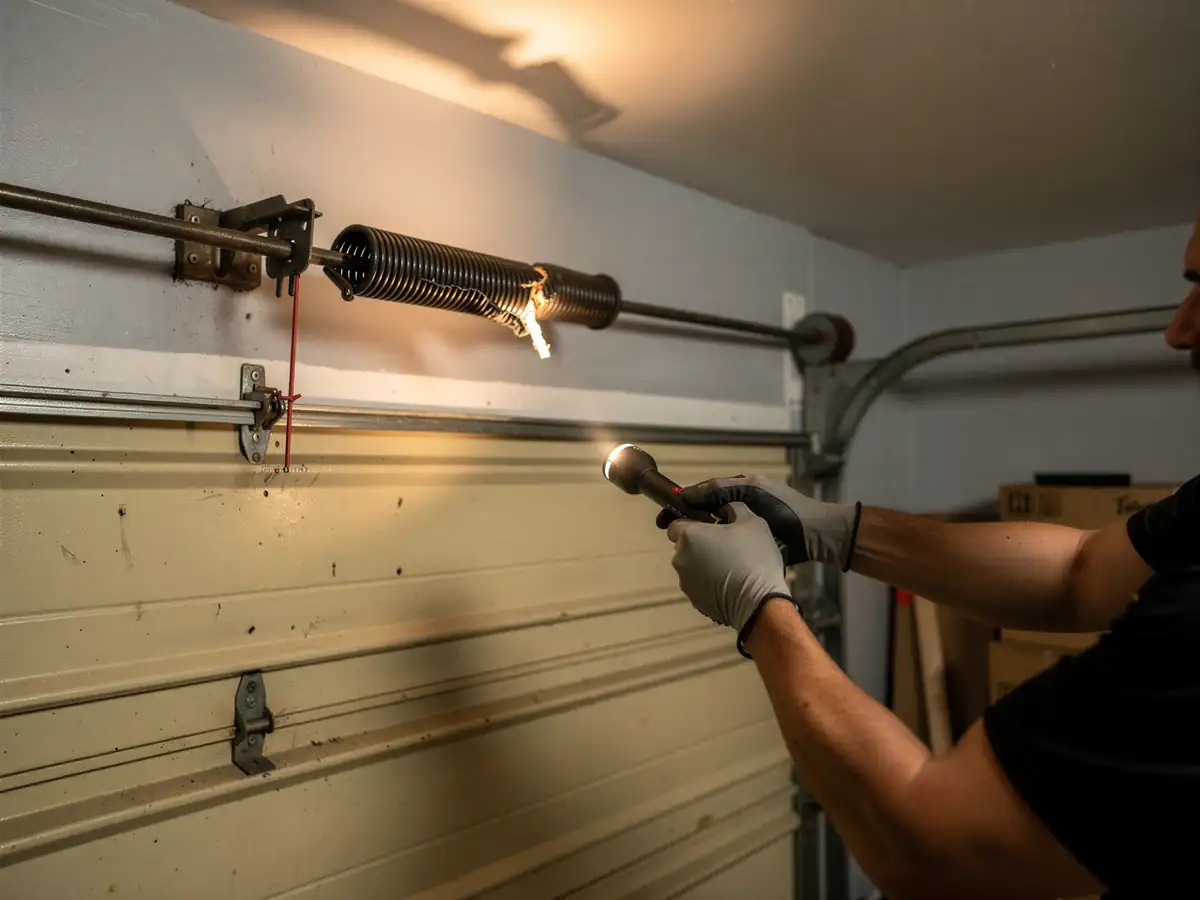
The typical house here was built around 1976, which puts it square in the extension-spring era, not torsion. That one fact changes almost everything about the job. Extension springs sit along the horizontal tracks instead of over the header, and on a lot of these doors they're still the originals, or a mismatched replacement pair installed by whoever owned the house in the 90s.
We drive out from Bay City, about 15 miles, and we don't guess at what we'll find before we get there
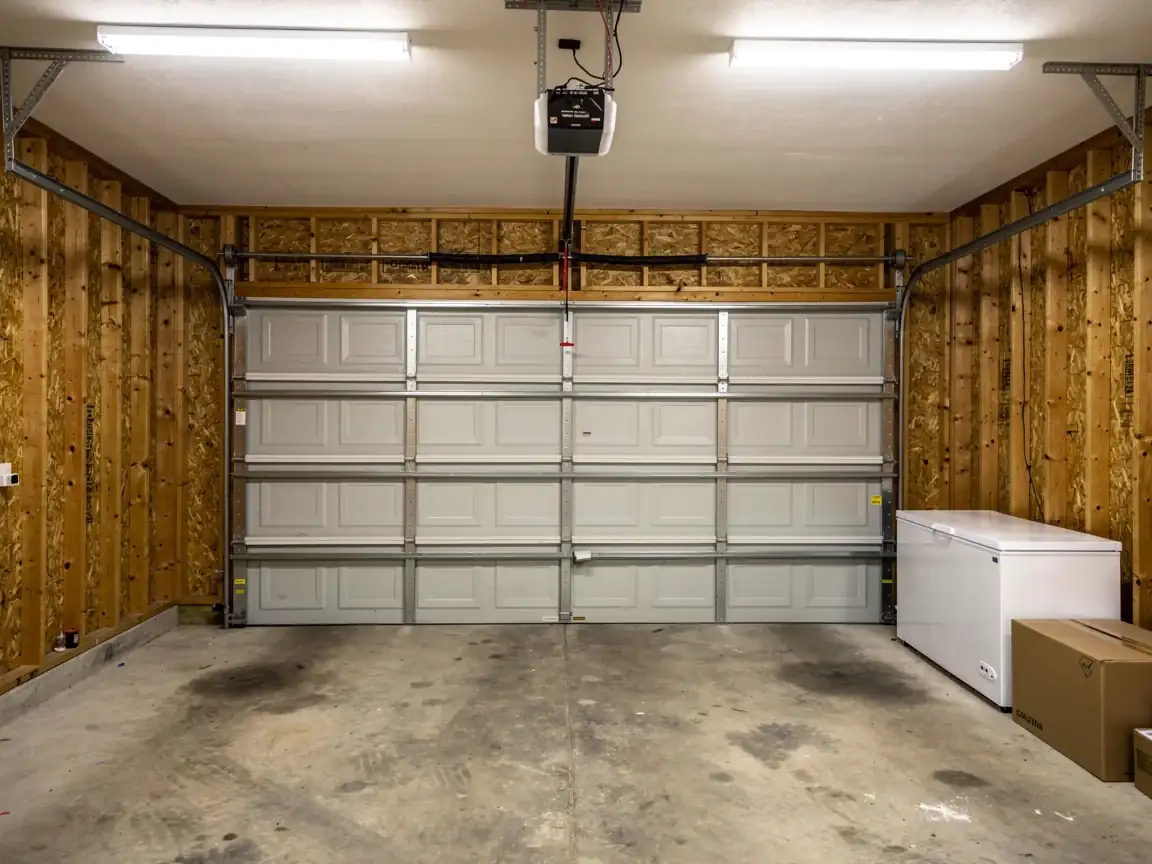
But we can tell you what's common. A 1976-era door is heavier than what's sold today, often a single steel skin with no insulation, and the openers paired with them were usually chain-drive units added years after the house was built. When one of those springs goes, the door doesn't ease down, it drops, and the opener motor burns out trying to compensate. That's the call we get most from this part of the service area.
- 15 miles
The Symptom
The complaint sounds almost the same every time: the door won't stay up on its own, or it slams the last foot instead of lowering slow. On a torsion-spring door that's usually one bad spring. On the extension-spring doors common to Shields, it's often both springs at once, because they were installed as a pair and they wear out close together.
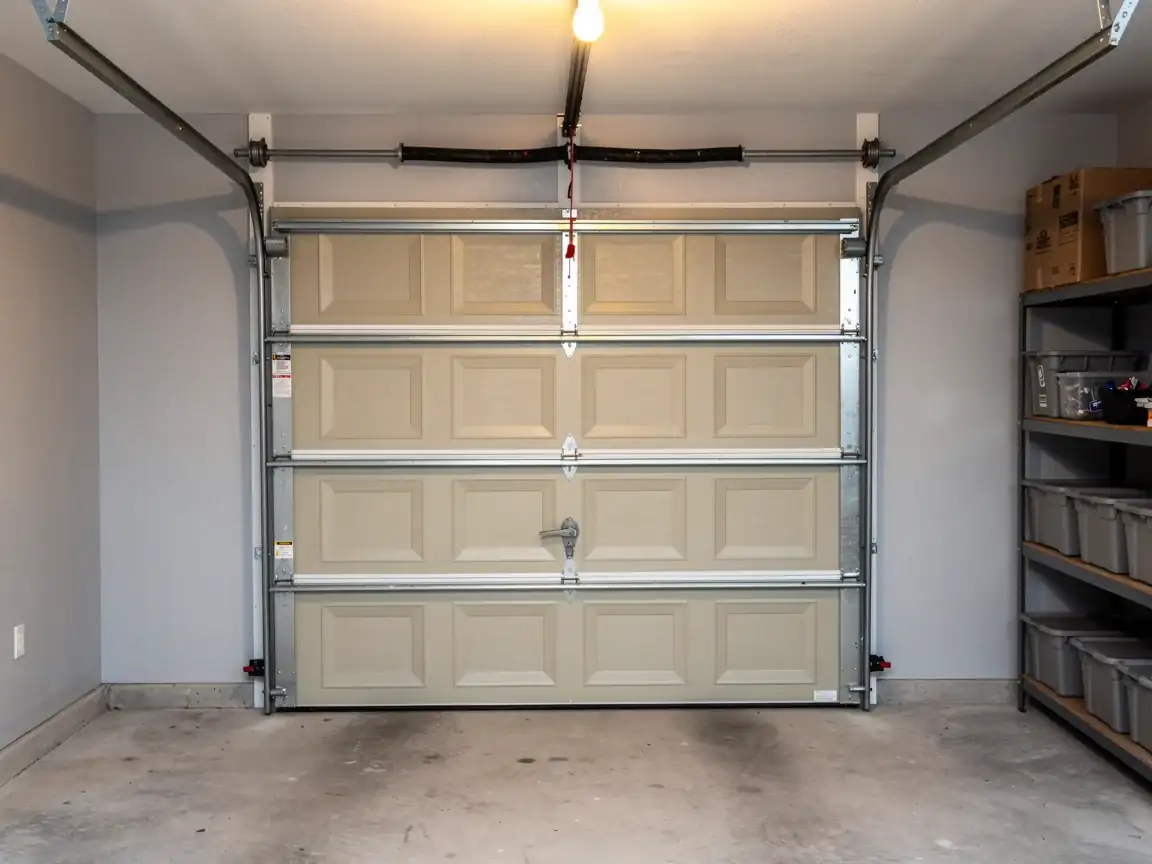
Some owners hear a loud bang from the garage first - that's a spring letting go, not the opener. If the door has a chain-drive opener dated to roughly the same era as the house, the opener may also be straining on a door it can no longer lift safely, and you'll smell or hear the motor working harder than it should. We treat these as two separate problems, spring and opener, even when a homeowner calls about just one.
Where This Job Goes Sideways
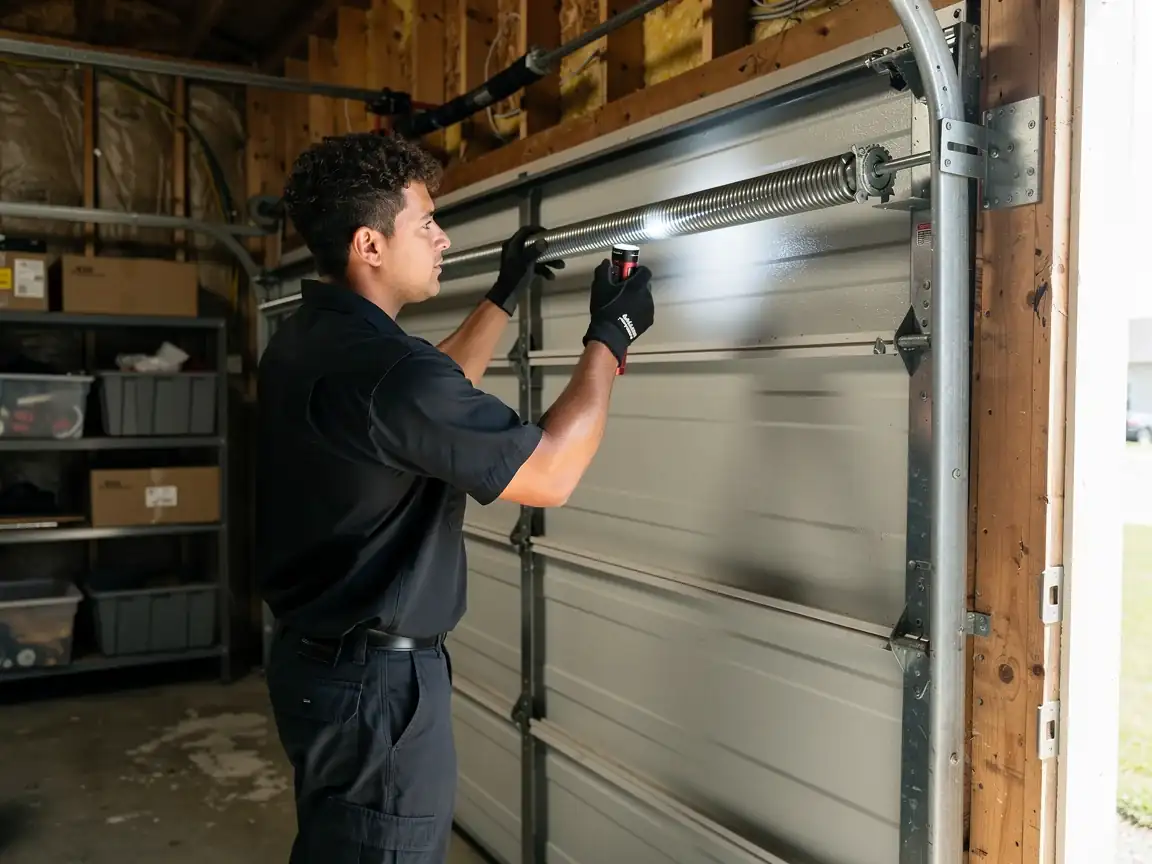
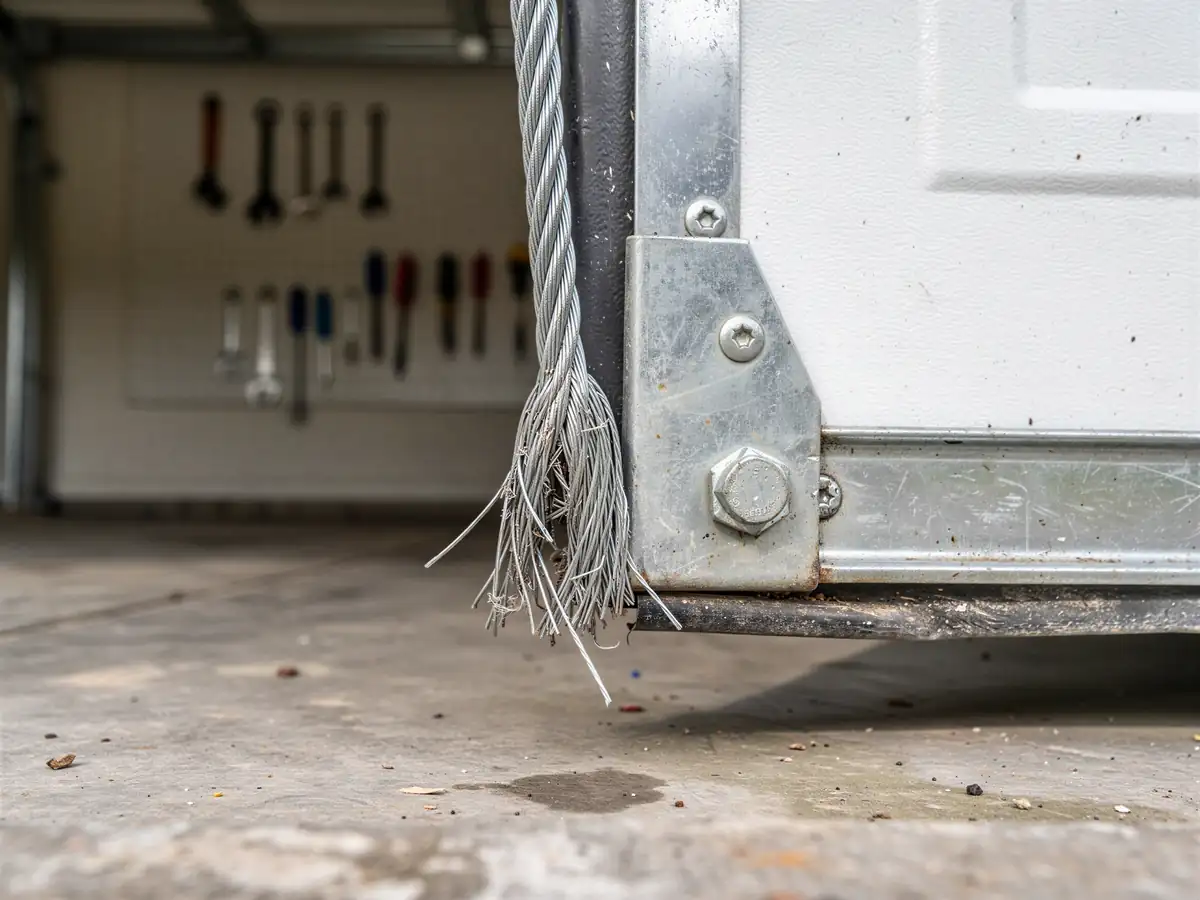
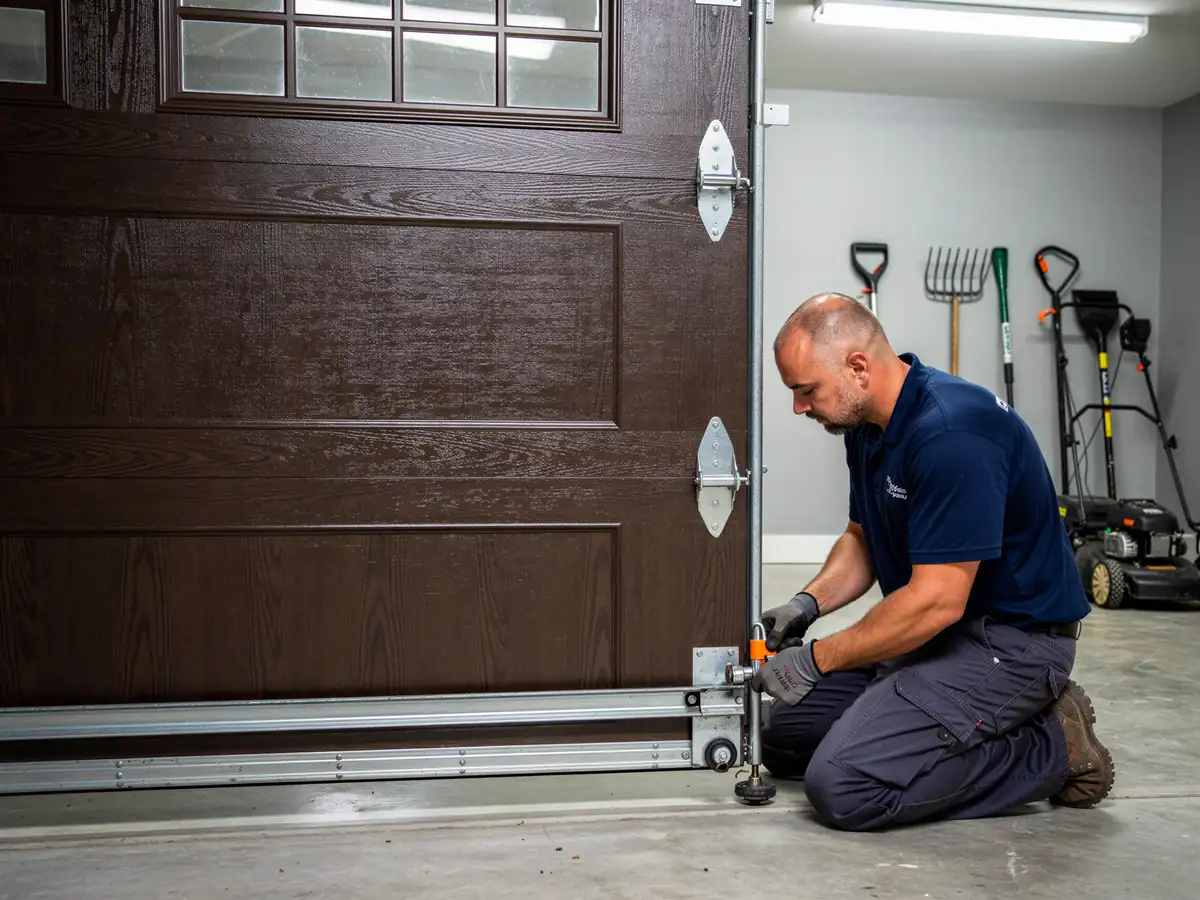
The failure point on these doors is almost always the hardware, not the panel. A steel door from the 1970s with no insulation can take a beating for decades, but the extension spring cable and pulley setup wasn't built to run forever, and once one cable frays, the door can come down unevenly, catching on one track and racking the frame.
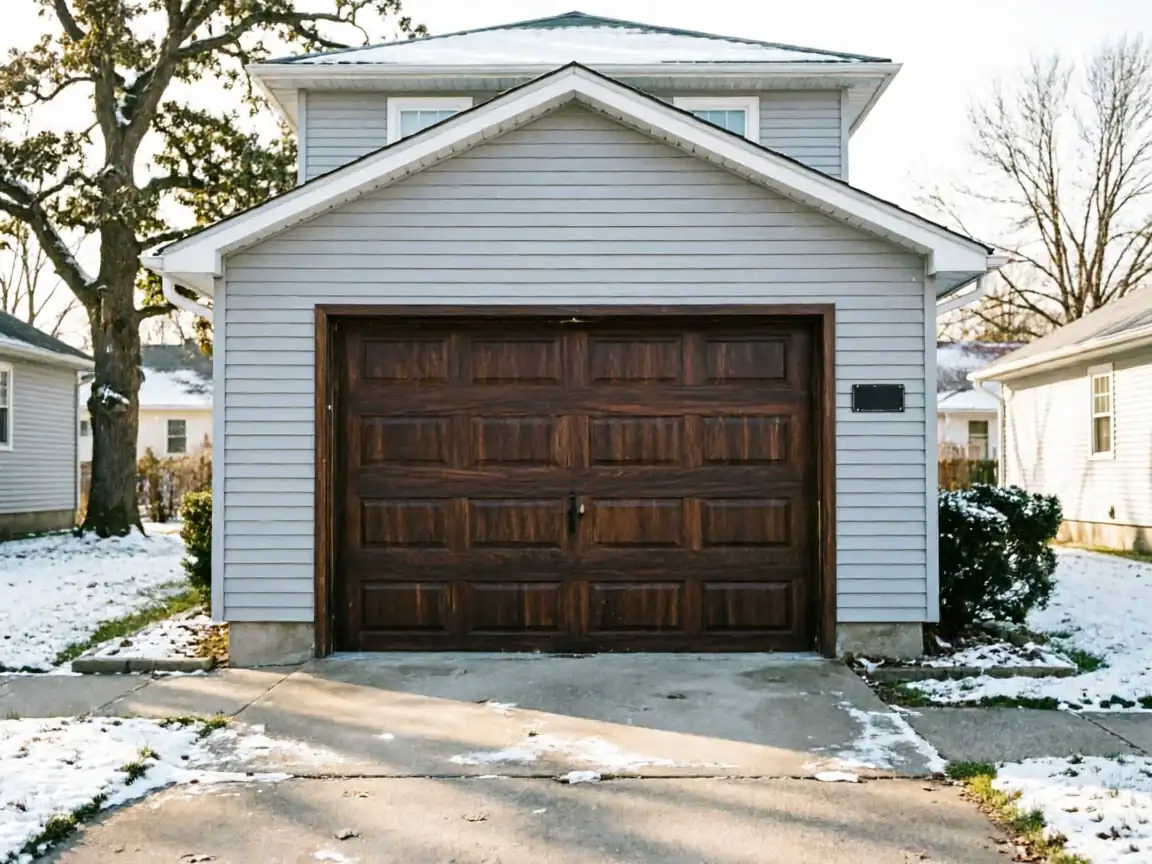
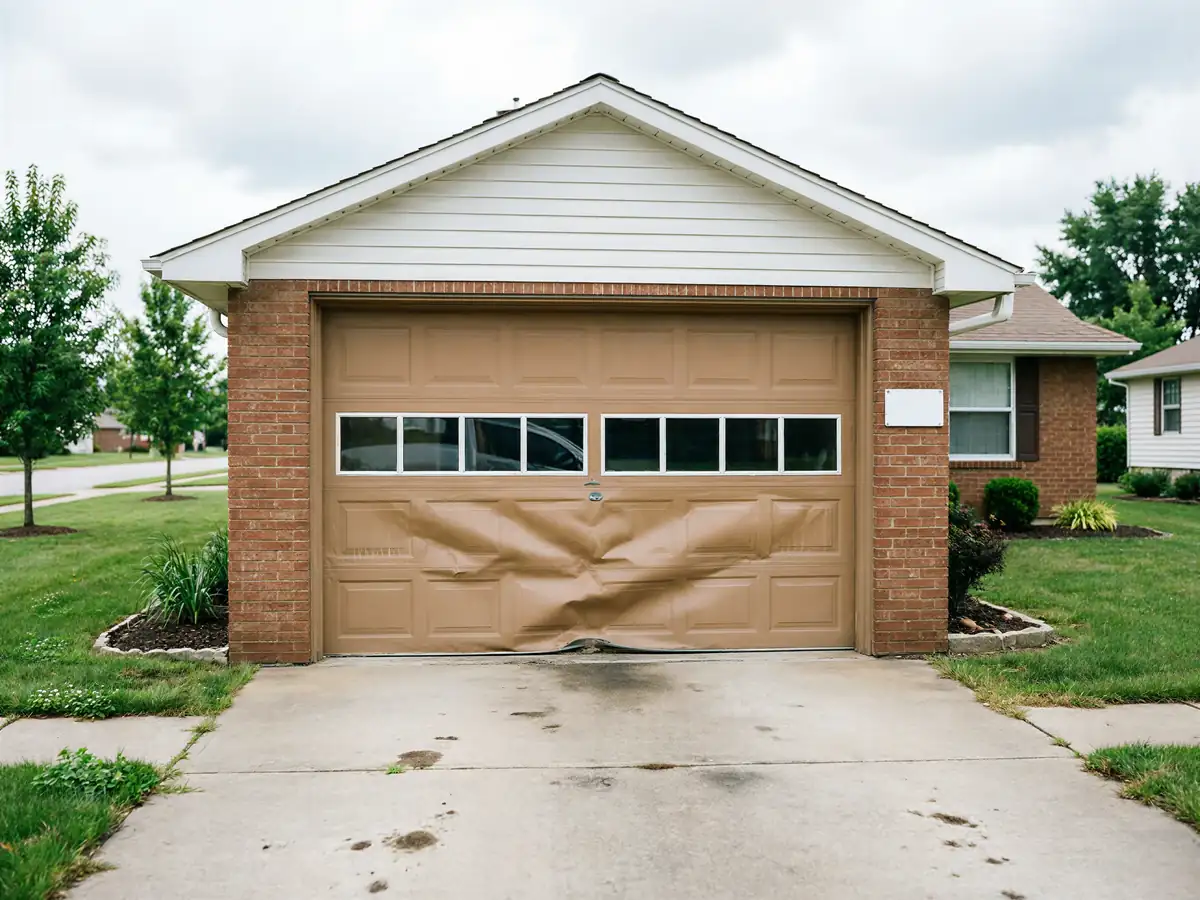
Here's the honest limit: if a door has been racked - the frame bent from an uneven drop - a spring swap alone won't fix it, and we'll tell you that instead of charging you for a repair that won't hold. Severe winters this far north put real stress on steel and on any gap at the bottom seal, and a door that's already stressed from age doesn't handle that cold load the same way a newer insulated door does. That's often where a repair call turns into a replacement conversation, and we'd rather say that up front than come back twice.
What Is on the Truck
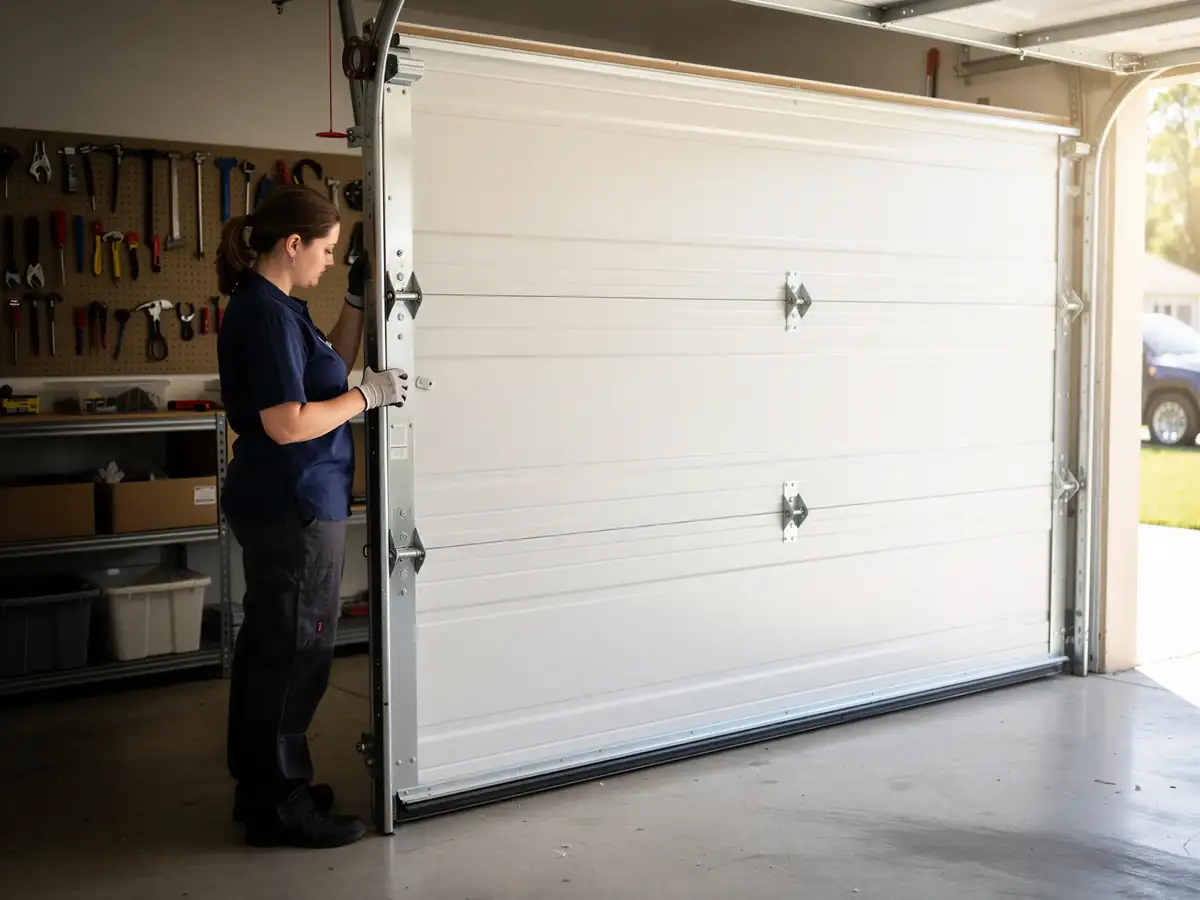
For Shields calls we carry extension springs in the common residential sizes, not just torsion springs
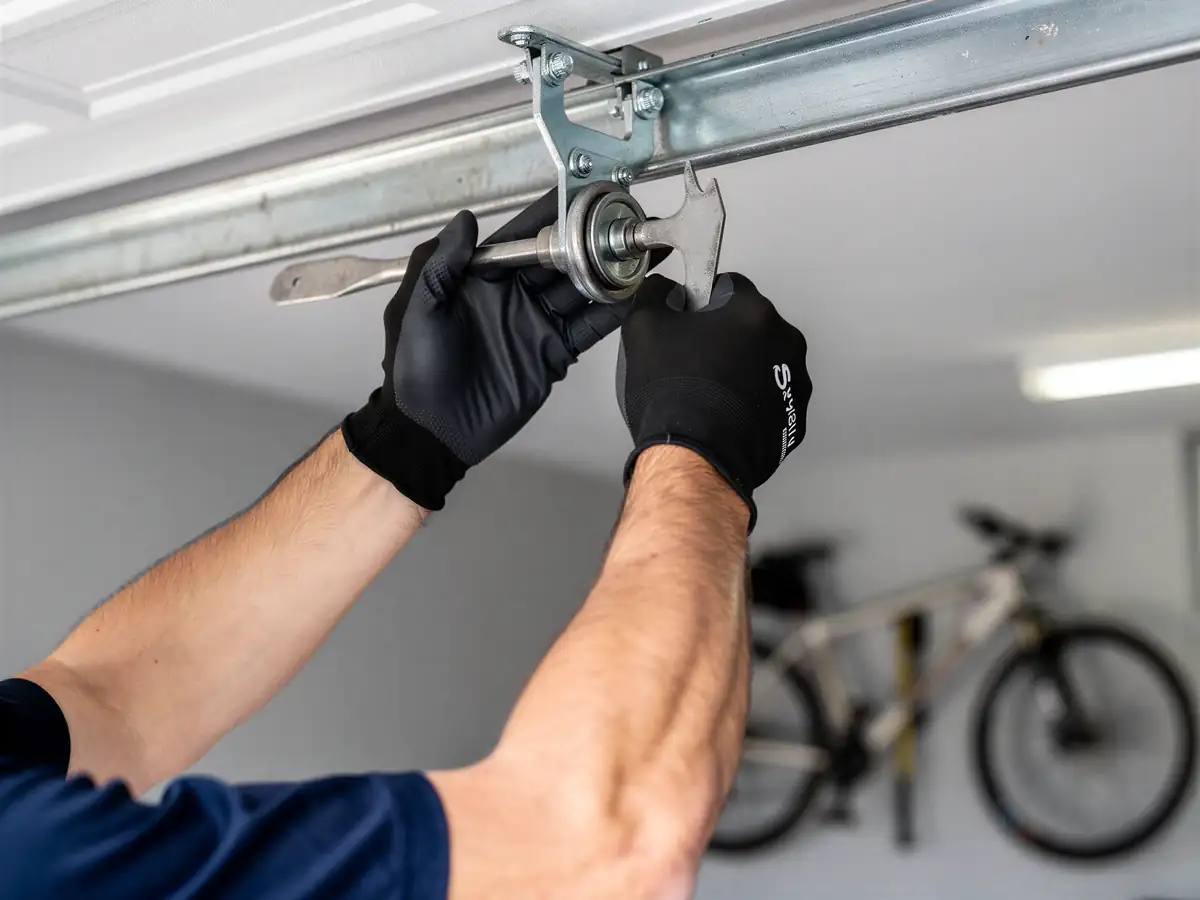
Because that's what a 1976-built door is going to need. We also stock replacement cables, pulleys, and the fittings that connect them, since those parts fail before the spring itself does on a lot of these setups.
We bring compatible chain-drive opener parts too
Sprockets, chains, and the logic boards for units of that general vintage - because swapping a whole opener isn't always the right call when the motor's fine and the drive gear isn't. What we don't carry on every truck is a stock of obsolete factory panels; if a specific original panel from that era is cracked, we'll tell you whether a close match exists or whether the practical fix is a new door section.