Time on the Job
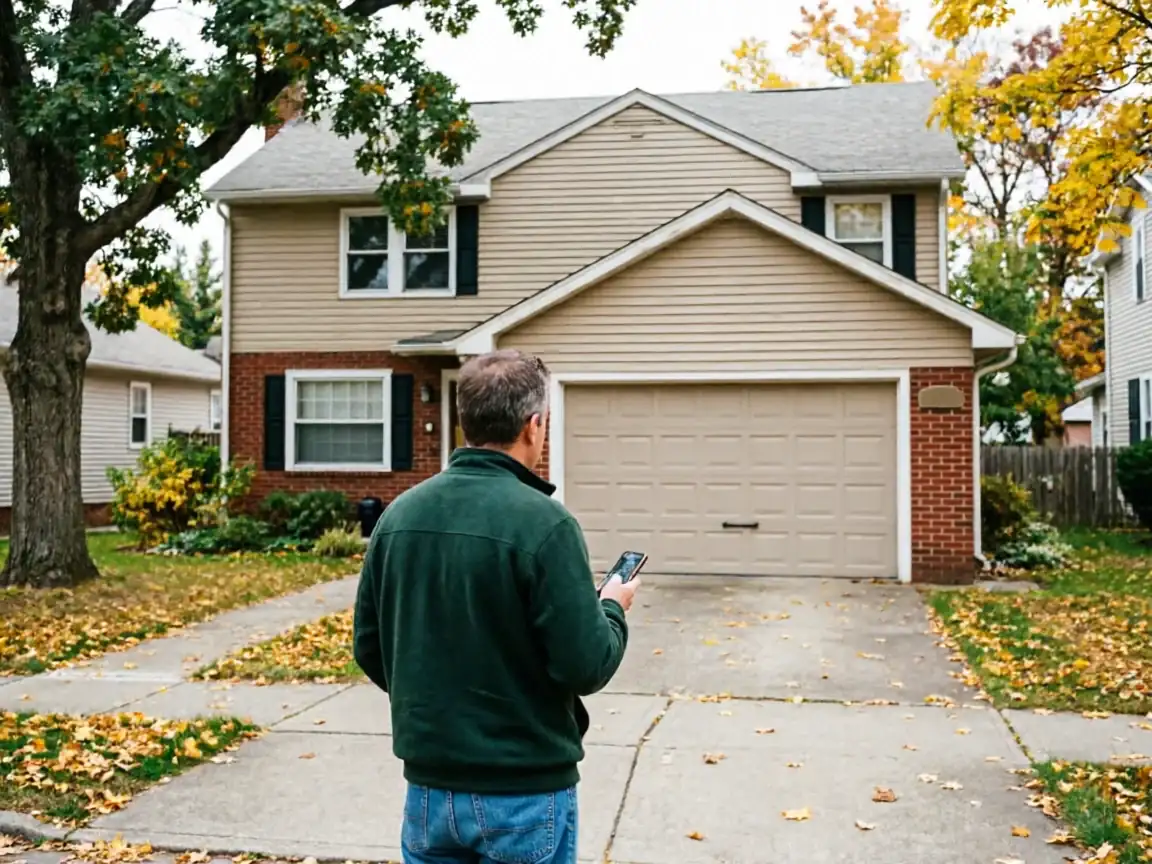
Most of the Bay City service area sits on housing built between 1952 and 1994
With a median around 1969. Shields runs newer than that average - the typical house here went up closer to 1976. That seven-year gap matters on a panel job. A door from the late 1960s often has wider, heavier steel sections and hardware that's been retrofitted at least once by the time we see it. A door from the mid-70s is more likely to still have its original track spacing and a panel profile that was mass-produced long enough that we can usually find a close match without special order.
We come out from Bay City, about 15 miles
So we don't carry a local stock point here - what's on the truck when we leave is what we've got for that trip. On a straightforward single-panel swap where the color and ribbing match stock, we can usually finish in one visit. If the door needs a full matched set across multiple panels, that's a longer job and sometimes a second trip once the order comes in.
- 15 miles
The Symptom
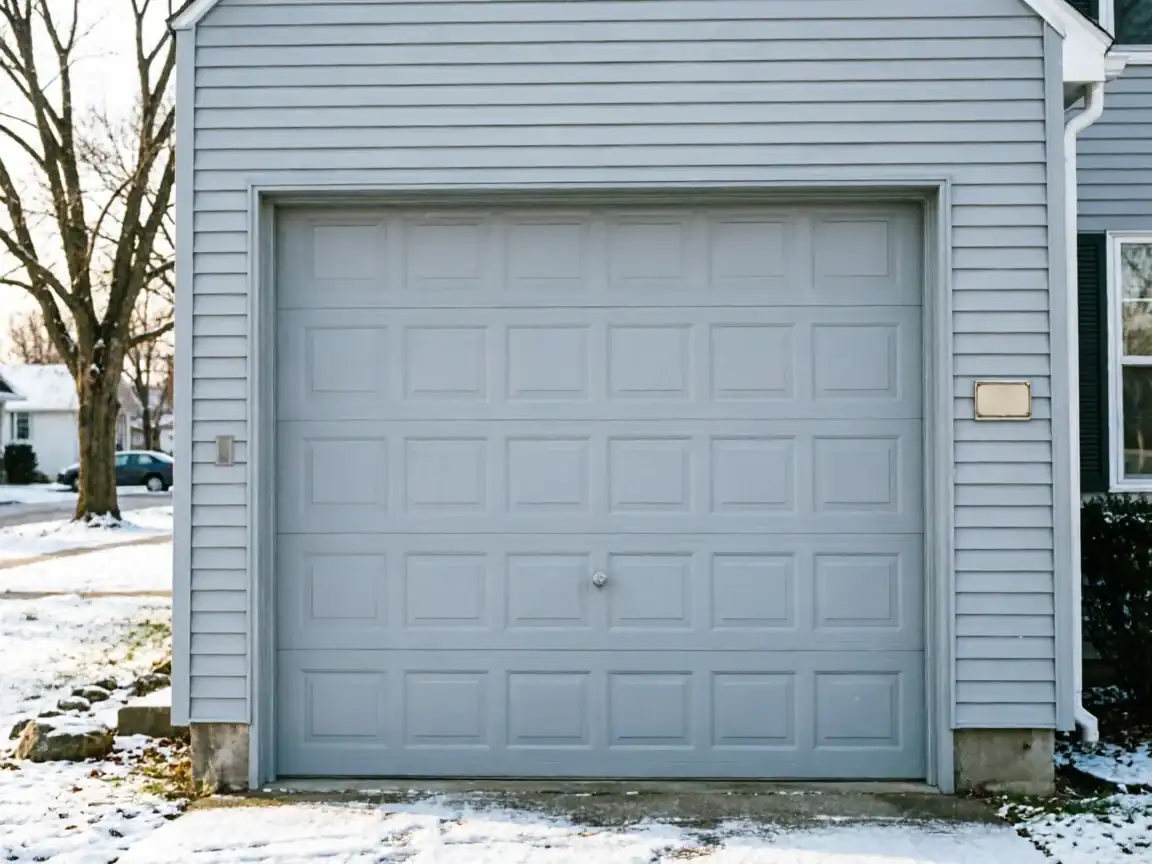
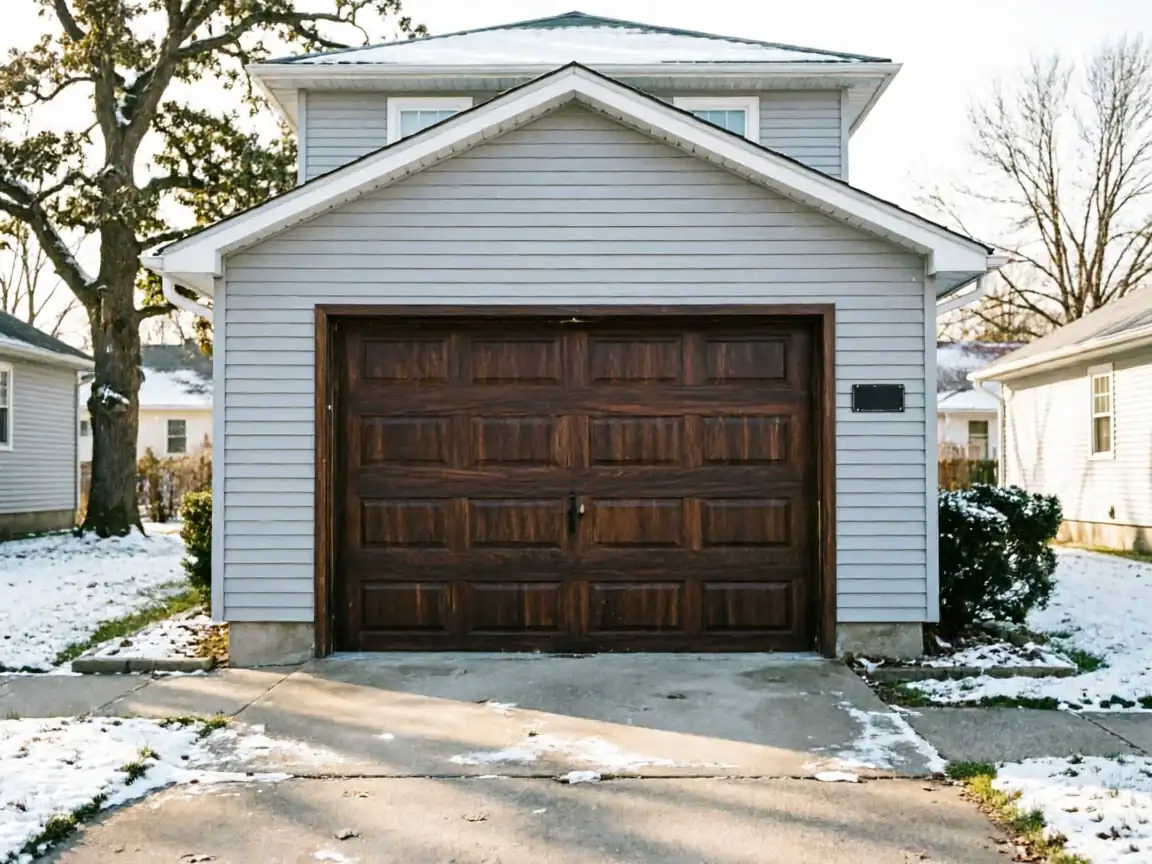
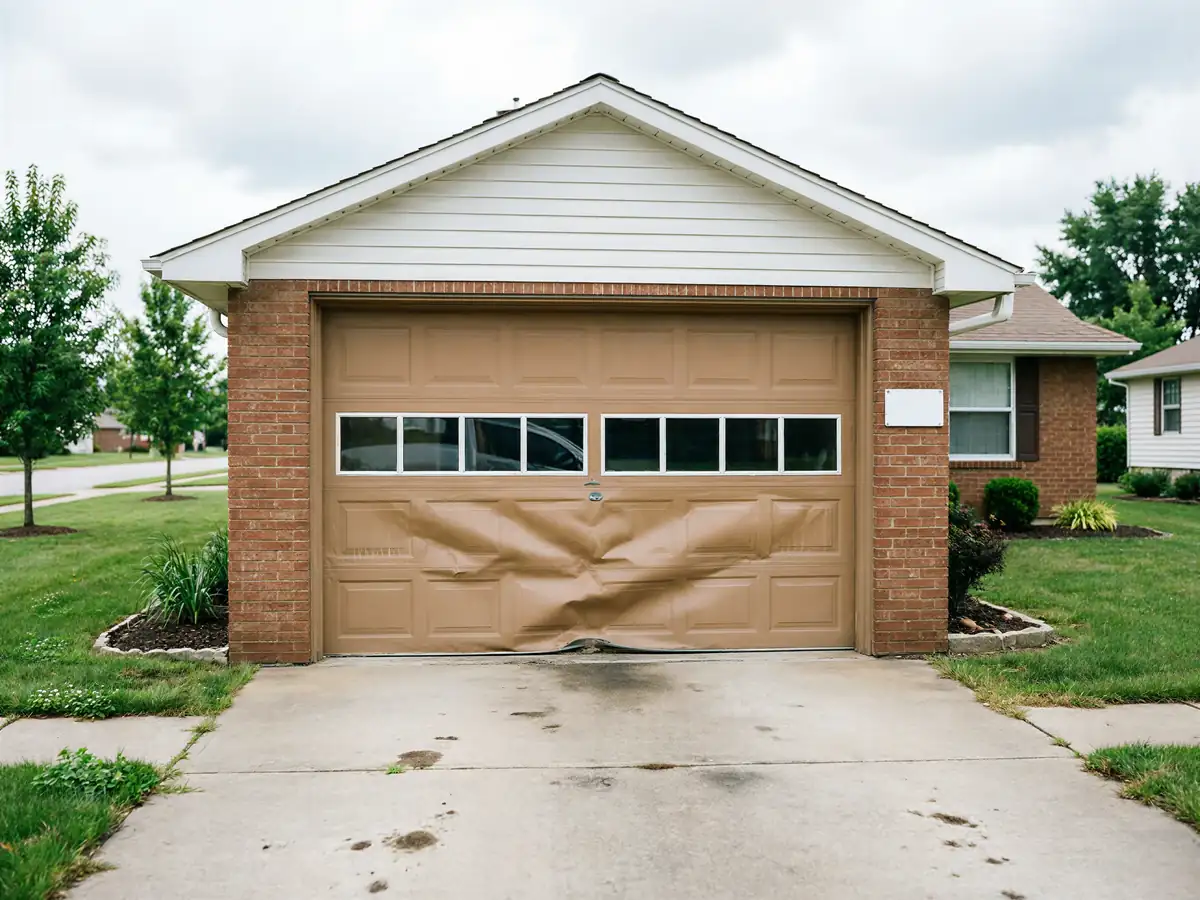
The giveaway on a Shields door is usually a dent or a bow in one section, not the whole door failing at once. Steel panels from this era are thinner-gauge than what's sold today, and they take a dent from a bumper tap or a dropped ladder that doesn't pop back out. In a cold-climate area like this, a dented panel also tends to let more air through the seam once the foam core inside has cracked loose from the steel skin - you'll feel it as a cold draft along one stripe of the door rather than the whole thing.
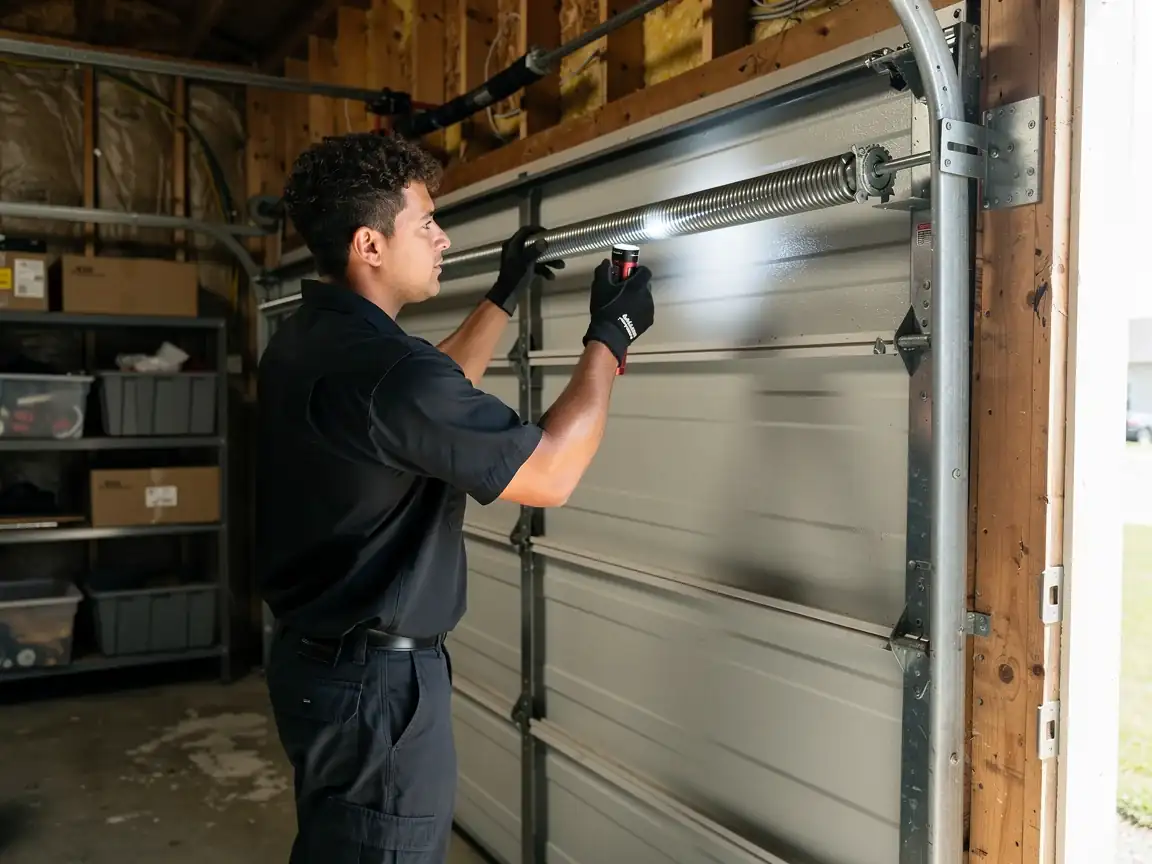
Sometimes the symptom isn't a dent at all - it's a panel that's rusted through at the bottom where snowmelt and road salt sit against the steel over a winter. That's common enough on houses from the 1970s that it's worth checking the bottom two sections specifically, even if the rest of the door looks fine. We don't patch rust-through sections; once the steel skin is compromised that way, the panel gets replaced, not repaired.
Where This Job Goes Sideways
The job gets harder when the homeowner wants to replace one panel and keep the rest of the door, and the door is old enough that the original color or ribbing pattern isn't made anymore. On a house built around 1976, that's a real possibility - doors from that window weren't always from manufacturers still producing matching stock sections. We'll tell you straight if we can't get a true match; sometimes the honest fix is a full door, not a patch, even though that's the more expensive answer.
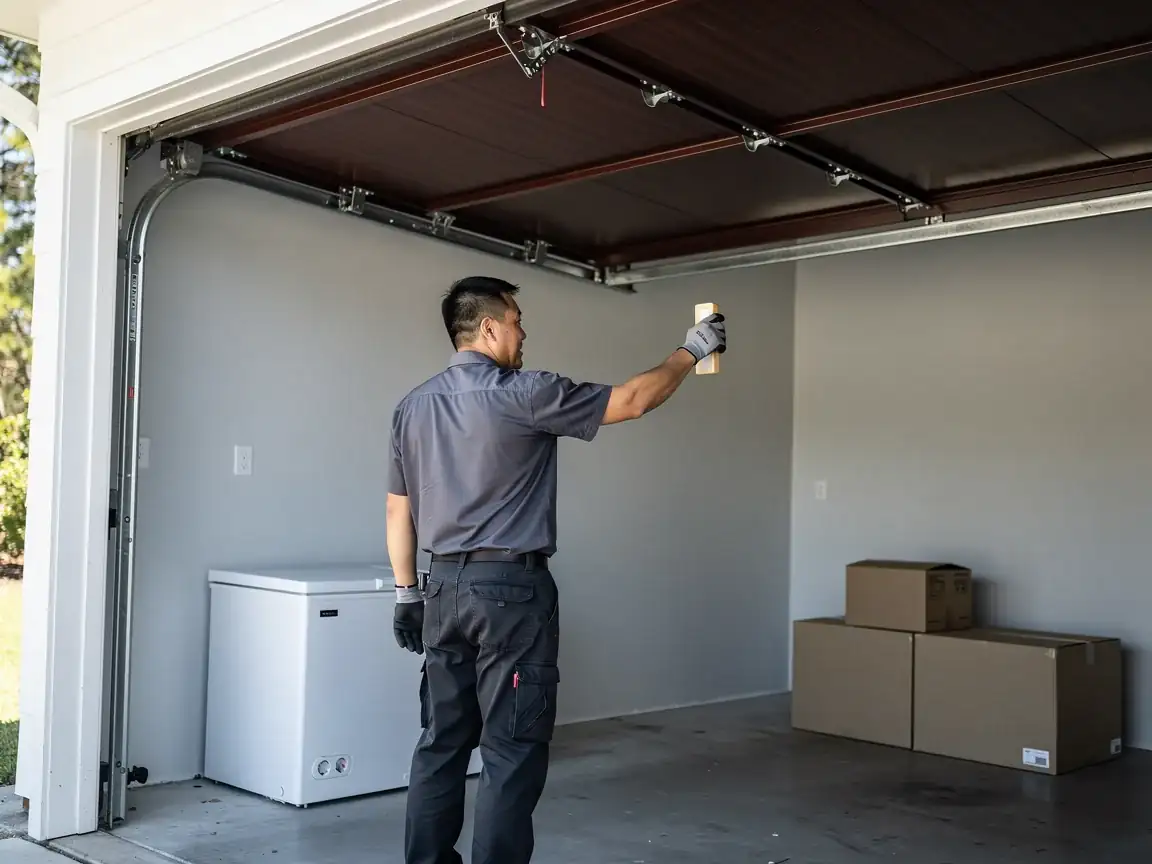
The other place this goes sideways is track alignment. Swapping a single panel on an older door can expose that the track itself has shifted slightly over the decades - something you don't notice until the new, straighter panel highlights how far out the old one had settled. That's an extra adjustment, not a separate charge we spring on you, but it does add time to the visit. We'd rather flag it before we start than have you wonder why a one-panel job took longer than expected.
What Is on the Truck
For a Shields call we stock standard steel panel sections in the common widths and the handful of colors that cover most doors from the 1970s and 80s
The bulk of what's out here. We also carry basic hardware: hinges, rollers, and the fasteners that typically corrode first in a cold climate with road salt in the mix.
What we don't carry is every discontinued color or embossed pattern
If your door is an uncommon make or an older custom order, we may need to special-order the section rather than finish same-visit. We'd rather say that up front than show up with the wrong panel and waste your afternoon. Given the median income in this area sits well above the broader service area's, we also see more requests for insulated replacement panels rather than a bare steel match - that's a stock item too, but it's worth asking about before we load the truck so we bring the right one.