Where This Job Goes Sideways
Pinconning sits about 19 miles out from the shop in Bay City
Which is farther than most of the stops on our route. That drive matters less for the repair itself and more for how the day gets planned - a Pinconning call usually gets grouped with other jobs on that side of the service area rather than slotted in alone, because running a truck out there for one spring isn't how the math works.
- 19 miles
Once we're actually at the door, the age of the house is what causes trouble
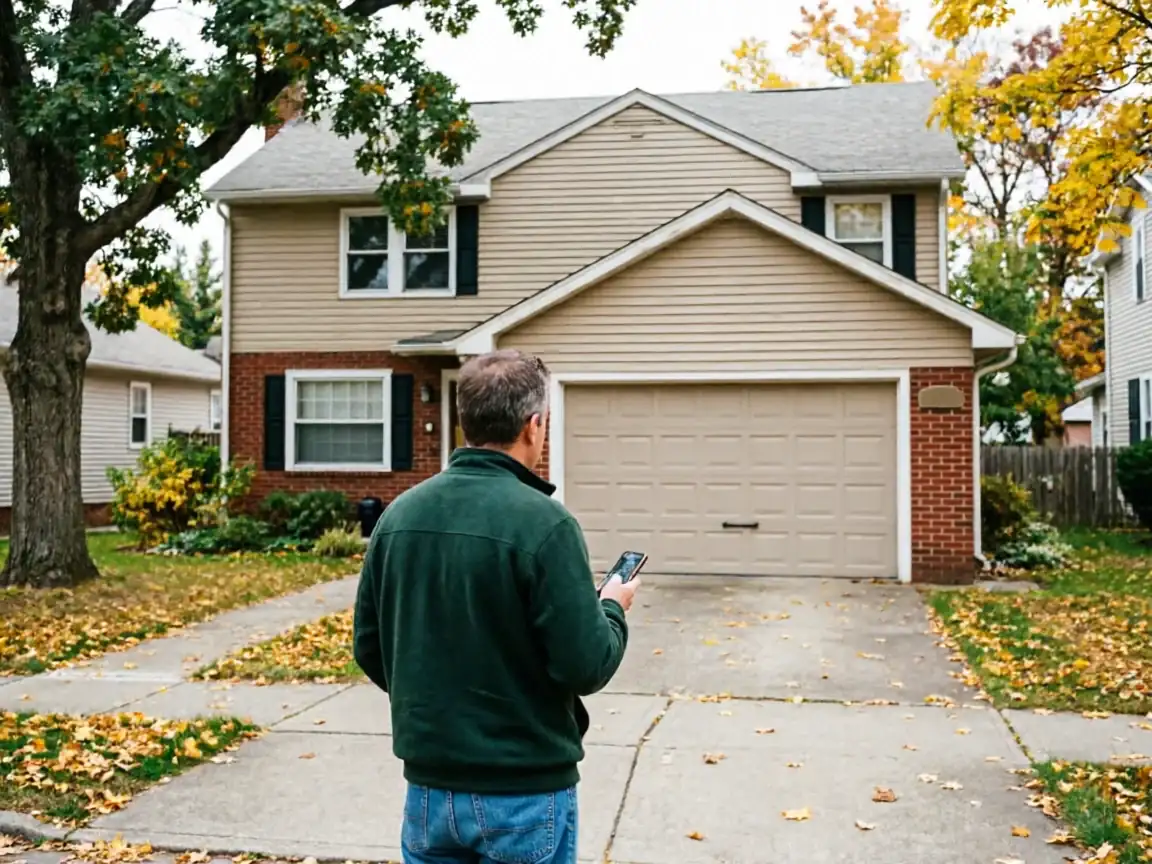
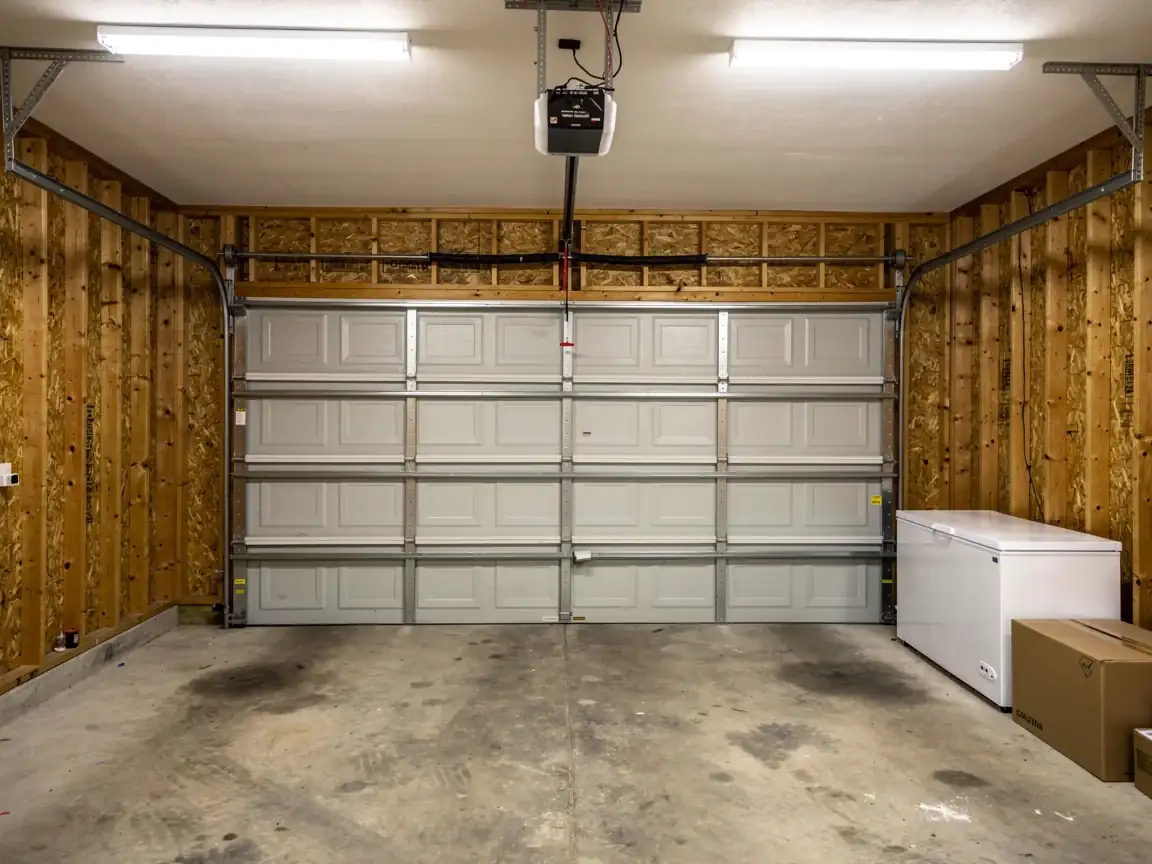
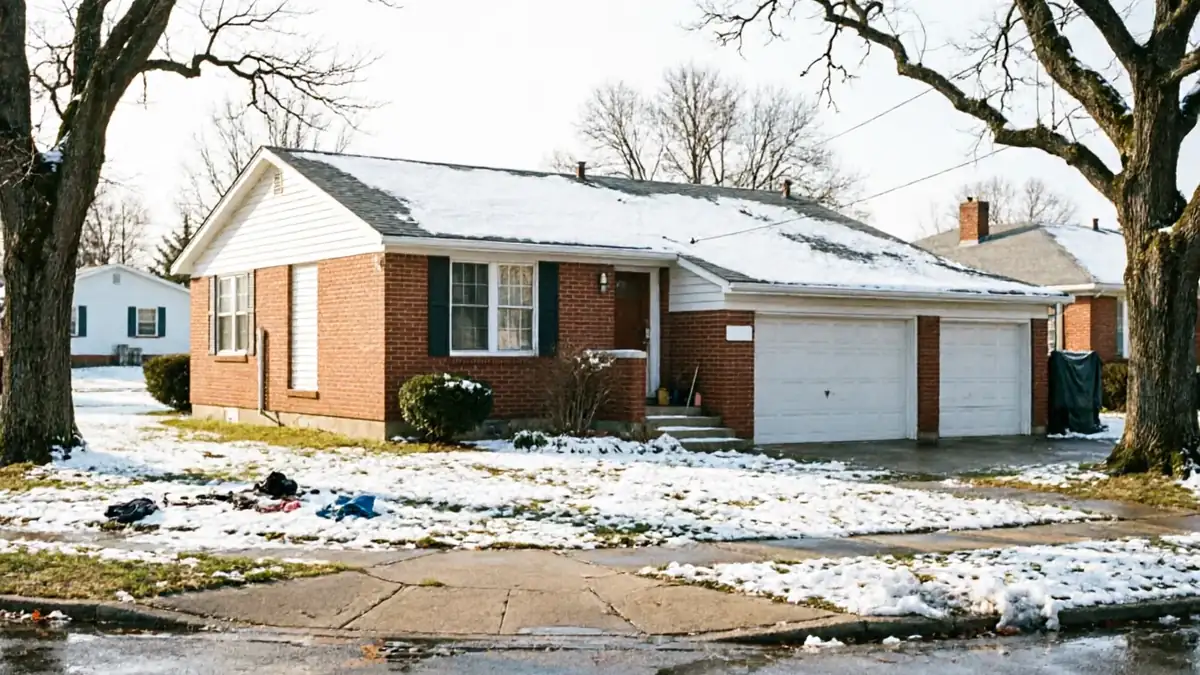
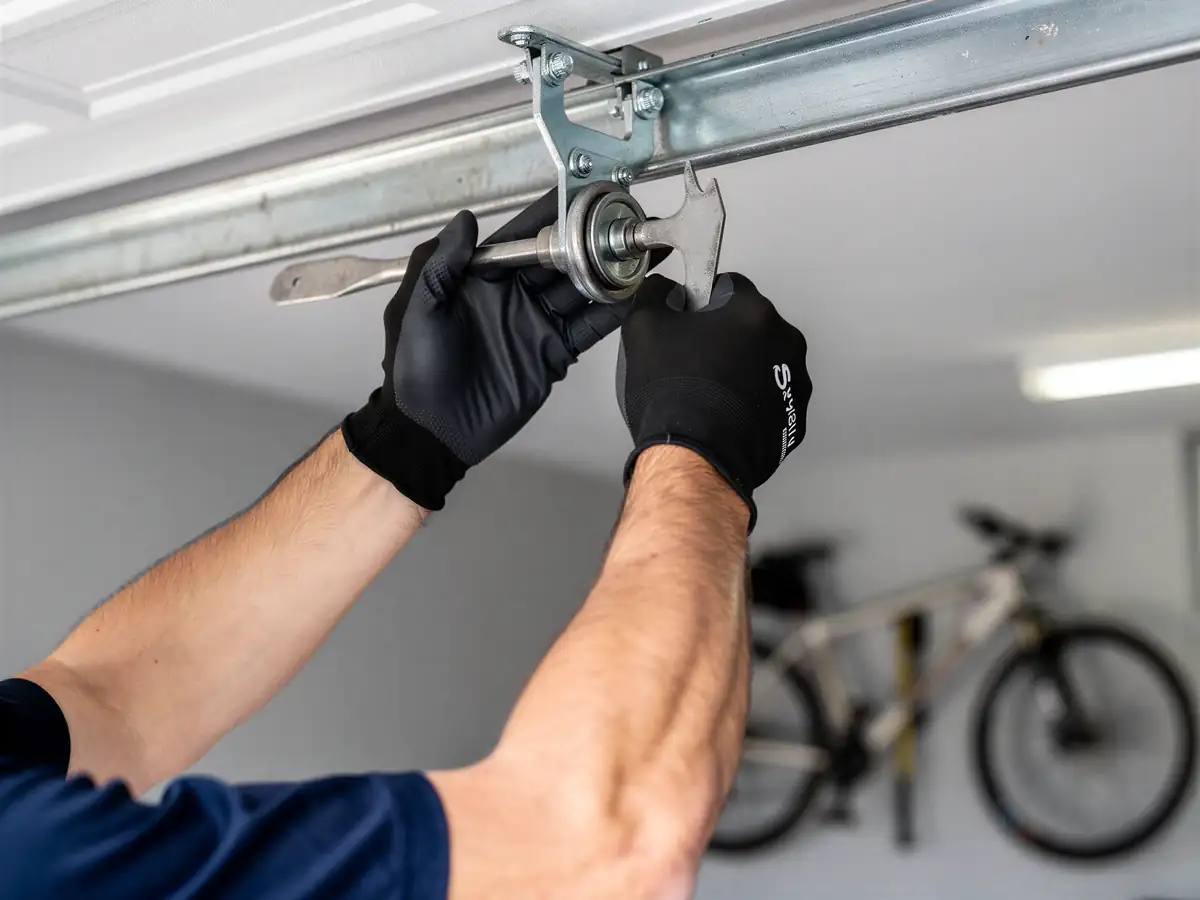
Pinconning's housing stock clusters around a median build year of 1956, which puts it ahead of the broader service area's 1969 midpoint - these are some of the oldest doors we see on the whole route. A door from that era was almost never built with an opener in mind. What usually happened is someone bolted a opener onto the original hardware decades after the house went up, and that hardware - the track brackets, the header mount - was never rated for the extra pull. That's where things go sideways: a strut that looks fine until the opener puts repeated stress on a mounting point that's 60-plus years old.
Doing It Yourself
If the door won't open and the opener motor is humming, check the obvious first - the manual release cord, a misaligned safety sensor, a track knocked out of line. Those are real fixes a homeowner can do safely.
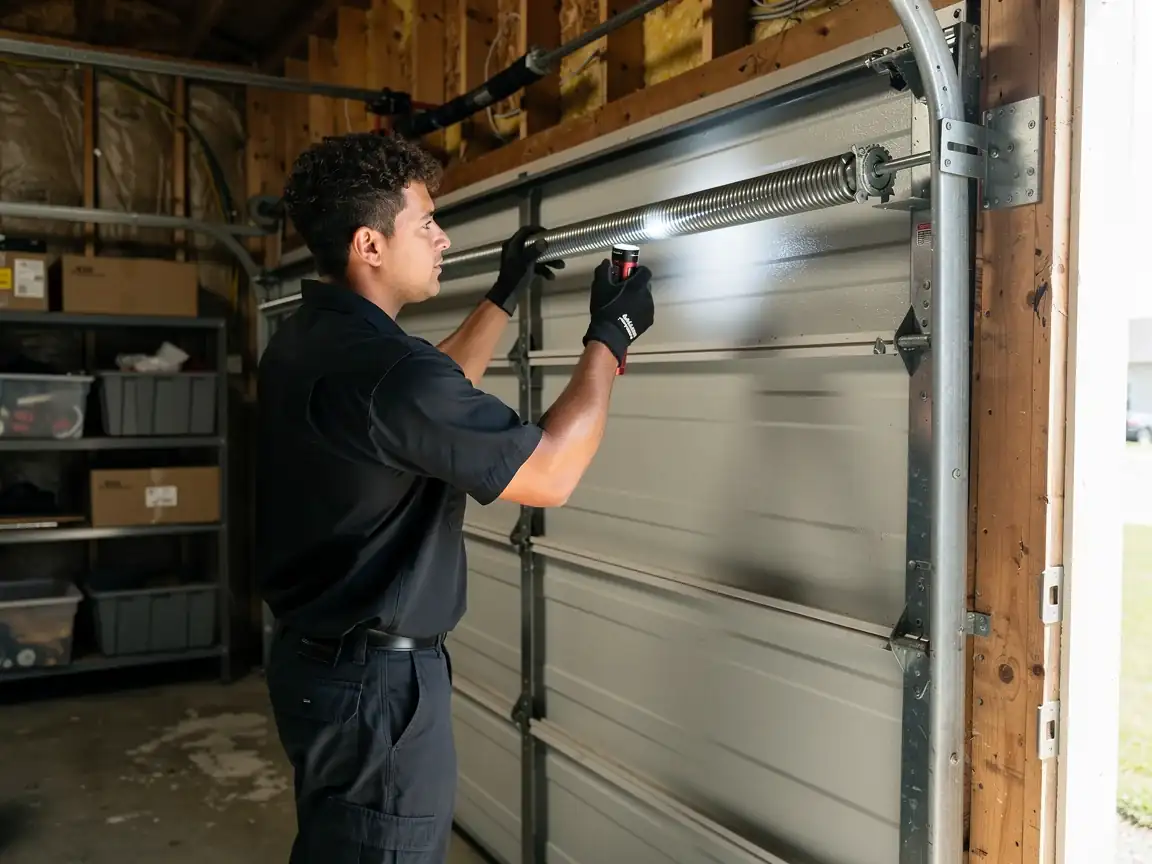
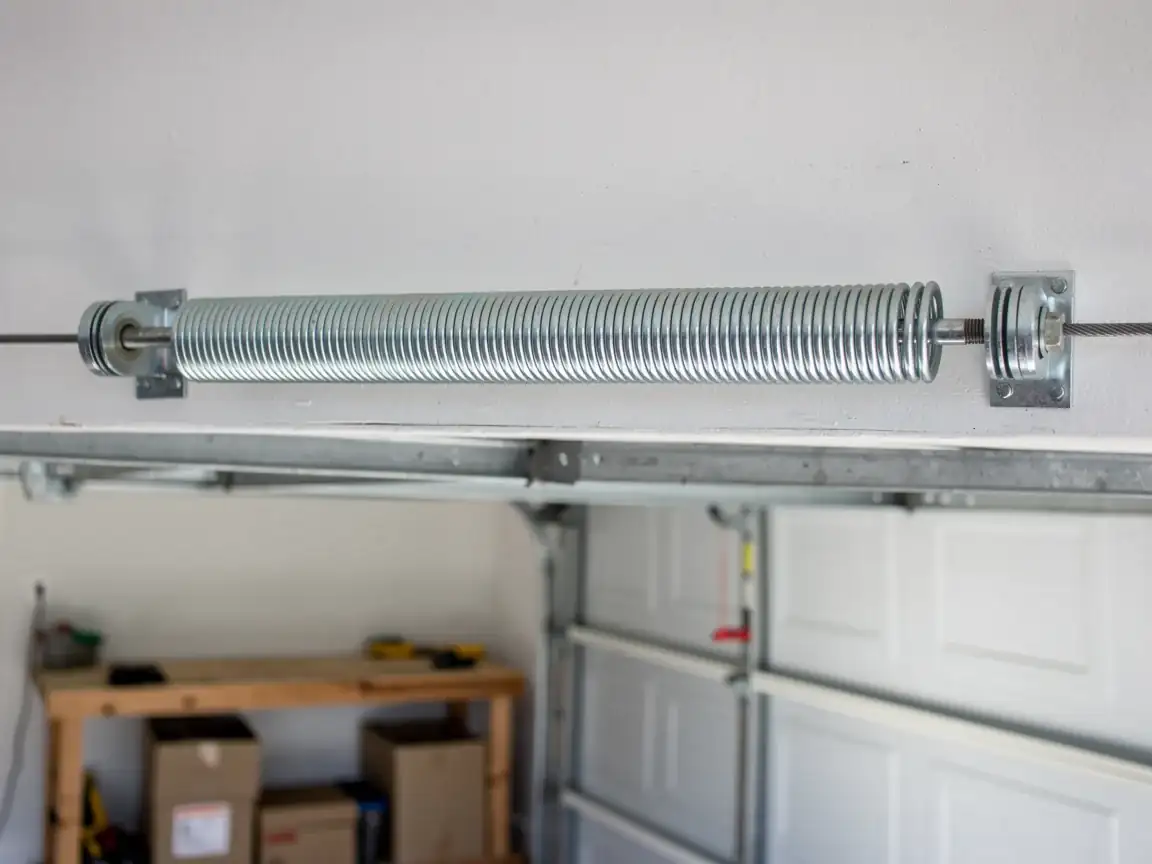
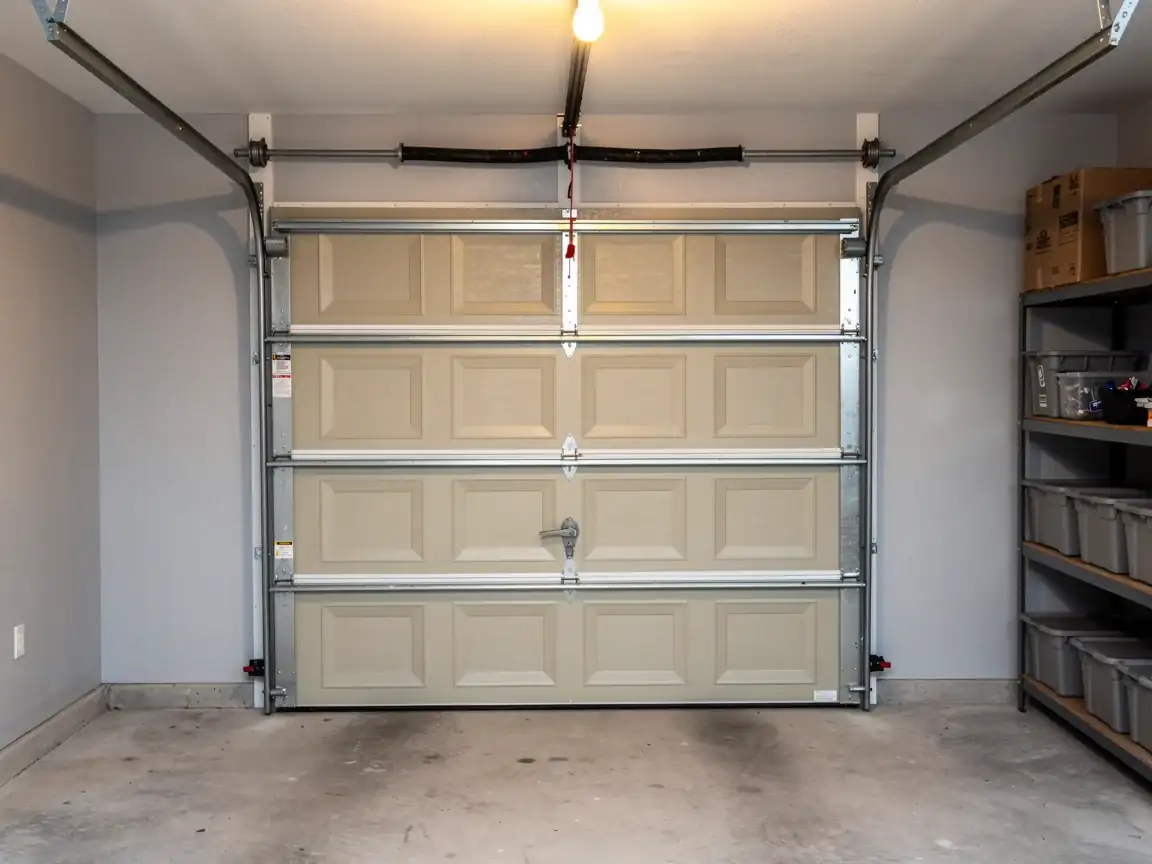
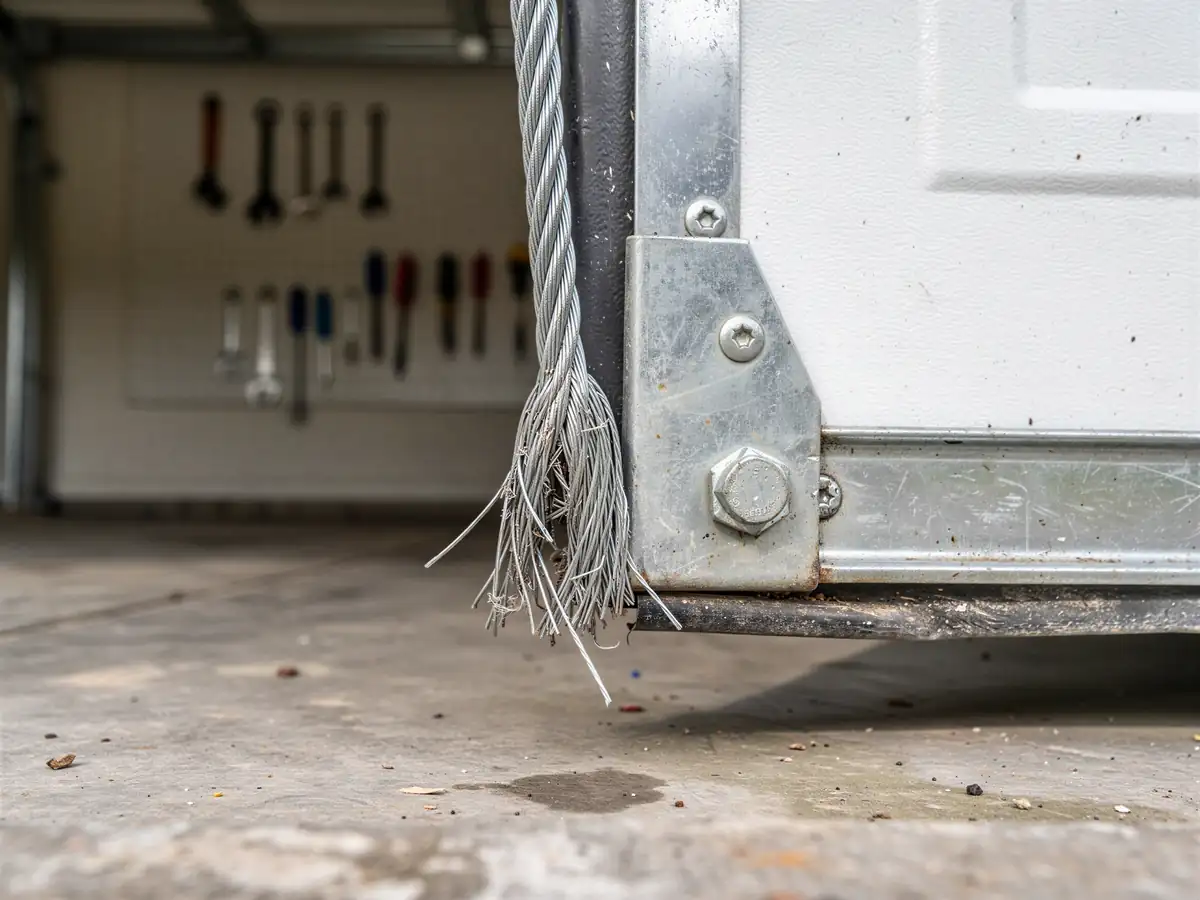
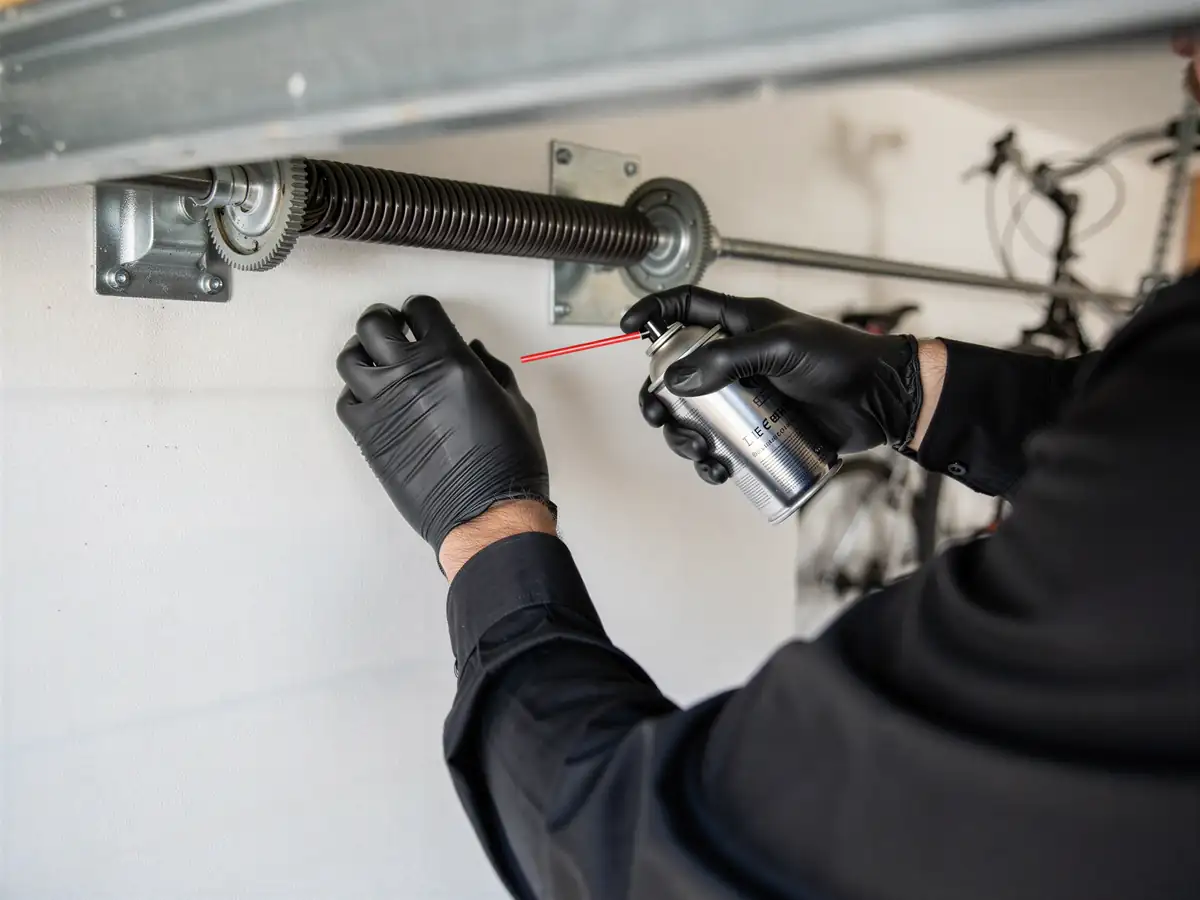
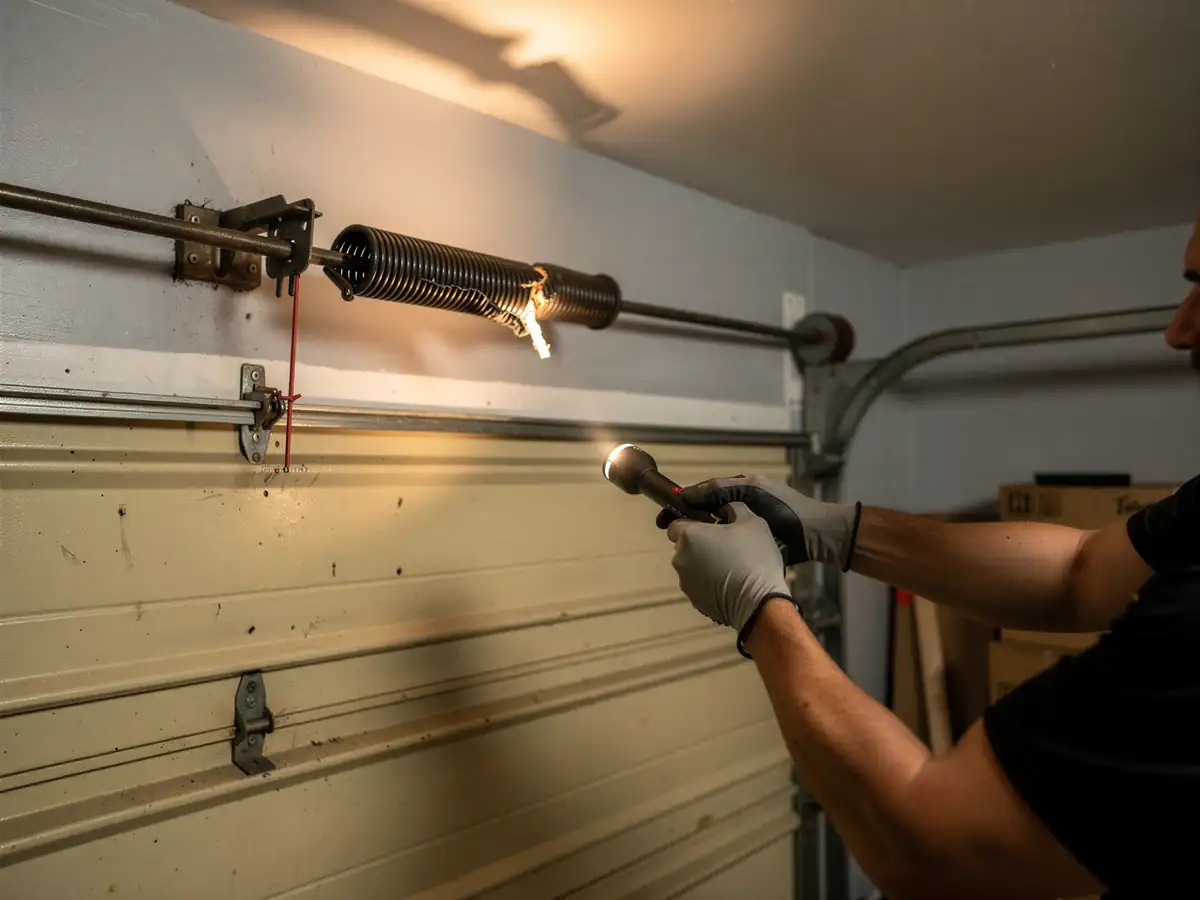
What you shouldn't touch is anything holding tension: torsion springs, the cables running to the bottom brackets, or the drums at either end of the spring shaft. On a house from the 1956 era especially, that hardware has often been there a long time without being touched, and old brackets under tension don't give warning before they let go. Given that Pinconning's household income runs around $64,309, well under the service area's $72,558 average, we understand the instinct to save the service call by doing it yourself. That instinct is right for the sensor and wrong for the spring.
Time on the Job
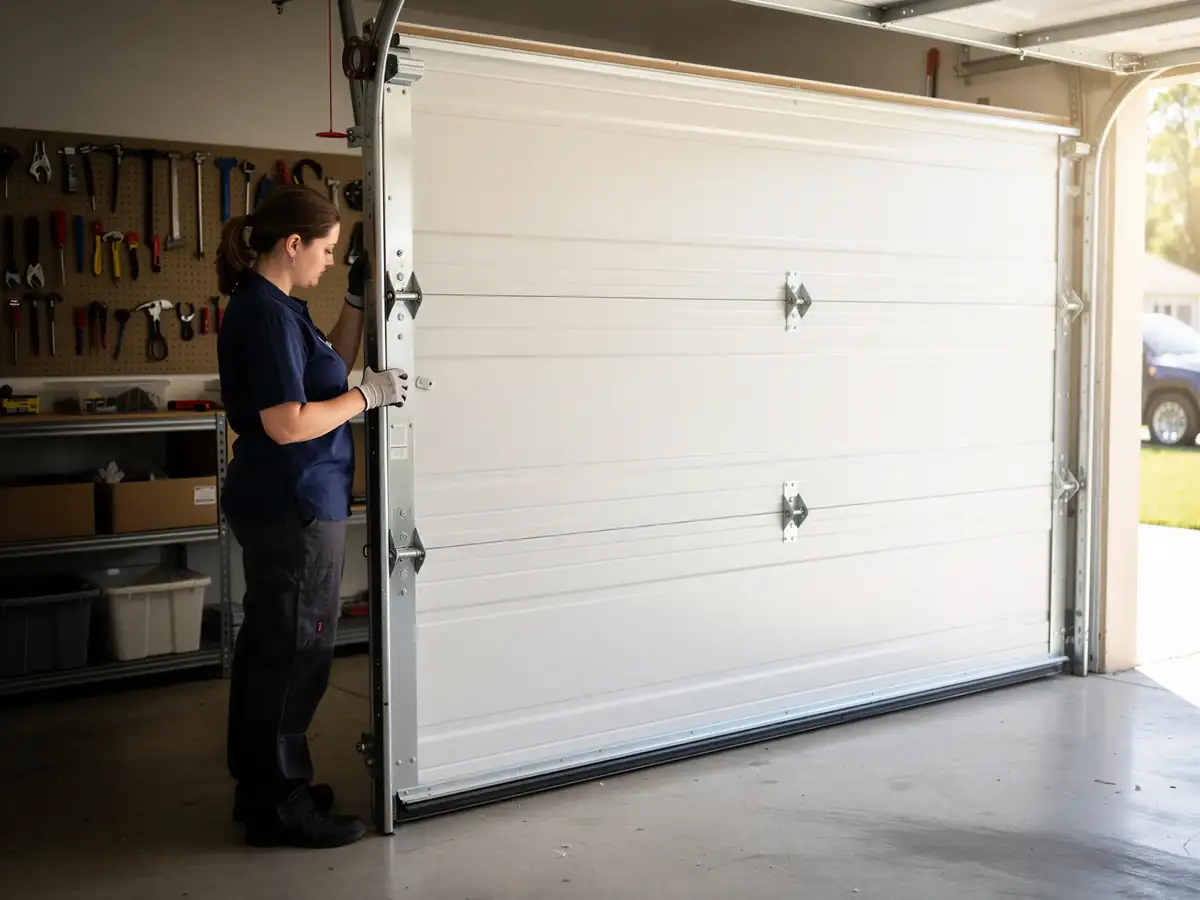
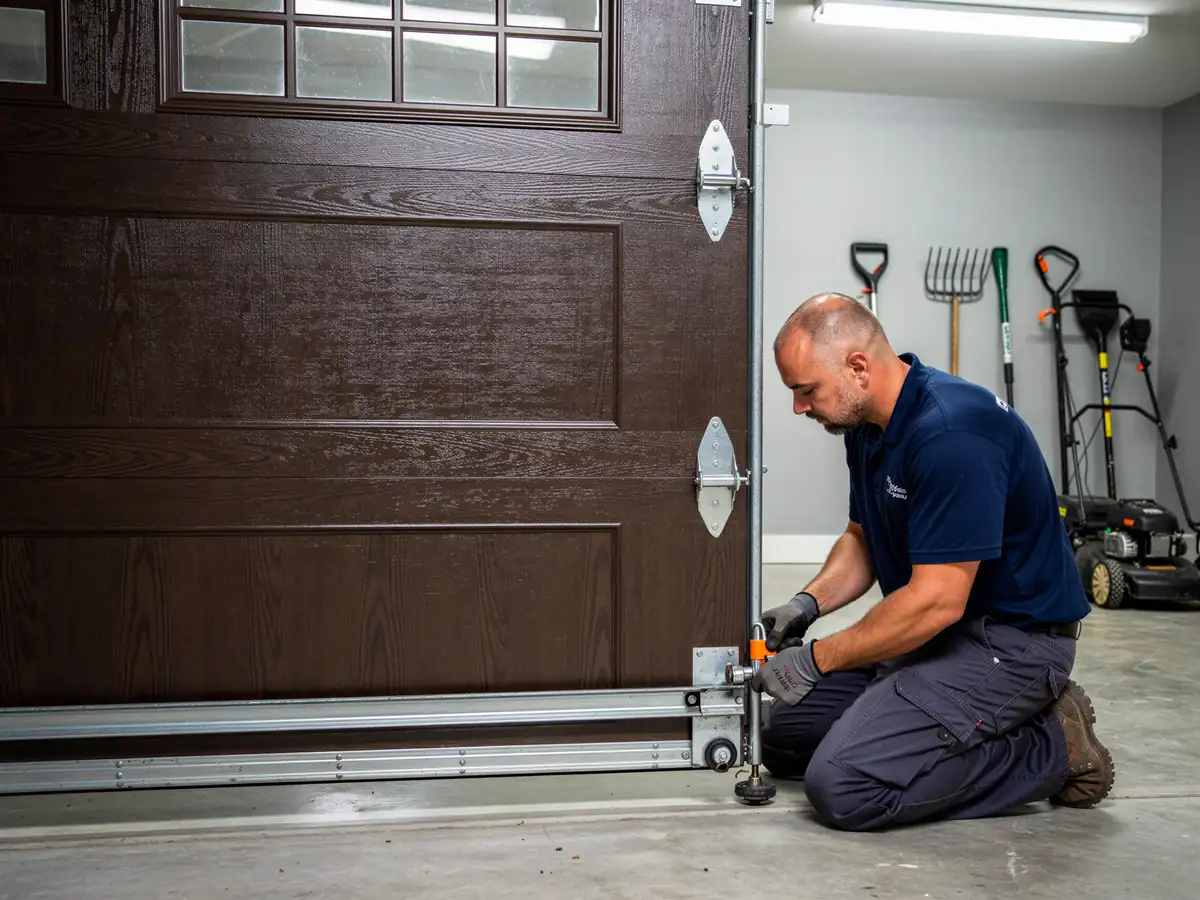
A straightforward spring replacement or opener swap runs about the same on-site time in Pinconning as anywhere else on the route - the work itself doesn't change with the address. What changes is everything around it: because the truck is coming from Bay City, roughly 19 miles away, a same-day call here depends more on how the route is already laid out that morning than it does closer to the shop.
With around 615 households in Pinconning, we're not out here every day the way we are in denser parts of the service area. That's not a knock on the town - it just means less routine traffic, so when we do get a call, we come prepared to find something the original installer didn't plan for, because the odds of hitting original 1956-era hardware are higher here than almost anywhere else we cover.
What It Costs
We don't post a number here because the real cost swings on what's actually on the door
Not on the town. A broken torsion spring on a standard double door is a different job than one where the drum, the cable, and the end bearing plate all need replacing because the house hasn't had service since the opener went in.
What we can say honestly
Houses in the 1956 bracket tend to cost more to repair than newer stock, not because the parts are exotic but because there's usually more than one worn component by the time we're called. A spring job that would be a single-part fix on a 1990s door often turns into a spring-plus-bearing job on a 1956 one. We'll always give you the number before we start, not after.
What Is on the Truck
Given how much of Pinconning's housing sits in that 1956 range, we load the truck expecting older torsion hardware, not the newer extension-spring setups you see on houses built after the service area's 1969 median. That means bringing a broader range of spring sizes and bearing plates than a job closer to the newer end of the stock would need.
One honest limit: if a part turns out to be a discontinued size specific to a door nobody made past the 1960s, we may not have it on the truck that day. In that case we order it and come back rather than force a part that doesn't fit, because a mismatched spring on old hardware is how you get a second failure a month later. We'd rather make two trips than one bad fix.